Earthworm Peptide in Functional Beverages: Formulation Trials, Stability, and Market Review
Earthworm Peptide in Functional Beverages: Formulation Trials, Stability, and Market Review
Earthworm peptide in functional beverages should be evaluated as a product-development question, not treated as a ready-made recipe. A technically workable drink requires evidence about the actual ingredient, liquid base, processing route, package, and storage conditions. Buyers considering earthworm peptide powder should establish those details before making claims about clarity, shelf life, absorption, or a health effect.
A functional beverage is a commercial concept rather than proof of a benefit or a single legal category. This guide explains how a development team can organize a trial and identify the evidence it needs. It does not establish a beverage formula, human intake, finished-drink safety, regulatory permission, or a claim that a supplier provides beverage manufacturing.
Decide What Kind of Liquid Product You Are Developing
The product category should be reviewed before a team commits to a recipe or label. A ready-to-drink beverage, a concentrate, and a liquid dietary supplement may look similar while presenting different intended uses and regulatory questions. Write down how the product would be described, packaged, consumed, and sold.
For the United States, FDA’s guidance distinguishing liquid supplements from beverages considers factors including name, packaging, serving size, intended intake, composition, and marketing. Calling a drink a supplement does not resolve the classification by itself. This is a U.S. example; a project needs review for its actual destination.
Give the reviewer the intended ingredient description and product presentation, not merely the phrase functional drink. Establish which decisions remain open and who can approve them. A sourcing team can collect technical information while this review proceeds, but it should not interpret sample availability as permission to launch a particular liquid product.
Match the Research to the Supplied Ingredient
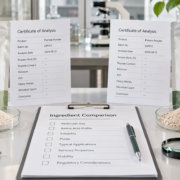
Peptide preparations can differ in source, processing, composition, and analytical methods. A mixed protein hydrolysate is not automatically equivalent to a separated peptide fraction or an isolated research peptide. Request the current material description, specification, composition information, and methods used for the offered powder.
A 2023 Processes study of earthworm protein hydrolysate and fractions examined laboratory enzyme-inhibitory activity and its response to heat, pH, and simulated digestion treatments. Those experiments provide information about the tested preparations and endpoints. They do not demonstrate the physical stability, microbial safety, flavor acceptance, or human benefit of a finished beverage made with a different commercial material.
Do not copy laboratory treatment conditions into a manufacturing instruction. Research conditions may have been selected to investigate an analytical response rather than to create a safe, acceptable drink. A useful evidence note names the preparation, model, measured endpoint, and limits before discussing its relevance to a development project.
Prepare a Beverage Brief That Can Be Tested
A clear brief converts a general idea into technical questions. Describe the proposed base, format, appearance, sensory direction, processing constraints, package, and storage plan. Separate requirements from preferences and identify which choices are still exploratory. Do not invent an ingredient loading simply to complete the brief.
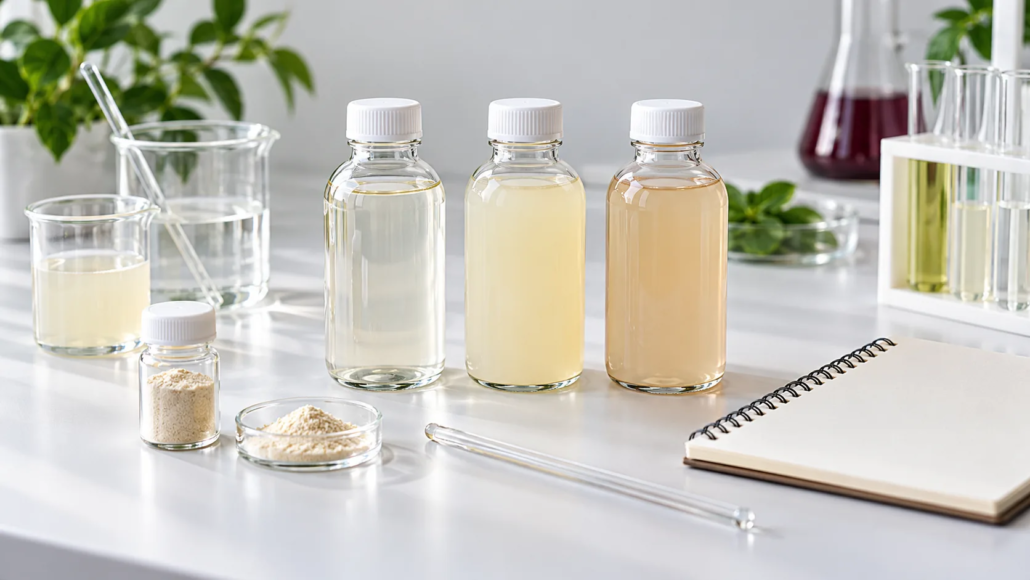
For example, a team might compare a visibly cloudy concept with a concept intended to remain visually clear. That is a design choice requiring trial evidence, not a claim that the ingredient can achieve either result. The tests and acceptance criteria should follow the chosen concept rather than an attractive photograph of a prototype.
| Brief item | Information to provide | Question to resolve |
|---|---|---|
| Product category | Destination, intended use, presentation, and sales channel | Which review route applies to this product? |
| Liquid base | Actual recipe components and proposed preparation sequence | How does the ingredient behave in the complete system? |
| Appearance | Desired clarity, cloudiness, color, and tolerance for visible change | What observations and methods will support acceptance? |
| Process | Proposed mixing, holding, heating, filling, or other operations | Does the trial represent the intended production route? |
| Package and use | Container, closure, storage plan, and opening pattern | Which conditions need separate evaluation? |
Distinguish Initial Mixing from Longer-Term Behavior
A powder that disappears from view during mixing has not necessarily demonstrated complete dissolution or acceptable storage behavior. Specify what the team means by dispersion and by a satisfactory appearance, then choose appropriate observations or measurements. A short mixing demonstration answers only a limited part of the project.
Record the water or base used, ingredient lot, addition sequence, mixing equipment, preparation conditions, and observation times. Include a base without the test ingredient where useful, so the team can distinguish changes associated with the base from changes in the complete prototype. Compare like with like rather than relying on photographs taken under different conditions.
If visible changes occur, document when and where they appear, whether the sample was disturbed, and what handling preceded the observation. Do not immediately assign a cause or add another component to hide the observation. A targeted investigation can be more useful than repeatedly changing several parts of the recipe at once.
Evaluate pH and Other Ingredients in the Complete Recipe
Testing should cover the intended liquid system rather than a convenient water-only sample. Ask the technical team how the planned acidity, salts, flavors, sweeteners, and other ingredients should be represented in a trial. Their presence may create questions that a standalone ingredient analysis cannot answer.
Change selected factors in a controlled manner and preserve the trial recipe for each version. If the team adjusts acidity and flavor together, it becomes harder to tell which change affected the observations. A small comparison plan with a clear purpose is more informative than an uncontrolled sequence of increasingly complex prototypes.
Where an analytical claim is proposed for the finished drink, confirm that the method is suitable for the complete matrix. Color, other ingredients, or sample preparation may need consideration by the laboratory. A result reported for incoming powder is not automatically a measured result for the finished beverage.
Include Sensory Assessment Without Making Benefit Claims
Flavor, aroma, color, and mouthfeel should be assessed against the intended concept using an appropriate protocol. Sensory evaluation should take place only after the responsible team has addressed the relevant safety and use questions. A pleasant sample is not evidence of a health benefit or permission for unrestricted consumption.
Describe observations consistently. Separate the intensity of an attribute from whether a particular evaluator prefers it, and compare prototypes under the same preparation and serving conditions. The purpose is to identify whether the concept is technically and commercially worth further development, not to create a testimonial about the ingredient.
If masking ingredients are proposed, evaluate the changed recipe as a whole. Record their identity and function, and revisit analytical, labeling, and stability questions affected by the change. Do not describe a flavor system as solving the project until the relevant tests support the revised version.
Review Processing and Food Safety as Separate Requirements
The process must be assessed for the actual drink and production setting by qualified personnel. A paper showing retention of an experimental activity after heating is not a validated microbial-control process. Likewise, a stable-looking bottle is not evidence that contamination has been controlled.
Give the responsible team the actual formulation, proposed operations, package, storage plan, and distribution route. Ask which food-safety controls and validation work are needed for that system. This guide intentionally supplies no universal heat treatment, preservative system, storage temperature, or processing schedule.
Process trials should also examine the quality attributes relevant to the project before and after the proposed operations. Keep records of the material, recipe, equipment, conditions, sampling, and methods used. When a pilot process differs from the bench trial, identify which earlier conclusions need to be checked again.
Assess the Finished Package over the Intended Storage Period
A packaged beverage needs its own storage evidence. The raw powder’s proposed shelf life cannot simply be transferred to a liquid formula in a different container. Define which attributes will be monitored, the package configuration covered, and how observations will be interpreted at planned time points.
The team may need to examine physical appearance, sensory attributes, relevant analytical measurements, package integrity, and microbiological evidence under a justified protocol. The appropriate endpoints and conditions depend on the actual system. A trial should distinguish the limits of what was measured from conclusions it cannot support.
Also clarify whether the evaluation concerns an unopened unit or use after opening. A different closure, a new package size, or a revised distribution route may create additional questions. If the system changes, review whether the existing study still represents the product that would reach customers.
| Development stage | Evidence to retain | Decision it supports |
|---|---|---|
| Bench comparison | Traceable recipes, sample identity, conditions, and observations | Which concept merits further investigation? |
| Method assessment | Laboratory review for the complete liquid matrix | Can the proposed attribute be measured appropriately? |
| Process evaluation | Actual operations, quality results, and separate safety review | Which conditions and controls require confirmation? |
| Package study | Container revision, closure, conditions, and relevant time-point results | What storage statement does the evidence support? |
| Pilot transfer | Differences from bench conditions and follow-up results | Does the revised process still meet agreed criteria? |
Keep Ingredient Permission and Product Claims Distinct
Ingredient acceptability and the evidence for a benefit are different questions. FDA’s food ingredient status information highlights identity, specifications, and conditions of use as relevant parts of an authorization review. A supplier listing or a functional-beverage concept does not establish the status of the specific material for the proposed use.
Have the full recipe and intended communication reviewed for the destination. Do not translate a laboratory inhibition assay into a blood-glucose promise, a disease claim, or a recommendation to replace medical care. This guide does not establish a permitted use or benefit statement for an earthworm peptide beverage.
Keep the approved ingredient description, formula, package, and communication versions together. If an ingredient or process changes, tell the people responsible for safety, evidence, and market review. A project can become inconsistent when purchasing, development, and marketing continue using different versions of the same proposed product.
Use Trial Failures to Choose the Next Question
A failed prototype should lead to a focused next test rather than an unsupported conclusion that the ingredient cannot work in any beverage. If a change appears only in the full recipe, compare the relevant base and ingredient combinations under the same protocol. If it appears only after processing, compare matched samples before and after that operation. These comparisons help organize an investigation without presuming its outcome.
Decide what would justify another trial and what would end the project. A team might continue when a specific uncertainty can be tested, but stop when a required attribute remains unsupported or a safety or market question cannot be resolved. Record the decision and its basis. This prevents a succession of visually different samples from being mistaken for progress and keeps the supplier discussion tied to evidence rather than repeated reformulation requests.
FAQ
Can earthworm peptide powder be added directly to any drink?
No universal compatibility is established here. The actual ingredient, recipe, process, intended use, and destination need review. A water-mixing demonstration cannot establish suitability for every beverage base or justify commercial sale of a finished drink.
Does a peptide study prove beverage shelf stability?
No. A study may measure an experimental activity after selected treatments. Beverage shelf stability concerns the full formula and package over a relevant period and includes different questions. Use the paper to identify research questions, not to assign a shelf life.
How much peptide should be used per bottle?
This guide supplies no loading or serving recommendation. The proposed use needs ingredient-specific evidence, safety assessment, technical evaluation, and destination review. Do not convert a laboratory exposure or assay concentration into a human serving.
Is a liquid supplement the same as a functional beverage?
Not necessarily. Classification depends on the applicable market and how the actual product is composed, presented, and intended to be used. Obtain review before finalizing the label, package, and sales message rather than choosing a category by name alone.
What information should a buyer send first?
Send the intended market, proposed product category, liquid base, processing route, package, storage goal, and development stage. Ask for current ingredient documents and sample arrangements. Confirm which technical information or services are available instead of assuming a ready-to-drink manufacturing offer.
Send Your Ingredient Inquiry
Discuss an earthworm peptide beverage research project with Venacore Bio through the form below. Share your destination, formulation questions, sample needs, and required documents. Confirm the offered ingredient, specifications, packaging, and any requested support in writing. Visit the Venacore Bio home page for the wider ingredient range.