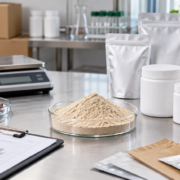
How to Import Earthworm Protein from China: A Practical B2B Guide

How to Import Earthworm Protein from China: A Practical B2B Guide
Importing earthworm protein powder from China is a purchasing project that needs clear supplier communication, document review, packaging planning, shipping coordination, and receiving checks. The process is easier when buyers define what they need before samples, payment, and freight decisions begin.
For brands, distributors, and contract manufacturers, importing earthworm protein powder is not only a logistics task. The buyer must confirm product identity, intended use, specification details, batch documents, import rules in the destination market, and whether the supplier can support repeat commercial supply.
This guide outlines a practical import workflow for B2B buyers. It focuses on procurement and documentation. It does not give legal advice, customs advice, or medical claims, and buyers should confirm destination-market requirements with qualified local professionals.
What should buyers confirm before importing?
Before importing, buyers should confirm the product name, specification, intended application, order quantity, sample needs, destination country, document requirements, packaging format, shipping method, and responsibility split between buyer and supplier. These points shape the entire import plan.
A buyer should start by writing a brief requirement list. It can include target quantity, preferred pack size, expected document set, receiving address, whether the order is for testing or commercial inventory, and any restrictions from the buyer’s quality team. This gives the supplier a clear starting point.
Product identity matters because customs, quality teams, and downstream customers need consistent wording. The product name on the quotation, invoice, packing list, COA, sample label, and package label should match as closely as possible. If different names are used, the supplier should explain why.
Destination-market rules should be checked early. The supplier can provide ingredient and export documents, but the buyer is responsible for knowing whether the product can be imported and used for the intended purpose in the target market. This is especially important for food, supplement, feed, or nutraceutical projects.
Early confirmation prevents wasted samples and delayed shipments. A clear import brief lets the supplier answer with practical details instead of general sales language.
How should buyers evaluate Chinese suppliers?
Buyers should evaluate Chinese suppliers by checking product clarity, document support, communication accuracy, export experience, packaging capability, and willingness to explain limits. A good supplier should answer practical questions without making unsupported claims.
Supplier review should begin before a sample is shipped. Ask for a product specification sheet, sample availability, batch COA example, packaging description, standard lead time, and export document list. The answers should be specific enough for the buyer’s procurement and quality teams to review.
Communication quality is a strong signal. A supplier that gives careful details about order size, document timing, testing options, and shipping terms is usually easier to work with than a supplier that answers every question with a simple promise. For regulated or brand-sensitive markets, careful wording is valuable.
Buyers should also ask whether the supplier supports repeat supply. A one-time sample is different from an ongoing import program. Repeat supply requires batch planning, stable packaging, document consistency, and timely responses after goods arrive.
When possible, buyers should keep all important decisions in writing. Written records help align purchasing, quality, finance, freight, and receiving teams.
| Supplier review area | Question to ask | Useful evidence |
|---|---|---|
| Product identity | How is the earthworm protein powder specified? | Specification sheet, sample label, and matching quotation name. |
| Quality documents | Which documents are supplied for each batch? | COA example, storage guidance, and document issue timing. |
| Packaging | What standard and custom packaging options are available? | Packaging photos, label information, and carton or drum details. |
| Export support | Which shipping methods and trade terms can be supported? | Freight options, packing list format, and invoice information. |
| Repeat supply | How are reorders, batch planning, and document questions handled? | Lead-time explanation and named communication process. |
What documents are usually needed for import planning?
Import planning usually involves a quotation, proforma invoice, commercial invoice, packing list, product specification sheet, batch COA, shipping documents, and any destination-market documents required by the buyer or importer of record. The exact set depends on the product classification, destination country, and intended use.
The buyer should not wait until cargo is ready to discuss documents. If a customs broker, distributor, or internal compliance team needs a specific format, that requirement should be shared early. Some documents may be routine, while others may require extra time or third-party testing.
Document consistency is critical. Product names, batch numbers, quantities, package counts, net weight, gross weight, supplier details, and invoice values should be checked before shipment. Small mismatches can cause delays when the shipment is reviewed.
A COA should be connected to the batch being shipped. Buyers should check test items, units, dates, and product names. If a value is missing or a unit is unclear, ask before dispatch. Receiving teams should not be left to solve document questions after cargo arrives.
For food, supplement, or feed-related applications, buyers should ask local professionals what documents are required. Supplier documents support the import process, but they do not replace destination-market review.
How do samples fit into the import process?
Samples help buyers review appearance, odor, handling, formulation behavior, and document matching before a larger order. A sample should be labeled clearly and linked to a specification or COA, so the buyer knows what is being evaluated.
Buyers should tell the supplier whether the sample is for internal review, formulation testing, customer presentation, or quality screening. Different goals may require different sample quantities or documents. A vague sample request can lead to a package that is difficult to evaluate.
Sample results should be recorded. If the buyer likes the sample, the next question is whether the bulk order will follow the same specification and whether normal production batches are documented the same way. If the sample is only a reference and not tied to a commercial batch standard, that should be clear.
Some buyers request pre-shipment samples from the commercial batch. This can be useful for first orders or strict internal quality systems, but it may add time. The buyer and supplier should agree whether this is required before production or packing begins.
A sample is not a full import plan. It is one checkpoint inside a larger process that includes specification, documents, packaging, payment, freight, and receiving review.
Which shipping method should buyers choose?
Buyers should choose the shipping method based on order size, urgency, cost, destination requirements, and how the goods will be handled after arrival. Courier, air freight, and sea freight can all make sense in different situations.
Courier shipments are often used for small samples or urgent small orders. They can be convenient, but import rules still apply. Buyers should check whether the courier route can handle the product type and destination requirements.
Air freight may suit moderate volume or time-sensitive commercial orders. It is usually faster than sea freight but more expensive. Buyers should confirm airport handling, documentation, and who will manage customs clearance.
Sea freight may suit larger bulk orders when the buyer can plan ahead. It can reduce freight cost per unit, but transit time is longer and packaging must protect the goods through more handling points. Pallet condition, carton strength, and moisture protection become especially important.
The shipping method should be agreed with the trade term. A quote that looks attractive can change after freight, destination charges, duties, taxes, and broker fees are added. Buyers should ask for a clear cost boundary.
| Import step | Buyer action | Reason to do it early |
|---|---|---|
| Requirement brief | Define product, quantity, destination, and intended use. | Helps the supplier quote and prepare documents accurately. |
| Sample review | Check sample label, appearance, and document match. | Reduces risk before a larger order is placed. |
| Document check | Review invoice, packing list, COA, and specification names. | Prevents avoidable customs and receiving delays. |
| Packaging review | Confirm pack size, labels, cartons, liners, and pallet plan. | Protects goods during export and receiving. |
| Freight plan | Match courier, air, or sea freight to order needs. | Clarifies time, cost, responsibility, and clearance work. |
How should packaging be prepared for export?
Export packaging should protect the powder, keep labels clear, support traceability, and survive the chosen shipping route. Buyers should confirm inner liner or bag type, pack size, outer carton or drum format, label information, and whether pallets are needed.
Powder ingredients can be sensitive to moisture and rough handling. The supplier should explain how standard packaging protects the material and whether extra protection is recommended for the route. For sea freight or mixed cargo, packaging strength and pallet preparation can be more important than buyers expect.
Labels should match documents. Product name, batch number, net weight, and supplier details should be clear enough for receiving teams to connect the package with the COA and packing list. If the buyer needs a specific label format, that should be shared before packing.
Custom packaging can support private label or distributor projects, but it adds artwork, review, lead time, cost, and compliance responsibilities. Buyers should approve label content carefully and avoid unsupported claims on finished packaging.
Before dispatch, first-time buyers can request packing photos. Photos cannot replace inspection, but they can reveal obvious label, carton, or packing-count errors before the shipment leaves the supplier.
What payment and trade terms should be clarified?
Payment and trade terms should be clarified before the order is confirmed. Buyers should understand the quoted price basis, payment schedule, bank or platform method, production timing, shipment responsibility, and what happens if documents need correction.
Trade terms define where responsibility and cost transfer. EXW, FOB, CIF, DAP, DDP, and courier terms can create different obligations for pickup, export declaration, freight, insurance, import clearance, duties, and delivery. Buyers should not compare quotes without checking the trade term.
For first orders, payment safety deserves careful attention. Buyers may use staged payments, verified company information, or platform protections when available. The right method depends on supplier relationship, order size, and buyer policy.
Document timing should be tied to payment and shipping milestones. The buyer may need draft invoice and packing details before payment, final documents before cargo departure, and COA before receiving release.
A clear commercial agreement does not need to be complicated. It needs to say what is being purchased, what is included, who handles each import step, and when documents will be supplied.
How can buyers reduce import delays?
Buyers can reduce import delays by checking product classification, document requirements, label consistency, freight terms, packaging details, and customs broker needs before shipment. Most import problems become harder to solve once cargo is already moving.
Start with the destination country. Ask the importer of record or customs broker whether the planned product description and documents are suitable. If a permit, registration, ingredient review, or special document is required, discover that before payment.
Then check supplier documents. The invoice, packing list, COA, product specification, and labels should tell a consistent story. Product names should not change from one document to another without explanation. Quantities and package counts should match.
Next, check shipment readiness. The supplier should confirm packing completion, carton count, gross weight, net weight, dimensions, and pickup plan. The buyer should know who receives original or electronic documents and who handles customs communication.
Finally, prepare receiving. The warehouse should know what is arriving, what documents to compare, and what to inspect before the material is released. Good receiving closes the import loop.
What should buyers check after goods arrive?
After goods arrive, buyers should check outer package condition, label accuracy, seal status, batch number, document match, quantity, and storage instructions. Any serious mismatch should be documented and discussed with the supplier before the material is used.
Receiving inspection protects both buyer and supplier. If cartons are damaged, labels are unclear, or package counts differ from the packing list, photos and notes should be taken immediately. This makes problem solving more objective.
The COA should match the batch on the package. The product name should match the purchase order and invoice. Storage guidance should be shared with the warehouse team. If the buyer has internal sampling or testing procedures, they should be followed before release.
Feedback is useful after first shipments. If the packaging worked well, the buyer can keep the format for repeat orders. If the receiving team struggled with carton size, label placement, or document format, those details can be improved before the next order.
Importing is not finished when cargo reaches the door. It is finished when the buyer has accepted the goods, matched the documents, stored the material properly, and recorded what should change next time.
FAQ
Can earthworm protein powder be imported by courier?
Small samples may be shipped by courier in some cases, but destination rules still apply. Buyers should confirm product eligibility, document requirements, and customs handling before shipment.
What documents should I ask the supplier for?
Common documents include a quotation, invoice, packing list, product specification sheet, batch COA, and shipping documents. The required set depends on destination country, product classification, and intended use.
Should I test a sample before placing a bulk order?
Sample review is usually helpful for first-time buyers. It allows the buyer to check appearance, handling, document match, and formulation fit before committing to a larger order.
Who is responsible for import compliance?
The supplier can provide product and export documents, but the buyer or importer of record should confirm destination-market import rules, use restrictions, duties, taxes, and finished-product compliance.
How can I avoid document problems during import?
Review product names, batch numbers, quantities, package counts, COA details, invoice information, and packing list data before shipment. Ask the supplier to correct mismatches before cargo moves.
Send Your Ingredient Inquiry to Venacorebio
Tell us your destination country, intended application, order quantity, document requirements, packaging preference, and preferred shipping method. Venacorebio can help review a practical earthworm protein powder import plan for your B2B project.