Earthworm Protein for Sports Nutrition: A Practical Guide for B2B Formulators
Earthworm Protein for Sports Nutrition: A Practical Guide for B2B Formulators
Sports nutrition brands are always looking for protein stories that feel fresh, credible, and workable in real production. Earthworm protein can sound surprising at first, yet the buying question is fairly practical: can this specialty protein fit a formula, pass documentation review, and be explained without making claims that create regulatory risk?
The short answer is that earthworm protein powder may be considered for selected sports nutrition concepts when the brand has a clear format, sensible dosage plan, verified quality files, and careful label language. It should not be treated as a magic performance ingredient. It should be treated as a protein source that needs technical testing, supplier review, and market-specific compliance checks.
Why are sports nutrition teams looking beyond familiar proteins?
Sports nutrition teams look beyond familiar proteins because the category is crowded. Whey, soy, pea, rice, and collagen all have strong roles, but brands still want new ingredient stories, better differentiation, and supply choices that support niche positioning.
This does not mean every unusual protein source belongs in a pre-workout tub or recovery shake. The smarter path is narrower. A brand might explore a specialty protein for capsules, functional powder blends, concept testing, limited launches, or products aimed at consumers who like novel nutrition sources. In that setting, the ingredient story can support interest while the formulation team stays grounded in data.
Sports nutrition buyers also know that the label is only one part of success. The powder has to flow through equipment. It has to survive storage. It has to work with flavors. It has to meet microbiology and heavy metal standards. A material that sounds exciting but fails production is not a real choice.
Earthworm protein fits into this conversation as a specialty ingredient rather than a commodity protein. That distinction matters. A commodity protein is often judged by cost per gram of protein and broad availability. A specialty protein is judged by story, technical fit, quality control, documents, and whether the brand can present it responsibly.
For B2B teams, the better question is not “Can we replace our current protein?” It is “Where could this material make sense without overpromising?” That question leads to better products and fewer headaches.
What should formulators test before using earthworm protein?
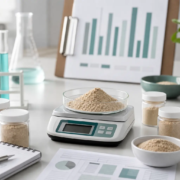
Formulators should test sensory profile, solubility behavior, powder flow, particle size, protein content, microbiology, heavy metals, and stability in the intended product format. A supplier sample is only useful when it is tested under real use conditions.
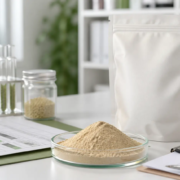
Start with sensory work. Earthworm-derived protein may have a natural color and aroma that needs to be understood early. A small spoon test is not enough. Test it in the target application, such as a capsule blend, sachet powder, stick pack, or flavored mix. The same material can feel acceptable in one format and distracting in another.
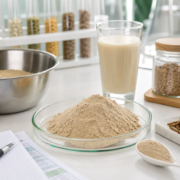
Solubility is another practical issue. Some protein powders disperse well but do not fully dissolve. Some suspend for a short time and settle. Some work better in thicker formulas. These differences affect consumer experience, production steps, and label instructions. If a buyer expects a clear beverage, they need to test that expectation before negotiating a large order.
Powder flow and density can shape factory performance. A powder that bridges in a hopper or creates dust during filling may slow production. Particle size control, carrier blending, or granulation may help, but each step changes cost and timing. That is why formulators should talk to production teams before promising a launch date.
| Test area | Why it matters in sports nutrition | Buyer action |
|---|---|---|
| Sensory profile | Affects flavor masking and consumer acceptance | Test in the exact formula and serving size |
| Solubility behavior | Shapes drink texture and usage instructions | Measure dispersion, settling, and mouthfeel |
| Powder flow | Impacts capsule filling and sachet packing | Check density, dusting, and equipment fit |
| Protein assay | Supports nutrition panel calculations | Confirm method, conversion factor, and batch values |
| Safety testing | Supports quality release and import review | Review microbiology, heavy metals, and COA data |
Formulators do not need perfect answers on day one. They need clear tests that reveal whether the project deserves a larger development run.
Can brands make performance claims with earthworm protein?
Brands should be careful. Earthworm protein can be discussed as a protein ingredient when supported by data, but performance, recovery, endurance, muscle, or disease-related claims should be reviewed by qualified regulatory professionals before use.
This is especially important in sports nutrition because the category often uses energetic language. It is easy for copy to slide from “contains protein” into language that suggests a direct athletic result. That may create trouble if the claim is not supported, allowed in the target market, or appropriate for the finished product category.
A safer B2B content path is to separate ingredient facts from finished-product claims. Ingredient facts may include protein content, amino acid profile if tested, particle size, processing controls, and format suitability. Finished-product claims depend on the complete formula, dosage, serving instructions, local rules, and evidence. Those two buckets should not be mixed casually.
For example, a supplier can help provide product specifications and test reports. The brand’s legal or regulatory team should decide whether the final product can say “protein source,” “supports daily protein intake,” or any other statement in a specific market. Even common-sounding phrases can be treated differently across jurisdictions.
There is another reason to stay careful: trust. Sports nutrition customers are used to bold claims. B2B brands that use clear, measured language can stand out in a good way. A restrained claim backed by documentation is usually stronger than a loud claim that nobody can defend.
Which product formats may be easier to test first?
Capsules, tablets, powder blends, sachets, and concept samples may be easier starting points than a clear ready-to-drink beverage. The right first format depends on taste, solubility, dosage target, production equipment, and the brand’s claim strategy.
Capsules can reduce sensory challenges because the consumer does not taste the powder directly. Still, capsules create their own questions: bulk density, flow, fill weight, excipient needs, and capsule size. A powder that looks fine in a jar may behave differently inside a high-speed capsule line.
Powder blends are flexible, but they expose taste, smell, texture, and dispersibility. If the brand wants to use earthworm protein in a flavored sports powder, early flavor masking work is essential. Cocoa, coffee, berry, citrus, and savory profiles each interact differently with specialty proteins. No supplier can answer that from a PDF alone.
Sachets and stick packs may be useful for trial products or professional sampling. They make it easier to test market reaction before moving to a full-size tub. However, sachets need good powder flow and moisture control. Poor sealing or clumping can ruin the consumer experience quickly.
Ready-to-drink products are often more demanding. Heat treatment, pH, suspension, sediment, color stability, and shelf-life testing all matter. It may still be possible, but it is not the simplest first project unless the brand has strong beverage development support.
| Format | Potential advantage | Main question to test |
|---|---|---|
| Capsules | Lower taste exposure | Can the powder fill cleanly at target weight? |
| Powder blends | Flexible for concept work | Does flavor and texture meet the brand standard? |
| Sachets | Good for sampling and smaller servings | Will the powder flow, seal, and store well? |
| Bars | May hide some powder notes in a food matrix | How does it affect texture and shelf life? |
| Ready-to-drink | Convenient consumer format | Can stability, sediment, and taste be controlled? |
The practical move is to choose a format that lets your team learn fast without burning the budget. A small, controlled pilot can answer more than a long debate.
How should buyers review specifications for sports nutrition use?
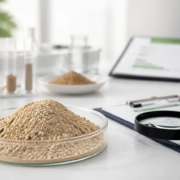
Buyers should review earthworm protein specifications against both ingredient quality and finished-product needs. A good specification should define protein content, moisture, ash, microbiology, heavy metals, sensory traits, packaging, storage, shelf life, and test methods.
Sports nutrition brands often work with tight internal standards. They may need lower heavy metal limits, strict microbiology requirements, allergen statements, non-GMO information, or market-specific declarations. The supplier’s standard spec may be a starting point, but it may not be enough for every brand.
Protein content deserves special attention. Ask whether the value is a minimum, range, or typical result. Ask which test method was used. Ask whether the same value can be supported across repeat orders. If the finished product has a nutrition panel, your team needs stable input data.
Microbiology and heavy metal limits should be reviewed with the target market in mind. A supplier may pass one customer’s needs but not another’s. For example, a distributor selling through professional channels may require additional third-party testing. A brand selling on online marketplaces may need documents ready for sudden platform review.
Packaging also matters. Sports nutrition powders often face humidity, long shipping routes, and warehouse temperature changes. Ask about inner bags, carton strength, palletizing, desiccants if relevant, and whether packaging can support private label or bulk repacking.
Use this checklist before approving a commercial sample:
- Confirm product name and intended sports nutrition format.
- Check protein test method, value, and release standard.
- Review microbiology, heavy metals, moisture, ash, and shelf life.
- Test taste, color, odor, mouthfeel, flow, and solubility in the target formula.
- Review label language with a regulatory professional.
- Confirm packaging, lead time, minimum order quantity, and export documents.
- Keep a retained sample from the batch used for approval.
This checklist is not paperwork for the sake of paperwork. It is how a brand avoids surprises after the first deposit is paid.
What supplier questions reduce risk before purchase?
The best supplier questions focus on repeatability, documentation, customization, and limits. Buyers should ask what the supplier can prove, what they can adjust, and what they cannot responsibly promise.
Start with batch consistency. Ask how often protein content, moisture, and microbiology are tested. Ask whether COAs are issued per batch. Ask whether third-party testing is available and how long it takes. If the supplier answers clearly, your quality team has something to review. If the answer is vague, slow down.
Then discuss customization. Sports nutrition projects may need specific particle size, lower odor, different packaging, private label support, or documentation packages for importers. Some suppliers can support these needs. Some cannot. Both answers are useful as long as they are honest.
Lead time deserves a serious conversation. Specialty ingredients may not always have the same availability as common proteins. Ask about sample lead time, production lead time, seasonal changes, and the supplier’s approach to reserving capacity. A launch plan built on hope is not a launch plan.
Finally, ask about communication during problems. What happens if a batch misses a parameter? What happens if customs asks for an extra document? What happens if your customer asks for a test report in a specific format? The answer shows whether the supplier is a transaction vendor or a real project partner.
Good suppliers do not pretend every project is easy. They help buyers define the project so the easy parts and hard parts are visible early. That is exactly what sports nutrition teams need.
FAQ
Is earthworm protein a complete replacement for whey or pea protein?
Not usually. It is better reviewed as a specialty protein ingredient for selected concepts rather than a direct replacement for large-volume commodity proteins.
Can earthworm protein be used in protein powders?
It can be tested in powder blends, but brands should verify taste, dispersibility, texture, serving size, label language, and quality documents before commercial use.
What documents should a sports nutrition buyer request?
Request a specification sheet, COA, protein method, microbiology data, heavy metal results, allergen information, shelf-life statement, storage guidance, and export documents.
Can suppliers support private label sports nutrition projects?
Some suppliers can support private label or custom packaging, but buyers should confirm minimum order quantity, artwork process, packaging materials, lead time, and compliance responsibilities.
What claims are safer for earthworm protein products?
Safer language usually focuses on verifiable ingredient facts, such as protein content and product format. Performance or health claims should be reviewed for the target market before use.
Send Your Sports Nutrition Ingredient Inquiry to Venacorebio
Tell us your target format, dosage range, label market, packaging plan, and testing requirements. Venacorebio can help your team review bulk earthworm protein specifications, samples, private label details, and export documentation for sports nutrition development.