Amino Acid Analysis by HPLC: Reading an Earthworm Protein Laboratory Report
Amino Acid Analysis by HPLC: Reading an Earthworm Protein Laboratory Report
An HPLC amino acid report is useful when it identifies the tested lot, explains how the sample was prepared, and states the measurement basis for each result. Start by asking whether the laboratory measured free amino acids in an extract or amino acids released by hydrolysis. The same instrument can support both workflows, and their results answer different questions.
For a buyer reviewing earthworm protein powder, a report can support a composition comparison or the acceptance of a named lot. The review should connect the numerical table to the laboratory’s analyte list and preparation records. A supplier’s typical profile may help plan the request, while a result for the submitted batch requires the corresponding report and sample identity.
Identify the question before opening the chromatogram
Write down the decision the report is meant to support. A developer comparing candidate ingredients may need a profile on a common dry powder basis. A quality team investigating a change may need a comparison of the same grade across batches using a consistent preparation. A team examining the free amino acid fraction needs a method that measures the extract without breaking the protein into its constituent amino acids.
Ask the laboratory to state the sample name, lot, material stage and date received. A raw powder, an extracted protein fraction and a finished blend can all produce an amino acid table. Their composition cannot be assigned to one another without evidence connecting the materials. Retain the laboratory’s sample identifier next to the supplier lot number so that the two can be reconciled later.
Confirm the required analytes before testing. The term amino acid profile can refer to a narrower panel than the buyer expects. If a particular amino acid or grouped result matters to the decision, request it by name and ask the laboratory which preparation will cover it. A missing analyte may reflect the agreed scope or the limitations of the method.
Check which preparation produced each number
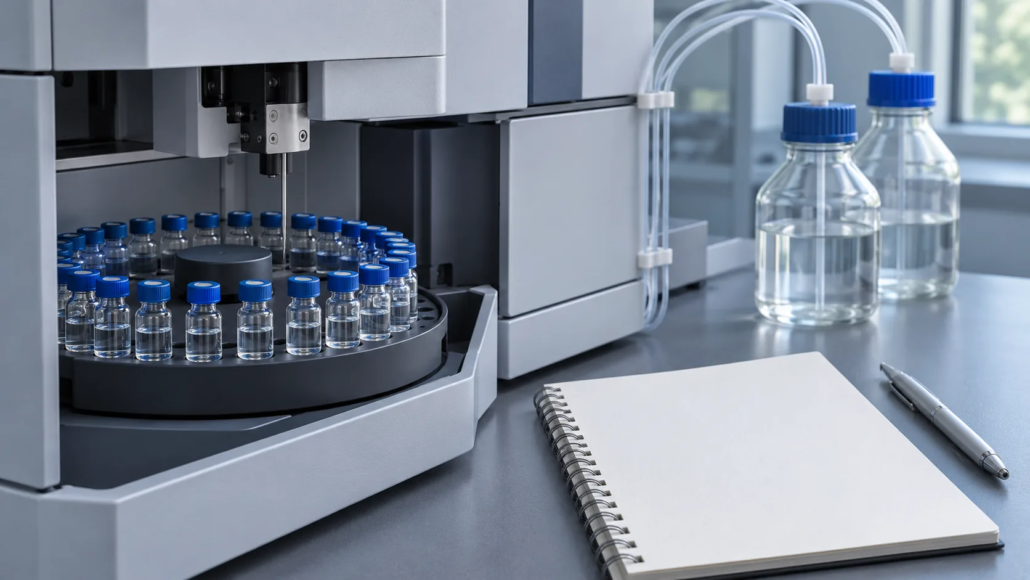
Protein-bound amino acids must be released before a conventional hydrolysate analysis. After preparation, the laboratory separates and quantifies the relevant compounds using its validated procedure. Some approaches use derivatization to create products that can be detected under the chosen chromatographic conditions. The report should identify the preparation and measurement method together.
The FDA’s published profile method describes acid hydrolysis with chromatographic analysis for much of the panel, alkaline hydrolysis for tryptophan, and a separate oxidation step for sulfur amino acids. Use this example to understand why a single standard acid hydrolysate may have limited coverage. Ask the testing laboratory which procedures it used for your material and which analytes it reports from each one. FDA amino acid profile method.
Acid hydrolysis can convert asparagine and glutamine to their corresponding acids. An acid hydrolysate table may therefore report combined values even when the row labels use the names of the acids. Where the distinction matters, ask the laboratory to explain the row labels and whether the method can resolve the original components. USP amino acid analysis text.
| Report item | What to ask the laboratory | Decision it affects |
|---|---|---|
| Free amino acid panel | How were soluble constituents extracted, and which material was removed before analysis? | Whether the result answers a question about the free fraction |
| Acid hydrolysate panel | Which analytes were recovered under the procedure, and which rows combine compounds? | Whether the table can support the requested composition comparison |
| Tryptophan | Was a separate suitable preparation used, and what is the reporting limit? | Whether the report can be used to evaluate this amino acid |
| Methionine and cysteine-related results | Which preparation and conversion from measured derivatives were used? | Whether a sulfur amino acid total can be compared across reports |
| Calculated totals | Which rows are included, and what molecular mass convention is used? | Whether the sum answers the intended mass or profile question |
Separate preparation recovery from instrument response
Two checks can look similar in a report but challenge different steps. A standard injected into the chromatograph can test whether the measurement system responds to known analytes. A suitable control taken through sample preparation can help assess losses or bias during that preparation. Ask the laboratory where the control enters the procedure before relying on a recovery percentage.
For example, a known free amino acid added to a completed hydrolysate can be useful for examining effects in the final solution. It cannot show whether the original protein released its bound amino acids during hydrolysis. A material with characterized composition processed alongside samples addresses another part of the workflow. The laboratory should explain which control is suitable for its method and for the claim the report makes.
Ask whether replicates were prepared independently or injected repeatedly from one vial. Replicate injections help assess the measurement of that prepared solution. Independently prepared portions also include variability from weighing, preparation and dilution. When a result is close to an agreed limit, knowing which kind of replication was used helps the quality team decide whether additional work is needed.
Read the units together with the denominator
Common reporting bases include grams per 100 grams of as-received powder, grams per 100 grams of dry powder, and milligrams per gram of protein. A percentage may also describe the share of the amino acids included in the reported total. Record the denominator exactly as the laboratory states it. A comparison across reports requires the same numerator convention and denominator.
If a compatible moisture result is available, convert an as-received powder result to dry basis by dividing by the dry mass fraction. For a hypothetical sample containing 10 percent moisture, a result of 5.4 grams per 100 grams as received corresponds to 6.0 grams per 100 grams dry powder. This example illustrates the calculation and supplies no commercial product value. Use moisture data relevant to the tested material and record the conversion.
To express an amino acid per gram of protein, obtain the protein quantity and the analytical basis used to derive it. If the denominator comes from nitrogen multiplied by a conversion factor, keep that method and factor with the result. Where the purpose is to compare two reports, changing the denominator can change the ranking even when the amino acid amount per gram of powder stays the same.
Review chromatographic evidence when a result drives a decision
A table of concentrations is usually the first deliverable. Request supporting evidence for a disputed or decision-critical result. Useful items include the analyte list, calibration range, chromatograms of the relevant standards and samples, dilution records, and the laboratory’s explanation of any flagged peak. Ask for a sample and standard that correspond to the same method and analyte panel.
When a peak is difficult to interpret, ask how the laboratory assessed resolution or possible interference. The sample matrix may contain other constituents that affect a measurement. A laboratory can explain the basis for its identification and whether a different preparation, dilution or method is warranted. Avoid treating a clean-looking chromatogram as proof that all analytes were measured successfully.
Record how the report distinguishes an untested analyte, a result below a detection or quantitation limit, and a reportable value. The symbols and wording vary. A dash or an empty field should remain unresolved until the laboratory explains its meaning. This is especially relevant when a buyer plans to add several analytes to make a group total.
Reconcile two results before comparing lots
| Observation | First reconciliation step | Evidence to retain |
|---|---|---|
| Different totals on two reports | Compare analyte lists, combined entries and numerator conventions | Original reports and a row-by-row comparison |
| Most values differ in a similar proportion | Check moisture basis, units, dilution and the stated denominator | Original values and documented conversion |
| One analyte differs substantially | Check its preparation, recovery controls, integration and reporting limits | Laboratory explanation and supporting data for that analyte |
| Supplier specification and test report differ | Identify whether the specification gives a typical value or an agreed limit | Specification revision, lot report and relevant acceptance rule |
| Two reports refer to different sample stages | Trace the materials and confirm what was actually submitted | Lot record, sample receipt and preparation information |
Resolve differences in method scope and calculation first. If a material difference remains, decide whether another test of a retained representative sample can answer the question. A useful request states what remains unexplained and which method, reporting basis and controls the follow-up should use. Keep both original reports so that later reviewers can understand the reason for the follow-up.
Interpret limiting amino acids with the correct reference
In an amino acid scoring exercise, a limiting amino acid is identified by comparing the measured pattern on the relevant protein basis with a defined reference pattern. The amino acid present at the lowest absolute concentration is not necessarily the one with the lowest ratio to that reference. The selected reference, any required grouping of amino acids, and the protein denominator should be recorded with the calculation.
If the required panel is incomplete, treat the corresponding comparison as incomplete. A reliable report may still support a narrower composition question. Keep the amino acid profile separate from evidence about digestibility and from any evaluation of the finished application. An instrument result for one powder sample describes that sample under the stated method. FAO discussion of protein and amino acid measurement.
Make the acceptance file reproducible
Include the offered grade and revision, sample and lot identifiers, analytes required for the decision, preparation assigned to each group, analytical method version, reporting units and any acceptance limits. Identify which documents describe the material and which contain measurements. If an updated report is requested later, the next reviewer should be able to reproduce the comparison without recovering unstated choices from an email thread.
Where the report supports routine release, agree what happens when a result is close to the limit or flagged. Document which party reviews the analytical evidence and how a repeat test will be assessed. If the supplier changes the laboratory or preparation method, compare the new evidence with the prior basis before interpreting the first changed result as a change in the ingredient.
Check how corrections and grouped results enter the calculation
Ask whether the report already includes a correction for preparation losses. A value can be a direct result under the method, a corrected estimate or an amount calculated from a measured derivative. Keep the reported value and any subsequent buyer calculation in separate columns. Applying a correction twice can create an apparent composition difference even when the laboratory results agree.
For a grouped result, check what was measured before adding rows. For example, a report may present a sulfur amino acid total alongside individual results that were used to calculate it. Adding the total and the individual rows would count the same contribution twice. Similarly, a method may report an amino acid pair as a combined entry because the preparation changes one member of the pair. Preserve that grouping when the underlying observations cannot support a split.
If the report expresses the sum using amino acid residue masses, ask the laboratory how the conversion accounts for free and bound forms. Compare that total only with a result using a compatible convention. When the purpose is a purchasing decision, ask the laboratory to state which comparisons its method supports. A short explanation in the report can save a later reviewer from treating apparently similar totals as the same measurement.
FAQ
Does HPLC measure all amino acids in one run?
Coverage depends on preparation and detection. Ask which analytes each preparation supports, and verify any separate procedures needed for tryptophan or sulfur amino acids.
Does a blank tryptophan row mean none was present?
Ask whether the laboratory tested for tryptophan with a suitable method and how it reports values below its limits. A blank field by itself cannot establish concentration.
Can two results be compared after converting the units?
Unit conversion is only one step. Confirm that the measurements cover comparable material, analytes, preparation, reporting basis and molecular mass conventions.
Should a buyer use repeated injections to verify hydrolysis recovery?
Repeated injections assess the prepared solution. Ask for evidence that covers the hydrolysis stage when recovery through preparation matters to the decision.
Can a typical specification replace the batch report?
A typical profile can describe an expected range or provide development context. For a lot-specific decision, request the report that identifies the actual sample and shows how the result was obtained.
Send Your Ingredient Inquiry
Share the grade, lot or sample requirements, analytes of interest and desired reporting basis with Venacore Bio. Include any method or acceptance criteria your laboratory or quality team already uses.