Is Earthworm Protein Sustainable? What B2B Buyers Should Evaluate
Is Earthworm Protein Sustainable? What B2B Buyers Should Evaluate
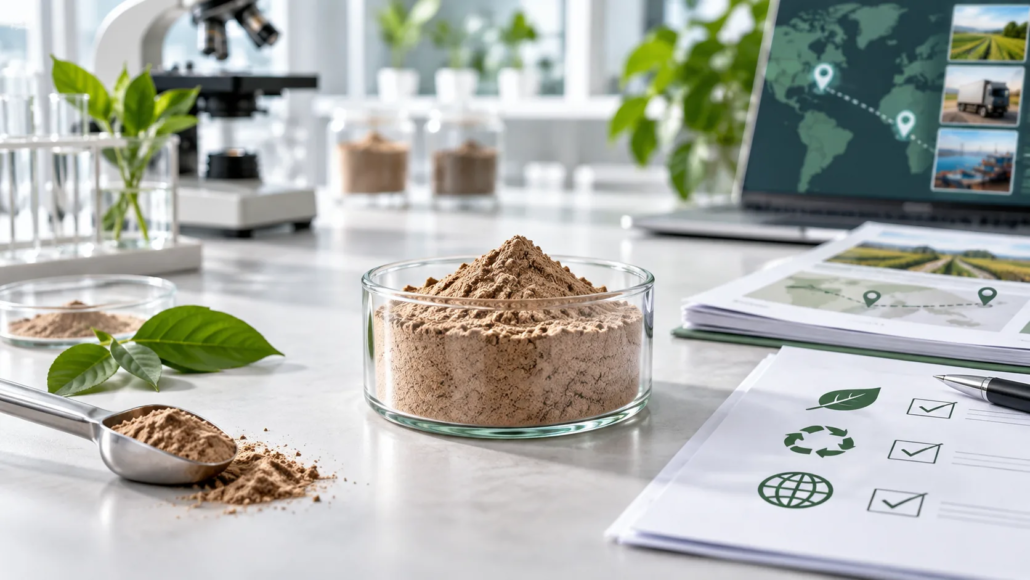
Earthworm protein can be discussed as a potentially resource-conscious ingredient, but B2B buyers should evaluate sustainability through documents, production controls, sourcing transparency, waste handling, packing, and repeat supply rather than broad green language. A supplier may have a responsible process, but the buyer still needs evidence that fits the target market, customer audit needs, and import file.
For companies reviewing earthworm protein powder, the practical question is not only whether the ingredient sounds sustainable. The better question is which parts of the supply chain can be verified. Buyers should check raw material origin, processing flow, batch traceability, energy and water management where available, quality documents, packaging choices, and how claims will be written for customers.
This article explains a cautious evaluation path for supplement brands, functional food teams, distributors, and ingredient importers. It does not treat sustainability as a single label. It breaks the topic into reviewable areas that can support procurement, quality, marketing, and compliance decisions.
What does sustainability mean for an earthworm protein ingredient?
For an ingredient buyer, sustainability means the material can be sourced, processed, packed, shipped, and repeated with responsible control over resources, quality, waste, documentation, and claim language. It should not be reduced to one environmental word on a sales sheet.
Earthworm protein may attract attention because it comes from an alternative biological source rather than a conventional animal or plant protein category. That can create a differentiated ingredient story. However, a differentiated source does not automatically prove lower impact, responsible farming, or better supply ethics. The buyer needs to ask how the supplier manages the chain behind the powder.
A serious review usually covers three layers. The first is sourcing: where the raw material comes from, how it is controlled, and whether batches can be traced. The second is processing: how the protein powder is produced, tested, stored, and packed. The third is commercial use: whether sustainability claims can be supported without overstating the evidence.
When these layers are separated, the conversation becomes easier. Procurement can compare supplier files. QA can review consistency. Marketing can write safer copy. Import teams can check documents before shipment. A broad sustainability claim becomes a practical supplier qualification file.
Why are brands asking about sustainable protein sources?
Brands ask about sustainable protein sources because customers, retailers, distributors, and internal product teams increasingly expect cleaner supply stories and more transparent ingredient choices. At the same time, buyers need materials that can be produced consistently, documented clearly, and used in realistic product formats.
Alternative protein interest has grown across food, nutrition, and supplement categories, but B2B buyers still need to separate market interest from technical readiness. A novel or less common protein source may help a brand stand out. It may also raise new questions about sensory profile, regulatory status, customer education, allergen review, and import documentation.
Earthworm protein powder should therefore be evaluated with both opportunity and caution. It may support product differentiation for buyers who want an ingredient story beyond mainstream protein sources. It also requires clear supplier communication, sample testing, and document review. If a buyer cannot explain the ingredient responsibly, a sustainability story may create more questions than confidence.
Buyer teams should also consider the channel. A distributor may need technical documents and concise sales education. A finished-product brand may need label review, claim guidance, and content support. A contract manufacturer may focus on handling behavior, blending, storage, and batch release documents. Each team uses sustainability information differently.
Which sourcing questions should buyers ask first?
Buyers should first ask where the raw material comes from, how supplier qualification is handled, whether batches can be traced, and what documents connect the raw material to the finished powder. These questions create the base for any responsible sourcing discussion.
A sourcing review does not need confidential farm or process data at the first contact, but it should provide enough detail for screening. Buyers can ask whether the supplier controls raw material intake, how lots are identified, which quality checks occur before processing, and how rejected material is managed. The answers should be specific enough to support a procurement file.
Traceability is especially important. The sample label, quotation, specification, COA, packing information, and invoice should use consistent product names and batch references. If the supplier uses different wording across documents, the buyer should request correction before placing a commercial order. Small document mismatches can become larger problems when a customer or importer reviews the file.
Buyers can also ask how the supplier handles supply variation. Biological raw materials can vary by season, feed system, drying conditions, and processing controls. A capable supplier should explain how it keeps the finished powder within specification and how it communicates changes that may affect color, odor, moisture, or other routine checks.
| Sourcing area | Buyer question | Evidence to request |
|---|---|---|
| Raw material control | How is incoming material checked? | Intake procedure summary or supplier qualification file |
| Traceability | Can sample, batch, COA, and shipment be linked? | Batch number, sample label, COA, packing record |
| Supply consistency | How are variations managed? | Specification, retained-sample policy, batch comparison notes |
| Rejection handling | What happens when material fails checks? | Quality control description or nonconformance process summary |
| Change communication | How are process or source changes reported? | Supplier statement or change notification practice |
How should processing and quality control be reviewed?
Processing and quality control should be reviewed through the specification, COA, process overview, storage guidance, packing details, and sample testing. These files show whether the sustainability story is connected to a controlled ingredient rather than a loose marketing idea.
The process overview does not need to reveal proprietary settings. It should explain the main production steps and quality checkpoints at a high level. Buyers may want to know how raw material is prepared, dried, milled, sieved, packed, and stored. They should also confirm whether the same process route supports samples and commercial batches.
The specification and COA should be read together. Depending on the supplier’s document scope, they may cover appearance, odor, moisture, ash, protein-related indexes, microbiology, heavy metals, and storage conditions. Buyers should not fill missing values from general market knowledge. If a value matters to the project, request it directly or arrange third-party testing.
Quality control also affects sustainability in a practical way. A process with high rework, frequent batch rejection, poor storage, or unclear packing may create waste and supply instability. Consistent batches reduce unnecessary sampling, rejected shipments, and reformulation work. For many B2B buyers, repeatability is one of the most important sustainability signals.
What packaging and shipping factors affect sustainability?
Packaging and shipping affect sustainability through material choice, moisture protection, carton efficiency, pallet use, shipment mode, and product loss prevention. The most responsible package is not always the least material; it is the package that protects the ingredient well enough to avoid damage, contamination, or waste.
Earthworm protein powder needs packaging that supports storage and transport. Buyers should ask about inner bags, outer cartons or drums, sealing method, net weight, label information, and storage instructions. If the powder is moisture sensitive, weak packaging can create far more waste than a slightly heavier protective system.
Shipping plans should match order size and urgency. Air shipment may be useful for urgent samples, but commercial orders often need better freight planning. Buyers can reduce rush shipments by approving documents early, confirming label requirements before production, and sharing forecast information with the supplier. Good planning is a simple sustainability action because it prevents avoidable emergency logistics.
Packaging claims should be handled carefully. If a supplier or buyer wants to discuss recyclable, compostable, reduced plastic, or lower impact packaging, the claim should match the actual material and target market rules. A generic green icon on a package is not enough. The package file should support the statement.
Can earthworm protein support responsible product positioning?
Earthworm protein can support responsible product positioning when the buyer has clear ingredient facts, cautious claim language, and a supply file that matches the story being told. It should not be presented as automatically superior to every other protein source unless the buyer has strong comparative evidence.
A responsible product page may explain that earthworm protein powder is an alternative ingredient under evaluation for nutrition, supplement, or functional food projects. It can discuss quality documents, sourcing review, formulation testing, and responsible supplier selection. It should avoid unsupported environmental rankings, medical promises, or guaranteed consumer outcomes.
For health-related or nutrition-related product concepts, buyers should also keep claim boundaries clear. Ingredient facts do not prove finished-product effects. Any consumer-facing wording should be checked against local rules for the product category, serving level, evidence, and label format.
This discipline can improve brand trust. Customers who ask about sustainability often also care about transparency. A careful explanation of what is verified, what is being evaluated, and what remains subject to local review is usually more credible than a bold claim that cannot be documented.
What documents help support a sustainability review?
The most useful documents include product specification, COA, process overview, storage and packing details, traceability records, supplier qualification information, and any available statements related to sourcing, quality, and environmental controls. The exact file depends on the buyer’s channel and market.
A distributor may only need a concise technical and commercial file at the first stage. A retail brand may need more detailed material for internal QA, packaging review, and customer education. An importer may need documents that match customs and food or supplement category requirements. Buyers should define these needs before production rather than after shipment is ready.
Document age matters. A very old COA or outdated specification may not represent current supply. Buyers should ask whether documents apply to a current batch, a representative batch, or a general product file. This distinction helps prevent misunderstandings during sample approval and repeat orders.
| Document | How it supports review | What to check |
|---|---|---|
| Specification | Defines the product and routine quality limits | Name, appearance, key limits, storage, revision date |
| COA | Shows tested batch or representative data | Batch number, test items, results, approval date |
| Process overview | Explains the general production route | Main steps, control points, sample-to-bulk consistency |
| Packing information | Shows how the powder is protected | Inner bag, carton or drum, net weight, label details |
| Traceability record | Links material, test file, and shipment | Lot code consistency across documents |
How can buyers compare earthworm protein with other protein options?
Buyers can compare earthworm protein with other protein options by using a balanced scorecard that covers source story, specification, sensory profile, formulation behavior, document strength, supply stability, cost, regulatory fit, and claim limits. Sustainability should be one part of the scorecard, not the only decision point.
A familiar protein source may have easier customer acceptance and established regulations. A less common source may offer differentiation but require more education and document review. Earthworm protein should be assessed according to the buyer’s actual product concept, not only according to trend language.
Sample testing is essential. Buyers should evaluate color, odor, particle behavior, blend compatibility, taste where applicable, and storage behavior in the intended formula. A sustainability story cannot rescue a product that fails sensory or handling tests. At the same time, a technically good sample needs documents that support commercial use.
Teams should also compare supplier behavior. Fast, clear, accurate communication is valuable. If a supplier can explain documents, limitations, packing, and repeat supply without exaggeration, the buyer has a stronger foundation for a long-term project.
Buyer checklist for a responsible sustainability review
Use this checklist before adding sustainability language to a product brief, sales deck, or website page:
- Confirm the exact product name, source, and intended application.
- Request the latest specification and representative or current COA.
- Check that sample labels, quote, COA, and packing details use matching names.
- Ask for a high-level processing and quality control overview.
- Review storage, packing, and shipment requirements before quoting.
- Test the sample under the intended formula or sales format.
- Separate verified ingredient facts from sustainability claims.
- Avoid unsupported comparisons with other protein sources.
- Send package and website wording through local compliance review.
- Keep retained samples and batch files for repeat-order comparison.
This checklist helps teams move from a broad question to a practical sourcing review. It also supports better communication between procurement, QA, marketing, logistics, and the supplier.
FAQ
Is earthworm protein automatically sustainable?
No. It may be positioned as an alternative protein source, but sustainability should be evaluated through sourcing, processing, quality, packing, logistics, documentation, and claim review.
What should buyers ask before using sustainability claims?
Buyers should ask what can be verified, which documents support the statement, whether the wording is allowed in the target market, and whether the claim applies to the ingredient or finished product.
Can earthworm protein replace mainstream proteins in every formula?
No. Replacement depends on sensory profile, nutrition target, processing behavior, serving concept, customer acceptance, and local rules. Sample testing is needed before any commercial decision.
Which documents are most useful at the first sourcing stage?
The specification, COA, process overview, packing information, and traceability details are usually the most useful first-stage documents.
How can brands write about earthworm protein responsibly?
Brands can discuss ingredient identity, sourcing review, quality documents, sample testing, and responsible product development while avoiding unsupported environmental rankings or health promises.
Send Your Ingredient Inquiry
Send your ingredient inquiry with target market, product format, sustainability questions, document checklist, sample needs, and estimated order plan. Venacorebio can help review whether the current earthworm protein powder option fits your B2B sourcing and responsible product-positioning workflow.