Allergen Cross-Contact Controls When Qualifying Earthworm Protein Suppliers
Allergen Cross-Contact Controls When Qualifying Earthworm Protein Suppliers
When qualifying an ingredient supplier, review allergen cross-contact at the site and process that will make the offered grade. Follow the material through shared equipment, storage, transfer and packing. Ask how the supplier has evaluated its cleaning procedure, how it checks the next changeover, and when it will notify the buyer about a change.
For buyers evaluating earthworm protein powder, keep the ingredient’s own allergen assessment separate from the possibility of unintended transfer from other materials. Evidence about a shared line addresses only the routes and conditions examined. Product suitability and labeling require their own assessment for the intended market and application.
Start with the offered grade and the actual process route
Confirm the grade, revision, manufacturing site and any external processing or packing locations. Ask the supplier which route the sample followed and whether commercial orders would use the same route. A plant may run different grades on different lines or use another site for a particular finishing step. The review needs enough detail to connect the offered material to the controls.
Ask for a process map or a suitably redacted route summary. Follow receiving and weighing, any movement of exposed material, processing, intermediate holding, packaging and dispatch. Identify where other materials can enter that route through shared equipment, utensils, air movement, people or containers. Where the supplier uses segregation, ask what it separates and which points of transfer remain.
Codex’s food allergen management code discusses route mapping, facility design and cleaning within food business operations. Use its control concepts to frame the review and determine which requirements apply to the intended use separately. Codex codes of practice, including CXC 80-2020.
Trace transfer routes that a line name can miss
| Route to review | Question for the supplier | Evidence to request |
|---|---|---|
| Shared contact equipment | Which materials can run before the offered grade? | Line route, relevant product sequences and changeover records |
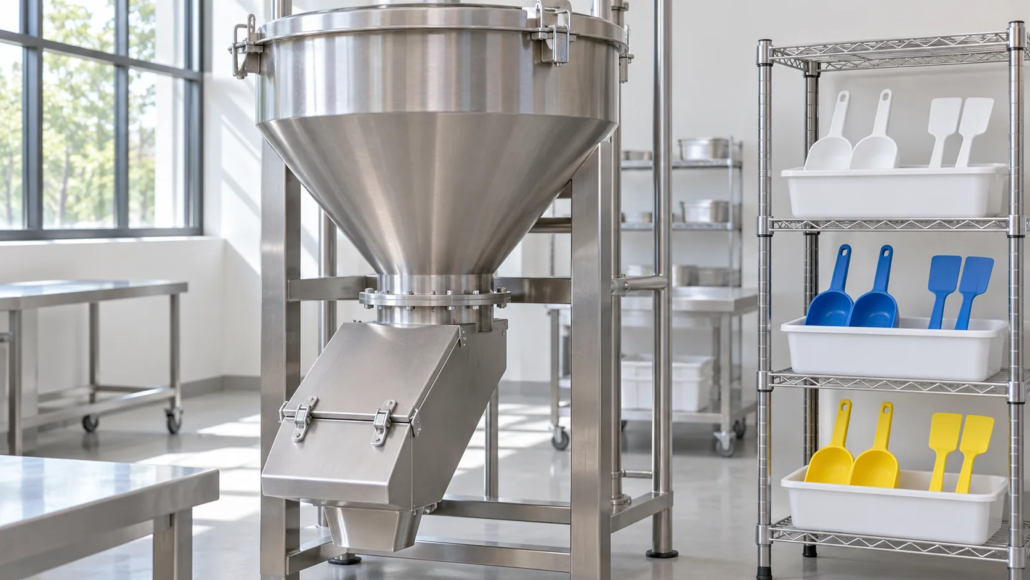
| Weighing, transfer and holding | Where is material open, and which scoops, bins or transfer tools are shared? | Handling instructions, equipment identification and segregation records |
| Dry powder movement | How are dust, residue and movement between work areas controlled? | Area map, containment measures and an explanation of relevant shared systems |
| Rework and returns | Which materials can re-enter the route, and who approves that use? | Rework controls, lot linkage and disposition records |
| Packing and external operations | Which site and line fill the finished pack? | Packing route, documented responsibilities and current approval scope |
Ask how the supplier updates the assessment when it introduces another material. A statement covering only ingredients intentionally added to the product does not describe every transfer route. A statement covering a whole site may be too broad to answer a line-specific question. Record which materials, areas and handling stages the statement covers.
On a facility tour or remote review, select one plausible sequence and follow it from the preceding material to the next lot. Ask the supplier to identify which control interrupts that route. For example, if a transfer hose can move between areas, request the rule for assigning it, how its status is identified, and the record that confirms which hose was used.
Review the evidence that cleaning can work
A validation study should address a defined cleaning procedure and the relevant materials, equipment and product sequence. Ask which residue challenged the procedure, which surfaces and hard-to-access locations were considered, and how the challenge represented routine conditions. The chosen challenge should have a clear rationale. More residue, a different formulation and a harder-to-clean surface can affect what the study represents.
Ask how equipment is disassembled and which steps or operating parameters have to be met. An approved cleaning instruction should identify the applicable equipment and the conditions that matter to its effectiveness. Request the conclusions and limitations of the validation work as well as the procedure. For a supplier with confidential product names, a redacted account may be sufficient if it preserves the relevant residue, process and equipment context.
Codex discusses validation for the specific allergen, process and product matrix combination, alongside verification of the cleaning performed. This distinction helps a buyer separate evidence that a procedure can be effective from evidence that a particular changeover was carried out under the intended conditions. Codex CXC 80-2020 cleaning provisions.
Ask how routine changeovers are checked
Request an example of the record used for the next production run. The record should show the line and preceding material, the cleaning procedure applied, the checks completed and the release decision. Ask who reviews a discrepancy and how the line is prevented from returning to service if a required check is missing or does not meet the agreed criterion.
A visual inspection is useful for locating remaining debris and verifying the condition of surfaces that can be inspected. Where residue testing is used, ask how the test complements visual and process checks. A reading from an easy-to-reach surface can provide limited evidence about a gasket, seam or transfer point elsewhere. The sample plan should address locations relevant to the risk being investigated.
Distinguish a record that cleaning was scheduled from a record that the specified steps were completed and checked. For the offered lot, confirm whether the preceding run fell within the supported changeover scope. If the prior run or equipment configuration was outside that scope, ask what evaluation took place before the line was released.
Interpret residue measurements in the context of the method
| Report item | What to verify | Reason it matters |
|---|---|---|
| Target | Which residue or marker the test is designed to detect | A general indicator and an allergen-specific measurement support different conclusions |
| Sample type | Whether the laboratory tested a swab, rinse or product portion | Each sample describes a different part of the process |
| Location | Exact sampling point and why it was chosen | One surface result cannot represent every route of transfer |
| Method suitability | Recovery and possible effects of the surface, residue or sample matrix | The same method can perform differently under different conditions |
| Reporting limit and decision rule | Units, limits and the criteria agreed for the decision | A result below a reporting limit describes the test under its stated conditions |
When a report says that a target was not detected, request the associated method and reporting limit. Interpret that statement for the sampled location or material and the method used. A composite product sample can also conceal variation within a batch if residues are unevenly distributed. Ask how the sampling plan and test together support the intended decision.
The FDA has published a study of wiping and cleaning in retail food establishments that found removal and transfer depended on factors including surface and wiping conditions. Its setting is different from ingredient manufacturing. It illustrates why the material and surface in the supplier’s own process matter to the evaluation. FDA study of allergen removal and transfer in retail settings.
Agree on what changes require notice
Build a change list around the accepted route. Include a new material on shared equipment, a new site or line, changes to cleaning instructions or disassembly, new external packing arrangements and changes to rework practices. Ask the supplier which changes it can notify before implementation and how it will communicate an unexpected change that affects a released or pending lot.
Document which information the notice should contain. A useful notice identifies affected grades and lots, the change and its effective date, the supplier’s assessment and supporting evidence, and any limits on existing approvals. Set the review responsibility and decide which changes need written acceptance before affected material can be used. Keep the contact route current for procurement and quality teams.
Use a worked scenario to test the agreement. Suppose a new material is introduced on a shared line and the previous cleaning study did not address its residue. Ask which lots would be held for review, what evidence would be needed to assess the changed sequence, and which party would authorize resumed supply. This is an illustrative scenario. It helps reveal gaps in responsibilities before a real change occurs.
Make the lot decision traceable
For initial qualification, retain the current statement, relevant process route, cleaning evidence and one representative changeover record where available. Identify the conditions under which the quality team accepts the supplier. If the review depends on a specific line or packing site, record that scope with the approval rather than leaving it in a discussion thread.
For a routine order, confirm that the material and route match the approval and that the required documents apply to the lot. If the supplier reports an exception, record the affected material and the action taken while the assessment is open. A decision to hold, reject or accept should identify the evidence and who made the decision. Keep lot status distinct from a general supplier approval.
Finally, pass the supported ingredient and process information to the team responsible for finished product assessment. That team needs the intended formula, site, market and current labeling requirements. A supplier document can inform that work within its stated scope. An approval for one grade, process and application should be re-examined when the evidence no longer fits the intended use.
Review an exception from detection through disposition
Ask the supplier for a redacted example showing how it handled an unexpected finding or a missed changeover check. The review should identify when the issue was noticed, the equipment and lots potentially affected, and the period covered by the investigation. If the supplier uses a hold, ask how the affected material is identified in its records and kept from being released while the investigation is open.
Look at the scope of the corrective action. Cleaning the immediate surface may address the current finding, while the investigation may also need to consider a missed step, a worn component, an equipment change or movement between areas. Ask what evidence supports the conclusion and whether the same issue could affect other sequences or grades. Document any remaining gaps and the conditions for restoring approval.
Where another company performs packing, ask how a finding is communicated across the handoff. The supplier should be able to connect the original material lot to the packing lots and to the relevant process records. Confirm which party has access to the changeover evidence and which party can prevent shipment. A contact list is useful when it is linked to a defined release responsibility.
Include a decision about verification after the correction. Depending on the issue, the reviewer might request evidence that the revised procedure was performed, a targeted residue check or a review of several comparable changes. Agree the scope before judging whether the action is complete. If the affected route changes, check whether the original validation still covers it. Keeping the finding, decision, corrective action and follow-up together makes it possible to see how an exception informs the next supplier review.
FAQ
Does a dedicated production line resolve every cross-contact route?
It addresses the shared equipment route to the extent documented. Review storage, utensils, personnel, transfer, rework and packing where those routes remain relevant.
What is the difference between cleaning validation and verification?
Validation evaluates whether a defined procedure can control the relevant residue under the studied conditions. Routine verification checks the execution and outcome of the changeover according to the agreed plan.
What does a residue result below the reporting limit support?
It describes the measurement for the specified target and sample under the selected procedure. Read the sampling location, method suitability and reporting limit with it before making a decision.
Can the supplier’s allergen statement replace a process review?
Use the statement to establish what the supplier has declared and what it covers. Request route and control evidence appropriate to the transfer paths and the decision your quality team needs to make.
What should trigger a new review?
Evaluate changes to shared materials, equipment, site, cleaning, rework or packaging when they may affect the current approval. Agree how the supplier will identify affected lots and document the evidence for continued supply.
Send Your Ingredient Inquiry
Share the intended market, earthworm protein grade, application and supplier qualification requirements with Venacore Bio. Include the line, cleaning evidence or change notification questions your quality team needs to resolve.