
Earthworm Protein Packaging Options: What B2B Buyers Should Confirm
Earthworm Protein Packaging Options: What B2B Buyers Should Confirm
Packaging is a practical sourcing decision for earthworm protein powder. It affects ingredient protection, shipping cost, warehouse handling, sampling, production efficiency, document review, and the buyer’s ability to scale from trial orders to repeat bulk supply.
For B2B buyers, packaging should not be treated as an afterthought after price negotiation. A brand or distributor sourcing earthworm protein powder needs to confirm whether the packaging format supports the intended use, destination market, storage conditions, and order stage. A good packaging discussion can prevent damaged goods, unclear labels, avoidable repacking, and delays at receiving.
This guide explains the packaging options and review points that matter most for ingredient buyers, contract manufacturers, food and supplement brands, and distributors. It focuses on supply planning and quality communication, not health claims.
Why packaging matters in earthworm protein sourcing
Packaging matters because it protects the powder from moisture, contamination, physical damage, and handling confusion during storage and export. It also helps the buyer identify batches, manage inventory, prepare production, and keep documents matched to the correct goods.
Earthworm protein powder is usually purchased as an ingredient rather than a finished retail product. That means the packaging must serve industrial handling first. The buyer may care less about shelf display and more about liner integrity, carton strength, drum sealing, pallet condition, label clarity, and whether the pack size fits the receiving facility.
A packaging choice also affects cost. Small inner packs may improve handling and reduce exposure after opening, but they can raise material and labor cost. Larger bulk packs may reduce unit packaging cost, yet they require suitable storage and production handling. The right answer depends on the buyer’s order volume and process.
Packaging is also tied to quality records. If the COA, label, batch number, and packing list do not match, the receiving team may pause the shipment even when the powder itself is acceptable. Good packaging review includes both physical protection and traceability.
Buyers should discuss packaging early, especially when the order is for a first commercial batch, private label project, or distributor inventory. Late packaging changes can affect lead time and quotation accuracy.
What are the common packaging formats for bulk ingredient supply?
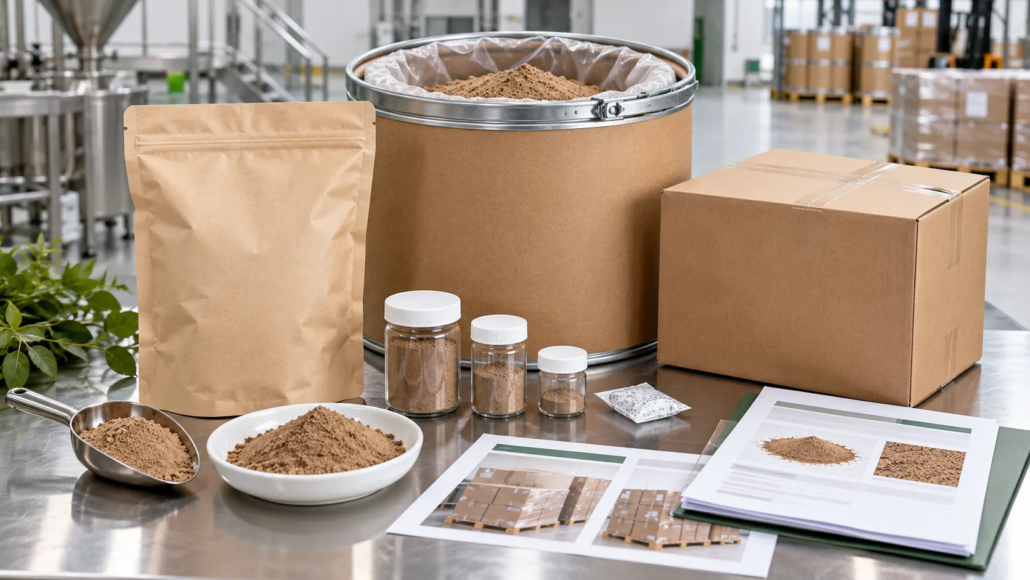
Common packaging formats include sample jars or pouches, foil or composite inner bags, carton-packed small bags, fiber drums with inner liners, and larger bulk shipping cartons or pallets. The supplier should recommend a format based on order quantity, shipping route, storage condition, and handling needs.
Sample packaging is usually designed for evaluation. It should be clean, sealed, labeled, and matched with documents. It does not always represent the final bulk packaging, so buyers should not assume that the sample pouch shows the commercial packing plan.
Trial orders may use smaller bags or cartons to make production testing easier. This can help a brand or contract manufacturer open only what is needed during pilot work. For repeat bulk orders, drums or larger lined cartons may be more efficient.
For export, outer packaging should support the freight method. Air shipments, courier shipments, sea freight, and mixed container cargo can expose goods to different handling conditions. The packaging needs to survive the route, not just look acceptable at the factory door.
Buyers should ask for photos or descriptions of the proposed packaging before final confirmation. A short packaging review before payment is much easier than fixing a mismatch after shipment arrives.
| Packaging format | Typical use | Buyer should confirm |
|---|---|---|
| Sample pouch or jar | Initial review and formulation screening | Seal condition, sample label, batch link, and document match. |
| Small inner bags | Trial production or controlled opening | Bag size, liner material, carton count, and handling convenience. |
| Fiber drum with liner | Bulk ingredient storage and export | Net weight, liner type, drum strength, seal, and pallet plan. |
| Carton packing | Moderate orders or distributor handling | Carton strength, inner protection, label placement, and stack limits. |
| Custom packing | Private label, OEM, or customer-specific handling | Artwork, label review, minimum quantity, lead time, and compliance ownership. |
How should buyers choose between small packs and bulk packs?
Buyers should choose between small packs and bulk packs by reviewing production workflow, opening frequency, storage conditions, order size, labor cost, and inventory turnover. Smaller packs can support controlled use, while bulk packs can improve cost efficiency when the buyer has suitable handling capacity.
Small packs are useful when the buyer needs to run pilot batches, send material to several development sites, reduce exposure after opening, or manage uncertain demand. They may also be easier for smaller contract manufacturers to handle. The tradeoff is higher packaging material cost and more packing work.
Bulk packs make sense when the buyer has stable demand, suitable warehouse conditions, and a production process that can handle larger units. Drums or larger lined cartons may reduce packaging cost per kilogram and simplify repeat orders. The tradeoff is that the buyer must manage opening, resealing, and internal material control carefully.
There is no universal winner. A buyer launching a new product may start with smaller units, then move to bulk packing when reorder volume becomes predictable. A distributor may prefer packaging that balances warehouse handling with downstream customer needs.
A helpful question is: who will open the package, where will it be opened, and how quickly will the material be used after opening? That answer often points toward the most practical pack size.
What label information should appear on ingredient packaging?
Ingredient packaging labels should clearly identify the product name, batch number, net weight, production or packing date when available, storage condition, supplier details, and any handling marks required for the shipment. The label should match the COA, invoice, packing list, and purchase order.
Label consistency is more than paperwork. If a warehouse receives cartons with unclear labels, the team may not know which COA belongs to which batch. If a distributor splits inventory, weak labeling can create traceability gaps. If customs or an importing partner reviews the shipment, mismatched product names can delay clearance.
Buyers should agree on label language and naming before production packing. The product name should be clear and consistent with documents. If the buyer needs a specific naming format for internal systems, that should be shared early.
Private label or OEM packaging needs extra care. The buyer may own artwork, claims, market compliance, and destination-market label requirements. The supplier can support production and packing, but the buyer should review whether the final label language is suitable for the target market and sales channel.
For bulk ingredient packaging, avoid unnecessary marketing claims on outer labels. Clear identification and traceability usually matter more than decorative language.
How does packaging affect quality and storage?
Packaging affects quality and storage by controlling exposure to moisture, air, dust, light, and physical damage. For powder ingredients, the inner liner, sealing method, outer container, and warehouse condition all influence how well the product is protected before use.
Moisture protection is a common concern for powders. Buyers should ask how the inner liner is sealed, whether desiccant is used when appropriate, and what storage conditions are recommended. If the product will travel through humid environments, packaging strength and sealing become more important.
Physical protection matters too. Cartons can crush if stacked poorly. Drums can be damaged during rough handling. Pallets can shift if wrapping is weak. The supplier should explain how the packaging is prepared for the intended shipping method.
Storage after arrival is the buyer’s responsibility. Even strong packaging cannot compensate for poor warehouse control after receipt. Receiving teams should check seal condition, label accuracy, outer damage, and document match before releasing the ingredient into inventory.
Packaging can also support partial use. If a buyer opens one large bag repeatedly, the material may face more exposure than expected. Smaller inner bags may be a better option when production uses the ingredient slowly.
| Packaging concern | Question to ask the supplier | Receiving check |
|---|---|---|
| Moisture protection | What inner liner and sealing method are used? | Check seal integrity and storage guidance. |
| Traceability | How are batch numbers shown on labels? | Match label, COA, packing list, and purchase order. |
| Physical damage | How is the cargo protected during export? | Inspect cartons, drums, pallet wrap, and outer condition. |
| Production handling | What pack size fits the buyer’s opening pattern? | Confirm the pack can be handled by the receiving facility. |
| Custom packing | What artwork, lead time, and quantity rules apply? | Approve label files before packing begins. |
What should buyers confirm before approving custom packaging?
Before approving custom packaging, buyers should confirm artwork ownership, label content, package material, pack size, minimum quantity, lead time, cost, regulatory review, carton marks, and sample approval. Custom packaging can support brand or distributor needs, but it adds more decision points than standard bulk packing.
Artwork review is especially important. If the package includes claims, icons, directions, or market-specific wording, the buyer should have qualified reviewers check it before production. A supplier can produce the package that was approved, but the buyer usually carries responsibility for finished label compliance in the destination market.
Custom pack size should match real demand. Ordering many small packs can be convenient, but it may increase labor and material cost. Ordering large custom units may reduce cost, but it can create inventory pressure if the product is still being tested.
Lead time should be discussed separately from ingredient availability. The powder may be ready, while printed bags, labels, cartons, or other custom materials need additional time. Buyers should build that into launch planning.
For first projects, a staged approach often works well: standard sample, standard trial order, then custom packaging once demand and label language are clearer. This keeps early risk manageable while still leaving room for branded supply later.
How should packaging requirements be written into a purchase order?
Packaging requirements should be written into the purchase order with pack size, net weight per unit, inner liner or bag type where agreed, outer carton or drum format, label requirements, pallet requirement, document set, and any photos or pre-shipment checks expected before dispatch.
A clear purchase order protects both sides. The supplier knows what to prepare, and the buyer has a written basis for receiving inspection. If the buyer needs five-kilogram inner bags inside cartons, that should be stated. If the buyer needs twenty-five-kilogram drums with inner liners, that should be stated too.
Buyers should also request final packing photos when the order is packed, especially for first shipments or custom packaging. Photos cannot replace inspection, but they help catch obvious label or packing mismatches before dispatch.
Document timing belongs in the order as well. The buyer may need COA, specification sheet, invoice, packing list, and other export documents before shipment. Packaging details should match those documents.
The goal is not to make purchasing complicated. The goal is to make the physical goods, labels, and documents tell the same story from factory to receiving dock.
What packaging mistakes should buyers avoid?
Buyers should avoid choosing packaging only by unit price, changing custom packaging late, ignoring warehouse handling, accepting unclear labels, and approving a sample package without discussing commercial packing. These mistakes can raise total cost or delay receiving.
One common mistake is assuming that smaller packs are always better. They may reduce exposure after opening, but they can increase cost and packing time. Another mistake is assuming that bulk drums are always cheaper. They may reduce packaging cost, but they can be awkward if the production site cannot handle them efficiently.
Buyers should also avoid treating private label packaging as a simple graphic task. Label wording, claims, symbols, product naming, and destination-market rules need careful review. A beautiful label with risky language is not a sourcing win.
A final mistake is skipping receiving checks. Even when the supplier is reliable, the buyer should inspect packaging condition, label accuracy, seal status, and document match when goods arrive. Good suppliers respect buyers who run a disciplined receiving process.
Packaging is quiet work, but it has a loud effect when it goes wrong. Reviewing it early keeps the project calm.
FAQ
What packaging is common for earthworm protein powder?
Common options include sample pouches or jars, small inner bags, carton packing, and fiber drums with inner liners. The right choice depends on quantity, handling, shipping route, and storage needs.
Can packaging be customized for private label projects?
Custom packaging may be possible, but buyers should confirm artwork, label content, quantity, lead time, cost, and market compliance responsibilities before approval.
Should buyers choose small packs or bulk drums?
Small packs can help trial production and controlled opening. Bulk drums may suit repeat commercial supply. Buyers should choose based on handling capacity, order volume, and inventory turnover.
What should appear on the packaging label?
The label should clearly show product name, batch number, net weight, storage condition, supplier information, and any agreed handling marks. It should match the COA and packing list.
Does packaging affect shelf life?
Packaging can support product protection by reducing exposure to moisture, air, and damage, but shelf-life support also depends on storage conditions, batch quality, and the supplier’s documented guidance.
Send Your Ingredient Inquiry to Venacorebio
Tell us your intended use, order quantity, preferred pack size, storage needs, shipping destination, and whether you need standard bulk packing or custom packaging. Venacorebio can help review practical packaging options for earthworm protein powder projects.