Custom Lumbrokinase Formulations: What B2B Buyers Should Define Before Production

Custom Lumbrokinase Formulations: What B2B Buyers Should Define Before Production
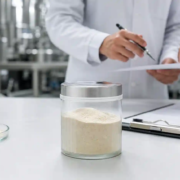
Custom formulations work only when the buyer and supplier define the product target before samples, labels, or bulk orders move forward. For brands working with lumbrokinase powder, that means aligning activity expectations, dosage-form needs, carrier choices, documentation, packaging, and market claim boundaries in writing.
It sounds simple, right? Yet many projects get messy because the first conversation stays too broad: “Can you make capsules?” or “Can you support private label?” A better question is more practical: what exact material, document set, production route, and compliance language will your team need to approve this product safely?
This article explains how B2B buyers can discuss custom lumbrokinase formulations with a supplier without drifting into unsupported health promises. It focuses on ingredient sourcing, formulation planning, quality review, and supply communication for supplement and nutraceutical brands.
What does a custom lumbrokinase formulation usually mean?
A custom lumbrokinase formulation usually means the supplier adjusts the ingredient presentation, blend, dosage form, packaging, or document file to match a buyer’s commercial project. It does not mean the supplier can guarantee finished-product effects, replace local compliance review, or create medical claims for the brand.
In B2B conversations, “custom” may refer to several different requests. One buyer may want a bulk powder with a specific activity range. Another may need a capsule blend with excipients that suit a contract manufacturer. A private-label brand may ask for bottle packaging, label support, and shipping cartons. An importer may only need the raw ingredient in drums with a clean COA and clear origin documents.
The first job is to name the custom request precisely. If a buyer says “custom formulation” while the supplier hears “custom packaging,” the project can lose two weeks before anyone notices. Say it plainly: ingredient specification, powder blend, capsule fill, tablet premix, private-label bottle, sachet, bulk drum, or documentation customization.
There is also a compliance boundary. Lumbrokinase is often discussed in the supplement ingredient market as an enzyme ingredient, but marketing language must be reviewed market by market. A supplier can support ingredient identity, testing, and supply documents. A buyer’s regulatory team or local consultant should review consumer-facing claims before launch.
Which formulation details should buyers define first?
Buyers should define the intended dosage form, target ingredient amount, activity expectation, excipient restrictions, batch size, packaging format, and destination market before asking for a quote. These details help the supplier judge whether the project is technically workable and commercially realistic.
Start with dosage form because it shapes nearly everything else. A bulk powder project is different from a capsule project. A capsule project is different from a tablet premix. Powder flow, moisture sensitivity, particle size, excipient compatibility, and filling behavior can affect cost and lead time. Even if the buyer does not know every technical answer yet, the supplier needs enough context to avoid guessing.
The buyer should also define whether the project is for R&D samples, pilot production, first commercial order, or repeat bulk supply. A sample request may require speed and flexibility. A repeat order needs tighter documentation, stable packaging, and clearer release criteria. These are not the same buying moment.
A practical first brief can look like this:
| Project item | Buyer should provide | Why it matters |
|---|---|---|
| Dosage form | Bulk powder, capsule, tablet premix, bottle, or sachet | Determines process route and material handling |
| Ingredient target | Amount per serving or activity expectation for review | Guides specification discussion without making health promises |
| Excipient limits | Allowed carriers, allergens, animal-origin concerns, color limits | Prevents formulation rework after sampling |
| Market | Destination country or sales channel | Shapes document and label-review questions |
| Order stage | R&D, pilot, launch, or repeat supply | Sets realistic lead time and testing depth |
| Packaging | Drum, bag, bottle count, carton plan, or pallet preference | Affects shipping, storage, and production handling |
That table may look basic, but basic is good here. Clear inputs reduce the chance of a beautiful sample that cannot become a repeatable order.
How should activity and specification be discussed?
Activity and specification should be discussed as quality targets and testable release criteria, not as promised consumer outcomes. The buyer should ask how the supplier defines activity, which test method is used, and how batch results are shown on the COA.
Lumbrokinase purchasing often becomes confusing because different teams use different language. Sales teams may talk about potency, formulators may talk about dosage, QA teams may ask for method details, and marketing teams may ask what they can say on the label. Those conversations should be connected, but they should not be blended into one vague claim.
A cleaner approach is to separate three layers. The ingredient specification describes the material quality target. The COA reports batch results. The finished-product claim language is reviewed later under destination-market rules. When those layers stay separate, the project becomes much easier to manage.
Ask the supplier for the routine specification first. Then ask whether alternative grades, custom activity ranges, or different carrier systems are available. If the buyer needs a higher or narrower activity range, the supplier should explain whether that requires different production planning, minimum order quantity, testing cost, or lead time.
Buyers should also remember that custom does not always mean better. A standard grade with stable documentation may be more suitable than a narrow custom grade that creates sourcing risk. The best formulation is the one the buyer can support consistently, not the one that looks most impressive in a single sample.
What excipients and carriers need early review?
Excipients and carriers need early review because they can affect flow, capsule filling, stability, label declarations, allergen statements, and customer acceptance. Buyers should ask what carriers are present in the material and whether alternatives are available for special projects.
For powder blends, excipients may help with flow, anti-caking behavior, fill weight, or uniformity. For capsules, the buyer may need to think about capsule shell material, fill weight, appearance, and whether the blend can run on the intended production line. For private label products, even small carrier details can become label questions.
Here is the part many teams underestimate: excipient changes can trigger more than a technical adjustment. They can change the document file. A different carrier may require a revised specification, allergen statement, GMO statement, label review, and stability discussion. If a buyer asks for a carrier change after the sample has already passed internal review, the clock often starts again.
That is why the supplier should not receive only a target ingredient name. The supplier should receive restrictions. No certain allergens? Vegetarian capsule shell? Color preference? Flow requirement? Tablet compatibility? Destination-market labeling limits? Spell it out early.
A good supplier will say where customization is realistic and where it may add cost or risk. That honesty matters more than a quick “yes” that later turns into repeated sample revisions.
How do buyers compare bulk powder, premix, and private label routes?
Buyers should compare bulk powder, premix, and private-label routes by control level, lead time, documentation burden, production responsibility, and minimum order quantity. Each route can work, but each one places responsibility in a different part of the supply chain.
Bulk powder usually gives the buyer or contract manufacturer the most control. The buyer can manage the finished formulation, choose capsule or tablet partners, and handle label review. The tradeoff is that the buyer must coordinate more work. Premix may save formulation time, but the buyer needs stronger clarity on excipients and blend uniformity. Private label can simplify sourcing for smaller brands, but it requires careful packaging, artwork, claims, and market compliance review.
The decision is not only about price. It is about where your team has strength. A brand with a strong contract manufacturer may prefer bulk powder. A small importer testing demand may prefer a simpler private-label route. A supplement company with a unique formula may need a premix or capsule blend, but only after technical review.
| Route | Useful when | Main buyer risk |
|---|---|---|
| Bulk ingredient powder | The buyer has formulation and manufacturing partners | More coordination across QA, production, and packaging |
| Custom premix | The buyer needs a blend ready for downstream production | Excipient, uniformity, and documentation details must be tight |
| Capsule filling support | The buyer wants a defined capsule form for launch testing | Fill weight, shell choice, and label review can slow approval |
| Private-label bottle | The buyer wants a packaged product route | Artwork, claims, market rules, and shelf-life files need review |
| Custom packaging only | The ingredient is standard but logistics or branding differ | Packaging changes may still affect cost and lead time |
Think of the route as a production map. If the map is vague, the supplier may quote one route while the buyer is imagining another.
What documents should support a custom formulation project?
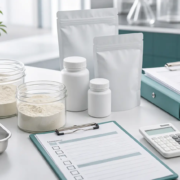
A custom formulation project should be supported by a specification, COA, formula or blend description when applicable, allergen and GMO statements when needed, packaging details, storage guidance, shelf-life notes, and sample traceability records. The document set should match the exact project route.
For bulk powder, the core file may be enough at the sample stage: product specification, COA, sample label, storage conditions, and packaging information. For a premix or capsule project, the buyer may also need a formula summary, excipient list, capsule shell information, and process notes that a contract manufacturer can review.
If private label is involved, the document burden becomes broader. Artwork files, label claims, supplement facts panels, warnings, language translations, barcode placement, carton marks, and destination-market requirements may enter the discussion. The supplier can help organize files, but the buyer should still own final label approval.
One very practical habit: keep a version history. A sample with carrier A, a revised sample with carrier B, and a launch batch with a different capsule shell should not be stored under the same vague file name. Version confusion can cause a QA team to approve the wrong document or ask the same question three times.
The document file should make the project boring in the best way. Same name, same lot, same formula version, same packaging plan, same test language. Boring paperwork keeps production calm.
How can buyers keep health language compliant?
Buyers can keep health language compliant by discussing lumbrokinase as an ingredient with quality, activity, and formulation attributes while avoiding disease-treatment promises or guaranteed outcomes. Consumer-facing claims should be reviewed by qualified local compliance support before launch.
This is especially important for enzyme ingredients. A technical discussion can quickly turn into marketing language if nobody slows it down. A supplier may explain product identity, activity testing, batch consistency, storage, and packaging. That is suitable B2B content. A brand should be cautious with statements that suggest prevention, treatment, cure, or measurable health results unless the market rules and evidence allow that language.
For internal briefs, use wording like “activity target for formulation review,” “batch-level COA,” “quality specification,” and “ingredient documentation.” Avoid turning those phrases into consumer promises. A COA supports quality review; it does not approve ad copy.
Search and AI systems also reward clear, responsible language. Google and other retrieval systems can surface content that answers buyer questions without exaggeration. A careful article, product page, or FAQ can explain what documents to request, what to test, and what to confirm while staying away from risky medical claims.
That restraint is not weak marketing. For B2B buyers, restraint often signals a supplier that understands the real approval process.
What checklist should buyers send before requesting a quote?
Buyers should send a short formulation checklist before requesting a quote so the supplier can price the right route and flag technical issues early. The checklist should cover product target, dosage form, documents, packaging, and market boundaries.
Use this before asking for samples or a formal quotation:
- Target product route: bulk powder, premix, capsules, tablets, sachets, or private-label bottle.
- Required ingredient name and target grade for internal review.
- Activity expectation or specification range to discuss with QA.
- Excipient limits, capsule shell preference, and allergen restrictions.
- Sample quantity, trial-order quantity, and expected annual demand if known.
- Destination market and sales channel for compliance planning.
- Documents required before sample approval and before bulk shipment.
- Packaging format, label language, carton marks, and pallet needs.
- Testing preferences, including third-party testing if the buyer requires it.
- Claim-language boundary: ingredient quality only, no unsupported health promises.
A supplier can answer faster when the brief is specific. Better yet, the answer will be useful instead of polite but thin.
When is customization worth the extra work?
Customization is worth the extra work when it solves a real production, market, packaging, or customer requirement that a standard ingredient offer cannot meet. It is not worth it when the change only makes the project sound more special while adding cost, delay, or document risk.
For example, a custom carrier may be worth discussing if a capsule filling line needs better flow. A revised package size may be worth it if the buyer’s warehouse or contract manufacturer requires a certain handling format. A private-label route may be useful when the buyer wants a faster market test and does not yet have manufacturing partners.
On the other hand, a custom activity target may not be useful if the buyer cannot explain why it matters or how it will be tested. A complex blend may not help if the brand has not reviewed label rules. A tiny first order with heavy customization may not be commercially sensible because setup time can exceed the value of the order.
The supplier and buyer should be honest about that. Custom formulation is not magic. It is a set of controlled choices. When those choices are tied to a real project need, custom work can support a stronger launch. When they are vague, they create extra email, extra samples, and extra stress.
Frequently Asked Questions
Can Venacorebio support custom lumbrokinase formulation discussions?
Yes. Buyers can discuss ingredient grade, powder handling, capsule or premix routes, packaging needs, and document requirements. Final market claims and finished-product labels should still receive local compliance review.
What is the first detail to define for a custom lumbrokinase project?
The dosage form is usually the first practical detail. Bulk powder, premix, capsule, tablet, and private-label bottle projects each require different production and documentation planning.
Should activity be treated as a marketing claim?
No. Activity should be treated as a quality and formulation discussion supported by specification and COA review. Consumer-facing claims need separate review for the destination market.
Can buyers request excipient changes?
They can ask, but excipient changes may affect flow, label declarations, allergen statements, stability review, lead time, and minimum order quantity. The request should be defined before sampling.
What documents should come with a custom formulation sample?
A practical sample file may include a specification, COA, sample label, excipient or formula summary when applicable, storage guidance, and packaging information tied to the exact sample version.
Send Your Lumbrokinase Formulation Brief to Venacorebio
Share your target dosage form, activity discussion, sample quantity, excipient limits, packaging route, destination market, and document checklist. Venacorebio can help you review bulk lumbrokinase powder supply details, sample planning, quality files, and custom formulation questions before you move toward a purchase order.