Earthworm Peptide Safety Overview: Evidence, Quality Controls, and Buyer Questions

Earthworm Peptide Safety Overview: Evidence, Quality Controls, and Buyer Questions
Earthworm peptide safety cannot be established from the ingredient name, a high peptide percentage, or a general statement that a product is natural. A responsible assessment needs the identity of the actual preparation, its manufacturing and batch information, relevant safety evidence, and the proposed conditions of use.
For buyers reviewing earthworm peptide powder, quality qualification and human-use safety assessment are related but different tasks. A certificate of analysis may support acceptance of specified batch attributes. It does not, by itself, demonstrate safety for every person, intake level, application, or destination market.
This overview is for ingredient buyers and product-development teams. It provides questions for qualified scientific, quality, and regulatory review, not a finding that an offered material is safe to consume. It gives no dose recommendation, treatment advice, or claim of market authorization.
Begin With the Identity of the Preparation
Safety evidence must be connected to the material being considered. Ask for an exact product description, source identity, manufacturing summary, composition statement, and relevant analytical information. Clarify whether the material is a mixed protein hydrolysate, a selected peptide fraction, or another specified preparation.
Peptides are chains of amino acids. The word peptide does not identify one substance or one uniform composition. A product described as earthworm-derived may need additional information about the source and processing before a reviewer can determine whether published evidence is relevant.
Request disclosure of added ingredients and the basis of any reported peptide content. A description of the active fraction is not necessarily a description of the entire powder as supplied. Keep product names consistent across the specification, sample label, analysis report, quotation, and safety file.
If those records conflict, resolve the identity question first. Reviewing a large collection of studies is not useful when the team cannot explain which preparation it intends to purchase or how that material relates to the evidence being cited.
Separate Batch Quality From Safety Under Intended Use
A batch-quality decision asks whether a specified lot meets agreed requirements. A safety assessment asks whether the evidence supports the proposed use of the identified material. Neither decision should be substituted for the other.
| Information | Question it may help answer | What it does not establish alone |
|---|---|---|
| Specification | What attributes are required for the offered material? | Safety for every use or population |
| Lot-specific analysis | What did the reported tests find in that lot? | Untested hazards or unrestricted long-term use |
| Process summary | How is the described material produced and controlled? | That all possible concerns are eliminated |
| Research report | What happened to a defined preparation in a stated model? | Equivalence to every commercial powder |
| Regulatory review | What requirements apply to a proposed product and market? | A global permission covering other applications |
For operations within its U.S. dietary supplement scope, the FDA manufacturing compliance guide addresses specifications, testing, and quality responsibilities. That framework is not a product-specific authorization for earthworm peptides.
Ask reviewers to record the question answered by each document and the questions left open. This prevents a complete-looking folder from being mistaken for a complete assessment.
Review Source and Manufacturing Information
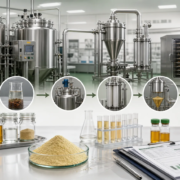
Source and process records help a reviewer understand which concerns need investigation. Request the source description, traceability approach, and the manufacturing stages relevant to the final ingredient. Do not infer production controls from a generic factory photograph.
Ask how incoming materials are accepted, how processing aids and enzymes are identified, and how the finished preparation is connected to its manufacturing lot. Where a supplier protects detailed settings, request a summary sufficient for the review purpose and appropriate access to essential quality information.
Also ask what happens after a material or process change. A change in source, processing route, added ingredient, or fraction description may require reassessment of how existing evidence applies. The responsible reviewer should decide the significance of the change rather than procurement assuming that an unchanged trade name means an unchanged material.
Keep the answers specific to the product under consideration. A manufacturer may handle several earthworm-derived ingredients, but documentation for a protein powder, enzyme preparation, or different peptide fraction should not silently be used as evidence for another product.
Use a Risk-Based Contaminant Review
A contaminant review should identify relevant concerns, suitable methods, and applicable acceptance criteria for the actual material and destination. Ask qualified staff to determine the testing plan rather than copying a short list from a supplier brochure.
A 2023 study of Eisenia andrei powder reported measured metals and highlighted safety considerations. It did not test every commercial earthworm peptide preparation. The useful lesson is to request material-specific evidence, not to transfer the study’s measurements to a supplier’s lot.
Ask the quality reviewer whether metals, microbiological concerns, process-related residues, or other hazards require investigation. A process described as washed, filtered, or hydrolyzed should not be treated as proof that all such concerns have been removed. The evidence needs to address the relevant attribute in the actual product.
When reading a report, check the sample identity, date, laboratory, method, units, reporting basis, and whether the stated result is suitable for comparison with the applicable criterion. A result recorded as not detected needs its analytical context; it is not a claim of absolute absence.
Read Peptide Research at the Level It Actually Supports
Laboratory findings can help identify research questions, but they should not become broad human safety statements. Check the test material, model, exposure conditions, duration, endpoints, and limitations before using a publication in a safety file.
For example, a 2025 earthworm protein hydrolysate study investigated a defined preparation using a hepatocyte model and analytical work. Such experiments are not clinical evidence establishing safe long-term use of any commercial peptide powder. This distinction also applies when a paper reports favorable cell-viability observations.
Ask the assessor to explain whether evidence concerns the whole hydrolysate, a selected fraction, or individual identified peptides. A result from one fraction should not be assigned to the complete powder without a justified relationship. Likewise, a study of a different source or process may require additional explanation before it can support the proposed material.
This overview does not determine that human evidence is sufficient or insufficient for every preparation. It explains why that decision requires a defined material and a qualified assessment of the relevant evidence.
Keep Allergy and Individual Suitability Questions Open
Do not describe an earthworm peptide ingredient as hypoallergenic or suitable for people with allergies merely because it has been hydrolyzed or divided into smaller fractions. Such a claim needs evidence appropriate to the actual preparation and intended users.
Ask for the source declaration, relevant added-ingredient information, and the manufacturer’s cross-contact review where available. Have qualified personnel determine what further assessment or labeling is needed. A statement about the absence of named ingredients should not automatically be treated as a complete evaluation of individual allergy risk.
The FDA’s consumer guidance on supplements notes that supplements can present risks and may interact with medicines, and recommends discussion with a health professional. That general guidance does not establish a particular interaction profile for earthworm peptides. This article does not supply one.
People considering personal use, especially those with medical conditions, medication use, pregnancy, or other individual concerns, should seek appropriate professional advice rather than relying on a B2B ingredient page. An unqualified technical sample should not be treated as a consumer-use product.
Assess the Proposed Use, Not Just the Powder
The safety review should describe the intended application, user group, route, exposure pattern, and finished-product context. This article does not supply a safe intake level or a formula. Those decisions require evidence and expertise specific to the proposed product.
A raw-material specification cannot settle every question about a finished formulation. Ask who will review the complete ingredient list, manufacturing conditions, proposed label, and use instructions. If several businesses are involved, identify which party owns each decision and which records must be exchanged.
Keep research samples, formulation trials, and commercialization as distinct stages. A sample may be supplied for analytical evaluation without being cleared for consumption or sale. A successful physical trial does not establish suitability for children, pregnancy, prolonged use, or any other population or condition that was not assessed.
If the project changes, update the review brief. Moving from a technical ingredient comparison to a consumer supplement launch is a material change in purpose, even when the same supplier and product name remain involved.
Check Destination-Market Requirements Separately
Market eligibility must be reviewed for the material and proposed application in the destination jurisdiction. A supplier’s ability to ship a sample is not the same as permission to sell a consumer product containing it.
For the United States, the FDA background on new dietary ingredients explains that manufacturers and distributors have responsibilities concerning ingredient status and safety evidence. Whether a particular preparation qualifies as a dietary ingredient, requires a notification, or can be used in a proposed product needs a product-specific review.
Do not interpret a notification reference, facility registration, analysis report, or commercial export document as a universal product approval. Ask what each record covers and whether its identity and conditions match the planned use. Evidence for one product category should not automatically be carried into another.
Have the reviewer document the jurisdiction, material description, intended use, source relied upon, and unresolved questions. This creates a clear basis for deciding whether the project can proceed or needs further information.
Build an Evidence File That Shows Its Limits
A useful safety file includes a gap list, not only favorable documents. It should let another qualified reviewer see which preparation was considered, which evidence was used, and which decisions remain conditional.
| Review area | Practical record | Reason to pause |
|---|---|---|
| Identity | Agreed description and supporting analytical information | Sample, specification, and study material cannot be related |
| Batch quality | Lot-linked reports and approved acceptance criteria | Missing tests, unclear methods, or mismatched lot references |
| Safety evidence | Qualified assessment of relevant studies and their limits | Cell findings are presented as unrestricted human safety |
| Use conditions | Defined application and intended users | No one has assessed the actual proposed use |
| Market review | Jurisdiction-specific conclusion and open questions | A general certificate is being treated as authorization |
Assign an owner and next action to each gap. Some gaps can be resolved through corrected documentation; others may need testing, scientific review, a narrower application, or a decision not to proceed. Avoid recording a conditional review as an unconditional approval.
Make Purchasing Decisions That Preserve Traceability
When a qualified team permits the project to proceed, connect the purchase to the reviewed material and conditions. Reference the specification version, approved document package, sample relationship, required batch records, and change-notification expectations.
Keep a record of why the current evidence was considered relevant. If a later offer uses a different composition, process, or source description, the team can then identify which parts of the earlier review need revisiting. This is more reliable than maintaining only a supplier name on an approved-vendor list.
Marketing should receive a clear statement of the review’s boundaries. A batch accepted for development work should not be advertised as clinically proven safe. A preliminary discussion of possible applications should not become a disease claim or a promise of universal tolerance.
Responsible sourcing may result in proceeding, seeking more evidence, restricting the project, or declining the material. The goal is a justified decision about a defined use, not a favorable conclusion at any cost.
FAQ
Are earthworm peptides automatically safe because they are natural?
No. Natural origin is not a complete safety assessment. Review the actual preparation, relevant evidence, batch quality, intended use, and destination requirements with qualified personnel.
Does a passing certificate of analysis prove human safety?
No. It reports the stated tests for an identified material or lot. It does not establish every untested attribute, individual suitability, or safety under all conditions of use.
Does hydrolysis prove an ingredient is hypoallergenic?
Do not make that inference from the process name or molecular-weight description alone. Request evidence relevant to the actual material and have qualified reviewers assess the intended claim and users.
Can a cell experiment establish a safe daily intake?
A cell experiment alone does not provide a justified consumer dose recommendation. The material, exposure, endpoints, and broader evidence need professional assessment. This article recommends no intake level.
What should a buyer request before sampling?
Request a clear material description, specification, available batch reports, relevant safety information, process summary, and market-document scope. Explain the intended use and ask which essential questions remain unresolved before dispatch.
Send Your Ingredient Inquiry
Discuss your earthworm peptide evaluation with Venacore Bio. Send the destination country, intended application, required material description, quality checklist, and safety-document needs. Ask the team to confirm what information and sample support are actually available before your qualified reviewers decide the next step.