Earthworm Protein Manufacturing Process: What B2B Buyers Should Review
Earthworm Protein Manufacturing Process: What B2B Buyers Should Review
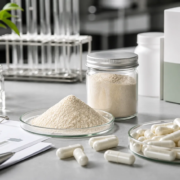
The earthworm protein manufacturing process matters because it turns a sensitive biological raw material into a documented ingredient that a food, supplement, or animal nutrition team can actually evaluate. Buyers reviewing earthworm protein powder should look past the simple product name and ask how raw material control, cleaning, extraction, drying, milling, testing, packing, and batch release are handled.
That may sound like factory paperwork, but it is really buyer protection. A smooth sample means little if the next lot cannot match it. A nice protein number means little if the COA does not connect to the batch. The best sourcing conversations start with the manufacturing flow because the flow shows where quality is built, checked, and recorded.
This guide explains the process in practical B2B language. It does not make disease claims, consumer promises, or finished-product label decisions. It focuses on ingredient identity, process control, documentation, and the questions buyers should bring to a supplier before moving from a sample to a purchase order.
What does the earthworm protein manufacturing process include?
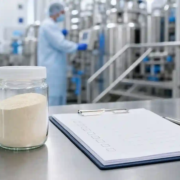
The earthworm protein manufacturing process usually includes raw material selection, cleaning, controlled processing, protein extraction or concentration, filtration, drying, milling, sieving, testing, and packaging. The exact process can vary by supplier, but the buyer should see a clear flow from incoming material to finished bulk powder.
For B2B teams, the process is not a curiosity. It helps explain why two suppliers can quote the same ingredient name while offering very different quality files. One factory may treat earthworm protein as a documented specialty ingredient. Another may treat it as a loose powder with limited controls. The difference shows up later in sample consistency, odor, microbial results, protein content, and the ability to answer regulatory questions.
A useful process overview should name the key stages without exposing confidential production settings. Buyers do not need every internal parameter, but they do need enough detail to understand traceability and risk. How are raw materials received? What is checked before production? How are batches separated? How are moisture, particle size, microbiology, and heavy metals tested? These questions are plain, but they separate serious suppliers from vague ones.
The most buyer-friendly answer is simple: the manufacturing process should be controlled like a quality file, not explained like a sales story. Each stage should have a purpose, a record, and a release standard. When the supplier can explain that flow calmly, procurement, QA, and product development can work with the same facts.
How should raw earthworm material be selected and received?
Raw material selection is the first control point because finished powder quality depends heavily on the source material. Buyers should ask how the supplier qualifies raw material sources, checks incoming lots, separates batches, and records traceability before processing starts.
A practical receiving process may include supplier approval, source identification, visual inspection, foreign matter control, moisture checks, and storage review. Some details will depend on local rules and factory design, yet the buying logic is always the same. If the starting material is poorly controlled, later processing has to fight a problem it did not create. That is never a comfortable place for a buyer.
Traceability should begin here. The incoming lot number should connect to production batch records, finished-product COA, labels, and shipping documents. If a supplier cannot explain how a finished batch links back to raw material intake, the buyer should slow down. It is much easier to clarify traceability before a first order than after a shipment is questioned by a customer or customs broker.
There is also a communication issue. Earthworm-derived ingredients can feel unfamiliar in some markets, so buyers need clean, factual language. A good supplier should explain the raw material source and control system without hype. Documentation builds confidence faster than dramatic wording ever will.
What happens during cleaning and preparation?
Cleaning and preparation remove unwanted material and prepare the raw input for controlled protein processing. Buyers should review this stage because it affects hygiene, odor profile, physical cleanliness, and the repeatability of later extraction or drying steps.
Preparation may include sorting, washing, draining, size reduction, controlled holding, or other factory-specific steps. The buyer does not need proprietary details, but the supplier should be able to describe the control purpose. For example, sorting reduces foreign matter risk. Washing supports hygiene. Time and temperature control can help protect material quality before the next stage.
Some buyers skip this topic because it sounds too basic. That is a mistake. The early physical handling of biological material can affect microbial load, odor, color, and processing yield. If the finished powder is intended for a food or supplement project, small upstream changes can create large downstream questions. A formulator may notice odor. A QA manager may notice microbial variation. A purchasing manager may only notice that repeat orders are harder than expected.
A simple supplier question works well: “What preparation steps are controlled before protein processing, and how are they recorded by batch?” The answer does not need to be long. It should be specific enough to show the factory has a repeatable method rather than a loose routine.
How is protein extracted or concentrated in production?
Protein extraction or concentration is the stage where the supplier separates useful protein-rich material from the prepared raw input. Buyers should ask how the process controls temperature, time, filtration, concentration, and intermediate checks because these factors can affect composition and consistency.
Different suppliers may use different process designs. Some may describe aqueous extraction, enzymatic treatment, filtration, concentration, or separation steps. The important point for procurement is not to collect secret formulas. It is to understand what the supplier controls and what each control is meant to protect. A supplier that can explain the control logic usually gives a buyer a stronger file than a supplier that only says “advanced technology.”
Protein content should be reviewed carefully at this stage. A high number on a sales sheet is not enough. Buyers should ask whether protein content appears on a batch COA, what test method is used, and how normal batch variation is managed. For food or supplement applications, product teams may also care about amino acid profile, odor, solubility, color, and particle behavior. The process can influence all of those details.
Think of this stage like making a consistent ingredient base before any polishing happens. If the base varies, later blending and packaging cannot fully hide the difference. A supplier does not need to promise perfection, but it should show how variation is measured and kept within a stated range.
| Process stage | What buyers should understand | Useful supplier question |
|---|---|---|
| Raw material receiving | Source control and incoming batch identity | How does the finished batch trace back to intake records? |
| Cleaning and preparation | Foreign matter, hygiene, and handling control | Which preparation checks are recorded by batch? |
| Extraction or concentration | Protein-rich material separation and repeatability | What parameters are controlled during processing? |
| Filtration | Removal of insoluble matter and process clarity | How is filtration effectiveness checked? |
| Drying | Moisture control and powder stability | What moisture limit is used for release? |
| Milling and sieving | Particle size, flow, and blending behavior | Can mesh size or particle-size range be adjusted? |
Why do filtration, drying, and milling deserve careful review?
Filtration, drying, and milling shape the final powder’s physical behavior. Buyers should review these steps because they affect moisture, particle size, flow, odor, color, dispersion, and handling during blending, filling, or packaging.
Filtration is often described quickly, but it can be important. It may reduce insoluble material, clarify the process stream, or help prepare material for concentration and drying. Buyers can ask what the supplier checks after filtration. The answer may be as simple as appearance, solids control, or an intermediate quality check, depending on the factory process.
Drying is one of the most visible risk points. If moisture remains too high, powder may cake, clump, or show poorer storage behavior. If processing is too harsh, sensitive quality attributes may change. The supplier should know the moisture target, storage condition, and shelf-life logic. Buyers should also ask whether moisture appears on the COA and whether the result matches the specification sheet.
Milling and sieving decide how the finished powder behaves in real use. A very fine powder may blend well but create dust. A coarser powder may handle more easily but feel less suitable for some direct-consumption concepts. For capsules, tablets, sachets, beverage powders, or premixes, the formulator may need a specific mesh size or flow profile. This is where procurement should bring technical colleagues into the conversation early.
The plain truth is that physical specifications are not boring. They are where many “same ingredient, different experience” problems begin.
Which quality tests should appear before batch release?
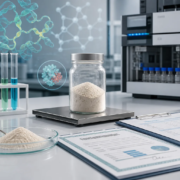
A finished earthworm protein powder batch should be released only after identity, protein content, physical properties, microbial limits, heavy metals, moisture, and other relevant tests are reviewed. Buyers should ask for a COA that matches the actual lot being offered, not a generic example with no batch connection.
The COA should show the product name, batch number, test items, methods where relevant, acceptance limits, results, and release date or manufacture date. The specification sheet should support the same quality story. If the COA says one thing and the sales sheet says another, the buyer should ask for correction before placing an order.
Microbial testing is especially important for biological ingredients. Buyers may request total plate count, yeast and mold, coliforms, Salmonella, E. coli, or other tests according to their market and product category. Heavy metals such as lead, arsenic, cadmium, and mercury may also need review. The supplier should not guess the buyer’s legal limits; the buyer should bring destination-market requirements into the discussion.
For U.S.-oriented food and supplement projects, teams often look at FDA-style categories such as food current good manufacturing practice requirements and dietary supplement cGMP expectations under 21 CFR Part 117 or 21 CFR Part 111, depending on the product pathway. The buyer should confirm the correct pathway with qualified regulatory support. Still, asking suppliers for clean batch records, hygienic handling, and truthful documentation is a sensible starting point in any market.
| Release item | Why it matters | What to compare |
|---|---|---|
| Protein content | Supports formula and label review | COA result against specification range |
| Moisture | Signals caking and storage risk | Finished result against internal release limit |
| Particle size | Affects flow, blending, and mouthfeel | Mesh request against sample behavior |
| Microbiology | Supports safety and import review | Buyer market limits against supplier COA |
| Heavy metals | Needed for many food and supplement reviews | Test report against customer or market limits |
| Appearance and odor | Helps screen batch consistency | Sample notes against repeat-lot results |
How should buyers review packaging and storage?
Packaging and storage protect the released powder after production, so they are part of the manufacturing process rather than an afterthought. Buyers should confirm inner packaging, outer packaging, batch labeling, storage temperature, shelf-life basis, and shipping protection before approving bulk supply.
Earthworm protein powder is commonly packed in food-grade inner bags, then placed in drums, cartons, or other export-ready formats according to supplier capability and buyer needs. The buyer should ask about net weight per package, pallet plan, moisture protection, label content, and whether private label or neutral packaging is available for B2B orders. A clear packaging plan helps the warehouse, customs broker, and contract manufacturer avoid avoidable confusion.
Storage language should be practical. The supplier may recommend cool, dry, sealed storage away from direct sunlight. Buyers should ask how shelf life is supported and whether retain samples are kept. If the buyer needs a longer shelf-life claim for a finished product, that claim should be reviewed separately. Ingredient shelf life and finished-product shelf life are related, but they are not the same thing.
Shipment planning also matters. A first sample may travel quickly by express courier, while bulk drums may face heat, humidity, port delays, or repeated handling. Packaging that looks fine on a sample desk may not be enough for a long international route. Ask early. Nobody enjoys solving packaging damage after the vessel has already arrived.
What manufacturing documents should B2B buyers request?
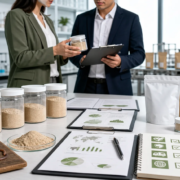
B2B buyers should request a focused document file that proves identity, quality, traceability, and commercial readiness. A useful early file usually includes specification sheet, recent COA, process flow summary, allergen statement, GMO statement, storage guidance, packaging details, and any market-specific tests the buyer requires.
The document list should match the project stage. For an early sample, a product specification and recent COA may be enough to begin internal review. For a trial order, the buyer may need batch-specific COA, invoice naming, packing list language, and shipping labels. For repeat supply, the buyer may ask for change-control expectations, retain sample policy, and third-party testing support.
A checklist keeps the conversation efficient:
- Confirm the exact product name and intended application.
- Request a specification sheet with protein, moisture, particle size, microbial, and heavy metal limits.
- Ask for a recent COA tied to a real batch or sample lot.
- Check whether allergen, GMO, BSE/TSE, irradiation, or vegan/animal-source statements are needed for the market.
- Compare packaging format, net weight, label language, and shelf-life note against your warehouse and manufacturer needs.
- Ask what tests are routine and what tests can be arranged through a third-party lab.
- Keep consumer-facing claims separate from ingredient sourcing data.
That last point matters more than it may seem. Ingredient documents help a buyer make a purchase decision. They do not automatically authorize consumer marketing claims. A supplier can support the technical file, while the buyer’s regulatory team decides what the finished product may say.
How can buyers compare suppliers without overcomplicating the project?
Buyers can compare suppliers by using the same process and document questions for each candidate. The goal is not to build a huge audit program for a small sample; it is to compare identity, consistency, documentation, communication, and commercial fit in a fair way.
Start with the intended product form and target market. Then ask each supplier for the same basic items: specification sheet, COA, sample availability, MOQ, lead time, packaging format, customization range, and document support. When every supplier answers the same questions, the buyer can see the real differences. Price still matters, of course. It just stops being the only thing in the room.
Watch how the supplier responds. Do they answer directly? Do they separate confirmed facts from what needs checking? Do they admit when a third-party test is needed? Do they avoid unsupported health claims? Responsible communication is a quality signal. A supplier that promises everything in the first email may create problems later.
The most useful supplier is not always the cheapest one. It is the one that can support the project from sample to repeat order with clear files, stable supply, and practical claim boundaries. For earthworm protein powder, that mix is worth protecting.
FAQ
Is earthworm protein manufacturing the same at every factory?
No. Suppliers may use different raw material controls, preparation steps, extraction methods, drying conditions, milling settings, and release tests. Buyers should compare the process flow and batch documents, not only the product name.
What is the most important document for earthworm protein powder sourcing?
The COA is usually the first document buyers review, but it should be read together with the specification sheet. A COA shows one batch result, while the specification explains the expected quality range.
Can earthworm protein powder be used in food or supplements?
Possible applications depend on the target market, formulation, regulatory status, and finished-product claims. Buyers should review local rules and avoid assuming that one market’s approach applies everywhere.
Should buyers ask for third-party testing?
Third-party testing can be useful for first orders, strict customer requirements, or regulated markets. Buyers should make sure the report is linked to the same batch being purchased.
What should a first inquiry include?
A strong first inquiry should include the intended application, target market, quantity range, specification needs, packaging format, documentation requirements, and any special testing needed before approval.
Send Your Ingredient Inquiry to Venacorebio
Tell us your target ingredient, specification, order quantity, dosage form, and destination market. Venacorebio can help you review bulk earthworm protein powder sample choices, documentation needs, packaging requirements, and supply details for your B2B project.