Earthworm Protein for Functional Foods: A Practical Guide for B2B Formulators
Earthworm Protein for Functional Foods: A Practical Guide for B2B Formulators
Earthworm protein for functional foods should be evaluated as a specialty protein ingredient with clear specifications, sensory limits, safety testing, and market-compliant claims. For B2B teams, the practical question is whether the ingredient can fit the formula, the label, the supply chain, and the buyer’s quality file.
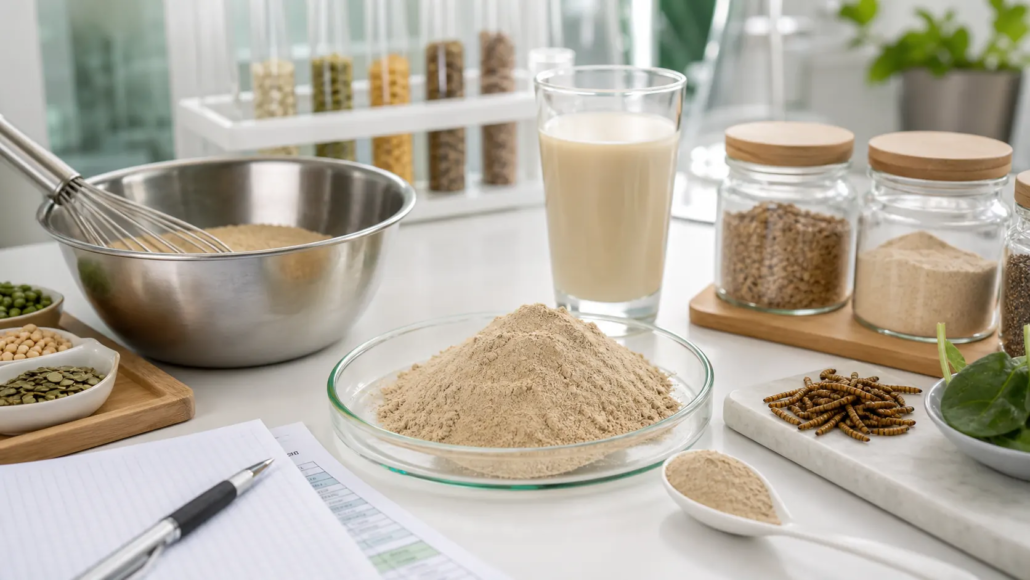
When a brand considers earthworm protein powder, it needs more than a protein percentage. It needs a realistic view of taste, color, solubility, dosage form, documentation, and consumer positioning. That is where a careful supplier conversation earns its keep.
What makes earthworm protein relevant to functional food projects?
Earthworm protein is relevant when a formulation team wants to review an alternative animal-derived protein source with defined quality parameters and B2B document support. It may be considered for niche supplement, nutrition, or functional food concepts where ingredient story, specification, and supplier reliability matter.
Functional food work is not only about adding protein to a recipe. The ingredient has to behave in the formula, survive storage, meet safety checks, and fit the market’s labeling rules. A powder that looks promising on paper can still fail if it tastes too strong, clumps in liquid, or arrives with weak documents.
| Evaluation area | What buyers review | Why it matters |
|---|---|---|
| Nutrition profile | Protein-related index and serving plan | Supports formula design |
| Sensory fit | Color, odor, taste, mouthfeel | Affects consumer acceptance |
| Quality file | COA, specification, limits | Supports buyer approval |
| Market rules | Label and claim review | Reduces compliance risk |
The most useful approach is to treat the ingredient as a technical input first and a marketing story second. A good story cannot rescue a weak product file.
Which functional food formats should buyers review first?
Buyers should first review formats where powder handling, taste control, and serving size can be tested without forcing unrealistic claims. Dry blends, sachets, capsules, nutrition powders, and certain fortified food concepts are common starting points for technical evaluation.
Beverages are attractive, but they can be unforgiving. Solubility, sediment, heat processing, pH, and flavor masking matter. A dry blend may be easier for early review because the ingredient is not immediately challenged by liquid stability. Capsules can reduce taste concerns, but then capsule fill weight and serving count become central questions.
| Format | Main technical question | Early buyer check |
|---|---|---|
| Dry powder blend | Does it mix evenly? | Flow, color, odor, serving size |
| Ready-to-mix drink | Does it disperse well? | Solubility, sediment, flavor |
| Capsule or tablet review | Can the serving fit? | Bulk density and fill weight |
| Fortified food concept | Does processing affect quality? | Heat, moisture, and sensory trial |
The format should be chosen for the target consumer and the real production line. A concept that looks neat in a deck still has to run through mixing, packing, shipping, and customer use.
How should formulators think about taste, color, and solubility?
Formulators should treat taste, color, and solubility as early screening items, not late-stage surprises. These sensory and handling traits can decide whether an earthworm protein concept feels acceptable in a finished product.
A neutral-looking protein powder can still bring a distinct odor or earthy note. That does not automatically make it unusable, but it does mean the flavor system and serving level need honest testing. Color can also matter, especially in light beverages or vanilla-style powders where even a slight beige or brown tone becomes visible.
- Test the ingredient at realistic serving levels, not only tiny lab amounts.
- Check dispersion in the actual liquid or dry mix base.
- Record color change after mixing and after short storage.
- Review odor before and after flavor addition.
- Keep a retained sample for comparison during later supplier checks.
Solubility is another word buyers use loosely. Ask whether the powder dissolves, disperses, or suspends. Those are different behaviors, and consumers notice the difference in the cup.
What quality documents matter for earthworm protein powder?
The most useful quality documents are the product specification, batch COA, microbiology and heavy metal results, storage guidance, packing details, and any agreed support files such as a flow chart or allergen statement. These files help the buyer decide whether the ingredient can enter a formal supplier approval process.
For functional foods, the document set often travels through several hands: R&D, quality, purchasing, regulatory, contract manufacturers, and sometimes retailers. Each team reads the file differently. R&D looks for formula fit. Quality checks limits. Purchasing checks repeatability. Regulatory teams check whether the planned label language is defensible.
| Document | Who uses it | What to check |
|---|---|---|
| Specification | R&D and quality | Protein index, limits, appearance |
| Batch COA | Quality and purchasing | Batch number and test results |
| Storage note | Warehouse and production | Temperature, moisture, shelf-life handling |
| Flow chart | Supplier approval team | Process overview and traceability |
Ask for documents before asking your team to approve a formula. It is easier to reject a weak file early than to rebuild a finished concept after quality review.
How can teams avoid risky health claims?
Teams can avoid risky health claims by describing earthworm protein as an ingredient with quality, nutrition, and formulation attributes rather than as a product that treats or prevents disease. Supplier content should support responsible formulation, not make promises that belong nowhere near a label.
This is especially important for functional foods because the category sits close to health communication. In the United States, FDA and FTC expectations around supplement and food claims require care. In Europe, EFSA-authorized health claims and local rules shape what may appear on labels. Other markets have their own review paths.
A supplier should be able to provide ingredient facts without pushing dramatic wording. Buyers should then have their own regulatory or legal team review final claims, serving directions, warnings, and consumer-facing copy. It is slower than copying a bold claim from a sales sheet, but it is the grown-up way to build a product.
What should buyers ask suppliers before sampling?
Before sampling, buyers should ask about specification, protein-related index, sensory profile, sample batch COA, packing size, shelf-life handling, MOQ, lead time, and available documents. These questions help a formulator decide whether the sample is worth testing.
- What specification is the sample based on?
- Will the sample COA match the actual sample batch?
- What odor, color, and taste should we expect?
- What is the recommended storage condition?
- Which bulk packing sizes are available?
- What documents can be supplied with commercial orders?
- What is the realistic lead time for pilot and bulk orders?
A sample without context is just a pouch on a desk. A sample with a matching COA, storage note, and packing plan becomes part of a real sourcing decision.
How should buyers plan from trial batch to repeat supply?
Buyers should plan repeat supply by approving a written specification, retaining a reference sample, documenting sensory results, confirming packaging, and checking every batch COA. The aim is to make the second and third orders match the approved first order as closely as practical.
Functional food projects often change during development. Flavor is adjusted, serving size moves, packaging changes, and the supplier may suggest a different packing size. Each change should be recorded. Version control sounds boring until a contract manufacturer asks which sample was approved and nobody can remember.
| Stage | Buyer action | Result |
|---|---|---|
| Sample review | Record sensory and COA match | Clear go or no-go decision |
| Pilot order | Test processing and packing | Real production feedback |
| Commercial order | Approve spec and retained sample | Repeatable purchasing target |
| Repeat order | Compare COA and sensory notes | Early drift detection |
Good repeat supply is built through plain habits. Keep the records, compare the batches, ask direct questions, and avoid letting a promising ingredient become a messy project file.
How should procurement and R&D work together on this ingredient?
Procurement and R&D should work together by using one shared evaluation file for specification, sample notes, sensory results, document review, price tiers, and supplier communication. When the teams work from the same file, the ingredient is judged as both a formula input and a supply item.
R&D may focus on taste, color, dispersion, and serving level. Procurement may focus on price, MOQ, lead time, and payment terms. Quality may focus on COA, microbial limits, heavy metals, and storage. All three views are valid. The project becomes messy only when each team keeps its own version of the truth.
| Team | Main concern | Shared record to keep |
|---|---|---|
| R&D | Formula fit and sensory result | Sample notes and use level |
| Quality | Specification and COA review | Approved spec and retained sample |
| Procurement | Price, MOQ, and repeat supply | Quote history and supplier replies |
| Regulatory review | Label and claim language | Approved wording and market notes |
A simple shared file can prevent a costly restart. If R&D approves a sample but procurement later buys a different specification because the quote looked similar, the finished product may change. That is not a supplier problem alone. It is a handoff problem.
Ask the supplier to keep the product name, batch number, and specification version consistent across the sample, COA, quote, and invoice. Consistent naming sounds small, but it makes internal review much easier.
What commercial questions matter after the formula works?
After the formula works, buyers should ask commercial questions about MOQ, packing size, lead time, price tiers, shelf-life handling, repeat-order availability, and document timing. Formula success is only the first gate; the ingredient also has to fit real purchasing and production schedules.
A powder that performs well in a bench sample may still create pressure if the MOQ is too high, the packing size does not fit the factory, or the lead time is too long for forecast demand. This is why commercial review should start before the final formula is frozen.
- Ask for sample, pilot, and commercial price tiers.
- Confirm the standard bag or carton size before factory trial.
- Check whether the supplier can reserve or repeat the same specification.
- Ask how long COA and shipping documents take after production.
- Confirm storage conditions with your warehouse or contract manufacturer.
The cleanest path is usually sample review, pilot production, commercial forecast, then repeat-order control. Skipping the pilot may save a few weeks, but it can move all the risk into the first commercial shipment. That is rarely where a brand wants to learn.
How can content teams describe earthworm protein responsibly?
Content teams should describe earthworm protein through ingredient identity, protein content, formulation role, quality checks, and supply documents. They should avoid medical promises and avoid implying that a food product can treat or prevent a disease.
Functional food marketing often wants a sharp story. That is understandable; crowded shelves are loud. Still, the safest story is built from facts the buyer can support: what the ingredient is, how it is specified, how it is tested, and why it fits the chosen product format.
| Safer wording area | Example focus | Risky direction to avoid |
|---|---|---|
| Ingredient identity | Specialty protein ingredient | Medical outcome promise |
| Formulation role | Protein source for concept review | Guaranteed body effect |
| Quality | Batch COA and specification | Unsupported purity claim |
| Use case | Nutrition powder or capsule review | Disease-related positioning |
A supplier can help by providing neutral ingredient information and quality files. The brand’s own regulatory review should decide final consumer wording. That split of responsibility keeps the supplier conversation useful and keeps the finished product closer to the rules of the target market.
Frequently Asked Questions
Can earthworm protein be used in functional foods?
It can be reviewed as a specialty protein ingredient for functional food concepts, but each formula, market, label, and safety file needs its own technical and compliance review.
What should formulators test first?
Start with taste, odor, color, dispersion, serving size, and document match. These early checks reveal whether the ingredient can fit the intended product format.
Is earthworm protein powder the same as earthworm peptide powder?
No. Earthworm protein powder and earthworm peptide powder may differ in processing, specification, sensory traits, and application review. Buyers should request the exact specification for each ingredient.
Can a supplier guarantee consumer health benefits?
A responsible supplier should not guarantee disease or medical outcomes. Buyers should focus on ingredient quality and have final claims reviewed under local rules.
What documents should come with earthworm protein powder?
Useful documents include a specification sheet, batch COA, packing details, storage guidance, and other agreed support files such as a flow chart or allergen statement.
Send Your Ingredient Inquiry to Venacorebio
Tell us your target ingredient, specification, order quantity, dosage form, and destination market. Venacorebio can help you review samples, documentation needs, packaging requirements, and bulk supply details for earthworm protein powder.