How Earthworm Peptides Are Produced: A B2B Process Overview
How Earthworm Peptides Are Produced: A B2B Process Overview
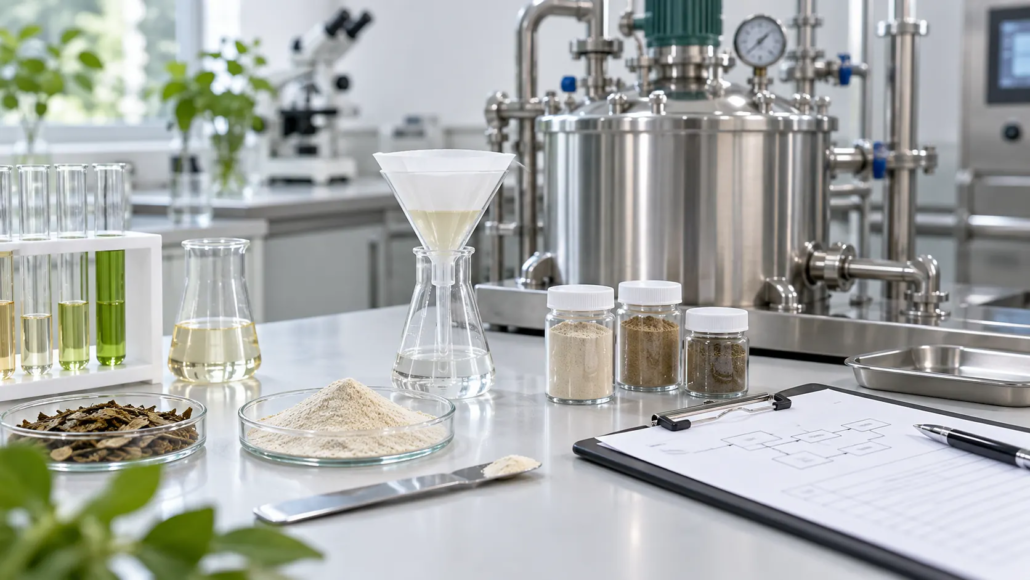
Earthworm peptides are produced by turning earthworm-derived protein material into a more peptide-focused powder through controlled handling, processing, separation, drying, testing, and packing. For B2B buyers, the production story matters because it affects identity, consistency, sensory behavior, documentation, and repeat supply. A buyer reviewing earthworm peptide powder should treat production as a quality-control topic, not as a vague origin story.
This article explains the common production logic behind earthworm peptide ingredients without claiming a single universal process for every factory. Actual methods, equipment, parameters, and quality standards can differ by supplier and product specification. The useful buying question is whether the supplier can explain the controlled process behind the material being quoted, provide batch documents, and support compliant ingredient language for the buyer’s target market.
Why production method matters to B2B buyers
The production method shapes how a raw biological material becomes a commercial ingredient. For supplement brands, functional food developers, ingredient distributors, and contract manufacturers, production affects more than appearance. It can influence powder behavior, solubility expectations, odor control, batch variation, document review, storage planning, and sample approval. If the production story is unclear, the buyer has less confidence in future repeat orders.
A serious supplier does not need to reveal every confidential process detail, but it should be able to describe the main stages in a practical way. Buyers should be able to understand how raw material is selected, cleaned, processed, converted into peptide-focused material, dried, milled, tested, and packed. That level of clarity helps the buyer’s quality team decide what questions to ask before sample approval.
Production also matters for claim control. Earthworm peptide powder should be discussed as an ingredient that needs formulation and market review. It should not be presented as a guaranteed health result. A supplier that explains production and testing carefully is usually better prepared to support responsible product communication than one that relies on broad health language.
Raw material selection and traceability
Production begins with raw material control. The supplier should have a defined way to source, receive, inspect, and record earthworm-derived raw material before processing. Buyers do not need romantic storytelling about the origin. They need traceability, acceptance criteria, and a way to connect finished batches back to controlled inputs.
Raw material review may include appearance checks, supplier records, storage conditions, and basic contamination control. The exact checklist depends on the factory and product specification. What matters for the buyer is that the supplier can explain how unsuitable raw material is rejected and how accepted material is recorded for batch production.
Traceability helps when a later question appears in quality review. If a sample has an unusual sensory profile, if a customer asks for more documents, or if an importer needs batch information, the supplier should be able to trace the material through production records. A low-cost ingredient without traceability can create expensive uncertainty.
Cleaning, preparation, and controlled processing
After raw material acceptance, the material usually needs cleaning and preparation before peptide-focused processing. The purpose is to reduce unwanted impurities, prepare the material for controlled conversion, and keep the production environment consistent. The exact operations may differ by facility, but buyers should expect the supplier to have defined handling steps rather than improvised production.
Controlled preparation is important because biological raw materials can vary. Moisture, particle size, storage time, and handling conditions may affect later processing. Suppliers should manage these variables with documented procedures. For a buyer, the key question is not whether the process sounds complex. The key question is whether the supplier can keep it repeatable.
This stage is also where hygiene, equipment cleaning, and batch separation become important. Buyers sourcing for B2B applications should ask how the factory prevents mix-ups, how batches are identified, and how production records are maintained. These operational details often matter more than marketing language.
Enzymatic hydrolysis and peptide formation
Many earthworm peptide production discussions refer to enzymatic hydrolysis. In simple terms, hydrolysis uses enzymes under controlled conditions to break larger protein material into smaller peptide-focused fractions. Buyers should treat this as a process concept that needs supplier confirmation, not as a promise of any specific health effect.
The hydrolysis stage can be influenced by enzyme choice, temperature, time, pH, solid-liquid ratio, and process control. These details are usually part of the supplier’s technical know-how. A buyer does not always need full confidential parameters, but the supplier should be able to confirm that the process is controlled, documented, and linked to the finished product specification.
Peptide-focused processing should connect to measurable quality items. For example, the supplier may track appearance, odor, solubility behavior, moisture, ash, protein-related values, or other specification items that are relevant to the product. If a buyer requires a particular test method or quality marker, that requirement should be discussed before sampling and quotation.
Buyers should also ask how the supplier handles process records. A useful answer may describe batch numbers, production dates, internal checks, retained samples, and the way deviations are reviewed. These details do not replace buyer-side testing, but they show whether the supplier treats peptide production as a controlled ingredient operation. When the process record is weak, later questions about odor, color, moisture, or batch variation become harder to resolve.
| Production stage | Main purpose | Buyer question |
|---|---|---|
| Raw material control | Confirm suitable source material and traceability | How is accepted material recorded by batch? |
| Preparation | Clean and prepare material for processing | What handling controls reduce variation? |
| Hydrolysis | Convert protein material toward peptide-focused fractions | Which quality items confirm process consistency? |
| Separation | Remove unwanted solids or process residues | How is clarity or powder quality checked? |
| Drying and milling | Create a stable powder form for packing | How are moisture and particle behavior controlled? |
Separation, concentration, and drying
After hydrolysis or related conversion steps, the material usually needs separation and concentration before it becomes a finished powder. Separation may remove coarse residues or unwanted fractions. Concentration may prepare the material for efficient drying. These stages affect yield, appearance, odor, and handling behavior.
Drying is one of the most important stages for finished powder stability. The goal is to create a powder that can be packed, stored, shipped, and used in downstream product development. Buyers should ask how moisture is controlled, how the powder is protected during handling, and which specification items are checked before release.
Milling or sieving may follow drying if the powder needs a more consistent particle profile. The buyer should not assume a particle size or flow behavior unless it appears in the specification or is confirmed by the supplier. If the material will be used in capsules, tablets, sachets, beverages, or blends, sample testing is still important.
Testing and batch release
Testing connects the production process to the buyer’s quality file. A finished batch should be reviewed against agreed specification items before release. The COA should match the batch, not serve as a generic document. Buyers should check whether the COA includes the product name, batch number, test items, methods where available, results, and release date.
Common review areas may include appearance, odor, moisture, ash, protein-related values, microbiological items, heavy metals, and other project-specific quality points. The exact list should come from the supplier’s product specification and the buyer’s market requirements. Missing values should stay marked for confirmation rather than being filled from another product or industry habit.
Batch release is also a communication checkpoint. If a buyer needs extra testing, special document language, or pre-shipment samples, this should be discussed before production or before goods are released. Late requests can delay shipping or create cost changes.
For repeat orders, buyers should keep prior COAs, sample notes, and receiving records together. This makes it easier to compare the next batch with the approved material and to spot changes that need discussion. A stable production partner should welcome this kind of review because it supports cleaner communication, faster reorders, and fewer surprises after goods arrive.
| Document or check | What it helps confirm | When to request it |
|---|---|---|
| Specification sheet | Target product identity and quality range | Before sample approval |
| COA | Batch-level test results | For samples and each bulk shipment |
| MSDS or safety document | Handling and storage guidance | Before import or warehouse review |
| Packing details | Inner bag, carton, label, and storage plan | Before purchase order confirmation |
| Export documents | Shipment and customs support | Before final shipping arrangement |
Packing, storage, and shipment preparation
Once the powder passes batch review, packing must protect the material during storage and transport. The supplier should use suitable inner packaging, cartons, labels, and sealing practices. Buyers should confirm whether the packing format fits warehouse handling, sample retention, local labeling, and customer requirements.
Storage guidance matters because powder ingredients can be sensitive to moisture, heat, odor transfer, or poor sealing. The supplier should provide reasonable storage instructions based on the product file. Buyers should avoid adding unverified shelf-life claims unless the supplier has supporting documentation for the exact material and packaging.
Shipment preparation should include document review, carton marks, batch labels, and agreed shipping terms. Importers and distributors should confirm the destination market’s requirements early. A production process may be well controlled, but a weak shipment file can still delay the order.
What buyers should ask before approving a supplier
Buyers should ask process questions that reveal whether the supplier can support commercial supply. Good questions are practical: how raw material is controlled, how batch traceability works, which testing items are routine, what documents come with samples, how packing is handled, and what lead time applies to pilot and bulk orders. These questions are more useful than asking for broad claims.
The buyer should also ask how the supplier manages changes. If raw material source, process route, specification, packaging, or document format changes, how will the buyer be informed? Change communication is essential for brands that need steady product files and repeat orders.
Finally, buyers should compare the process explanation with the sample. The powder should be reviewed for appearance, odor, blending behavior, solubility expectations, and document fit. A supplier’s production story has value only when it matches the material and paperwork delivered to the buyer.
How to read production claims carefully
Production claims should be specific enough to verify and cautious enough to stay responsible. Terms such as enzyme hydrolysis, controlled drying, batch testing, or quality management can be useful when they are connected to documents and supplier answers. They are less useful when they appear as broad marketing language without proof.
Health-related statements need special care. Earthworm peptide ingredients may be discussed in nutrition or specialty ingredient contexts, but buyers should avoid disease claims, guaranteed outcomes, or language that turns a raw material into medical advice. Finished-product wording must be reviewed under the buyer’s market rules.
A practical production overview should help the buyer understand risk. It should answer what is controlled, what is tested, what is documented, and what remains for buyer-side confirmation. That is the difference between useful supplier communication and decorative content.
FAQ
Are all earthworm peptides produced the same way?
No. Suppliers may use different raw material controls, process routes, testing items, and specifications. Buyers should request the product-specific process overview and documents for the material being quoted.
What is enzymatic hydrolysis in earthworm peptide production?
It is a controlled process concept where enzymes help break larger protein material into smaller peptide-focused fractions. The exact conditions and test items should be confirmed with the supplier.
Which documents should a buyer request?
A buyer commonly requests a specification sheet, COA, MSDS or safety document, storage guidance, packing details, and export documents that match the destination market and project stage.
Can production details predict product performance?
Production details help buyers assess consistency and quality control, but application performance still requires sample testing in the buyer’s formula, process, and market context.
How can buyers avoid unsupported health claims?
Discuss earthworm peptide powder as an ingredient with specifications, documents, and formulation review. Avoid disease, treatment, prevention, cure, or guaranteed effect language unless legally reviewed and supported for the finished product.
Send your ingredient inquiry
Send your ingredient inquiry with target application, sample needs, specification questions, document checklist, order quantity, and destination market. Venacorebio can help review whether the current earthworm peptide powder option fits your B2B production, quality, and supply review.