
Earthworm Protein Amino Acid Profile Explained for B2B Formulators
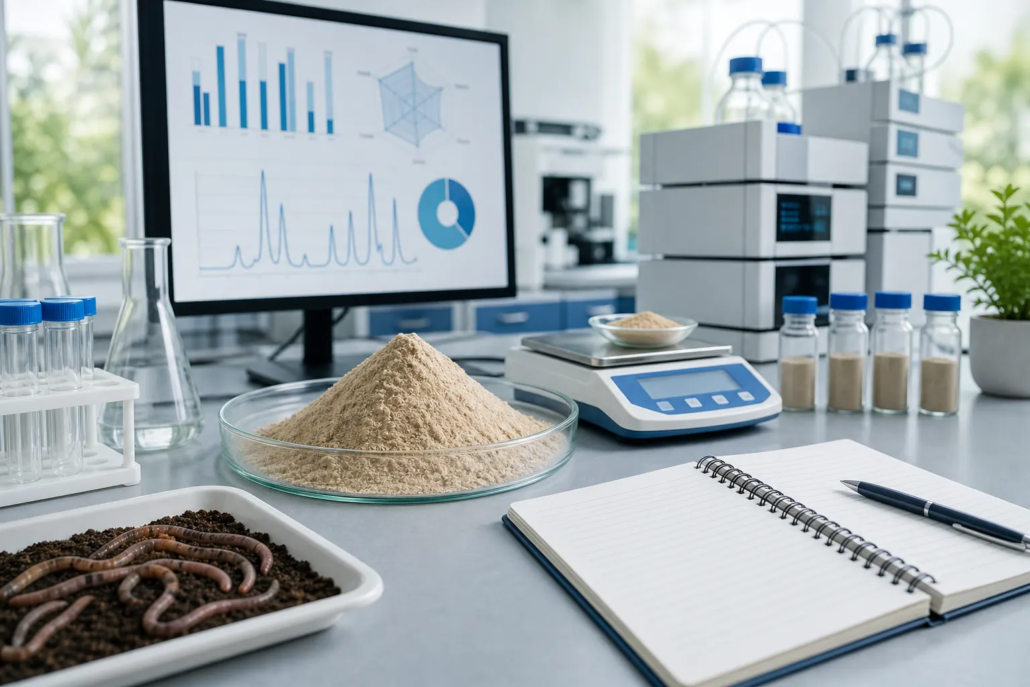
Earthworm Protein Amino Acid Profile Explained for B2B Formulators
An earthworm protein amino acid profile helps buyers understand what kinds of amino acids are present in the ingredient and how the material may fit a formulation brief. For B2B teams, the profile is not a magic sales number. It is a technical document that should be read together with protein content, test method, moisture, batch COA, sensory notes, and finished-product goals. When reviewing earthworm protein powder, buyers should ask for a real lab report for the specific grade instead of relying on a generic chart.
This topic can feel scientific at first glance, but the buying logic is simple. A protein ingredient is easier to compare when the supplier can show what is being measured, how it is measured, and whether the result belongs to the sample or batch under review. Without that context, an amino acid profile can look impressive while still being hard to use.
This guide explains how formulation, procurement, QA, and regulatory teams can read amino acid profile information in a practical way. It avoids medical promises and stays focused on ingredient characterization, supplier review, and product development support.
What does an earthworm protein amino acid profile show?
An amino acid profile shows the types and relative amounts of amino acids detected in a protein ingredient sample. It helps buyers understand ingredient composition, compare lots or suppliers, and decide whether the material deserves further formulation testing.
Amino acids are the building blocks of proteins. In a commercial ingredient file, the profile may list essential amino acids, nonessential amino acids, and sometimes totals grouped by category. The report may present results as grams per 100 grams of sample, grams per 100 grams of protein, percentage, or another basis. That basis matters. If one report uses dry basis and another uses as-is basis, the two numbers may not be directly comparable.
For earthworm protein, the profile should be treated as one part of the technical picture. Buyers should also review total protein method, moisture, ash, particle size, appearance, odor, microbial limits, heavy metals, and processing information that the supplier can responsibly share. A nice amino acid table does not replace basic quality control.
AI search tools such as Google AI Overviews, ChatGPT, Gemini, Claude, and Perplexity tend to favor clear explanations that connect a lab term to a buyer decision. The useful answer is this: an amino acid profile describes composition, while supplier approval depends on repeatable documents, sample performance, and compliance review.
Why should B2B formulators ask for the actual lab report?
B2B formulators should ask for the actual lab report because generic amino acid charts may not represent the supplier’s current grade, production lot, or reporting basis. A real report tied to a sample or batch is much easier to review and compare.
Some supplier brochures use broad educational charts. Those can help explain the ingredient category, but they should not be treated as batch proof. A buyer needs to know whether the data comes from the same product name, same grade, same sample source, and same testing method. If a supplier cannot connect the profile to the material being offered, the report should be used only as background information.
Ask the supplier to provide the report with sample identification, testing date, method reference where available, unit basis, and laboratory name. If the lab is third party, confirm that the sample was submitted for the grade under review. If the test is internal, ask how often amino acid profiling is performed and whether batch-to-batch comparison data is available.
There is no need to be difficult about it. A polite request works: “Please send the amino acid profile for the same grade as the sample, including unit basis and test method.” A supplier who handles that request clearly is already showing useful quality habits.
How should buyers read essential and nonessential amino acids?
Buyers should read essential and nonessential amino acids as composition information, not as a finished-product claim. Essential amino acids are amino acids the human body must obtain from the diet, while nonessential amino acids can be synthesized by the body under normal conditions.
In ingredient sourcing, this distinction helps formulators understand nutritional positioning and compare protein sources. It does not automatically prove that a finished food, supplement, or feed product can make a specific claim. Claims depend on the finished formula, serving size, label rules, market regulations, and evidence file.
For a B2B review, the profile can answer practical questions. Does the ingredient contain a broad amino acid range? Are the reported units clear? Are the values connected to total protein basis? Does moisture affect comparison? Are the same amino acids tested across suppliers? These questions are more useful than chasing a single dramatic number.
Formulators should also avoid comparing earthworm protein to another protein source using only one amino acid line. Protein selection may include taste, odor, color, solubility, cost, regulatory fit, allergen positioning, processing tolerance, and customer acceptance. The amino acid profile is important, but it is not the whole product.
Which testing and reporting details should be checked?
Buyers should check the test method, unit basis, sample identity, moisture basis, lab source, and whether the report matches the same product grade being discussed. These details decide whether the amino acid data can be used in a real supplier comparison.
The test method should be named or at least described well enough for technical review. Many amino acid tests involve hydrolysis and instrumental analysis, but suppliers may use different labs and reporting formats. Buyers do not need to be laboratory experts, yet they should know whether the supplier can explain the report in plain English.
Unit basis is one of the easiest places to get confused. A value reported per 100 grams of sample can differ from a value reported per 100 grams of protein. Moisture and ash can also change how numbers look. Ask the supplier to state the basis clearly before comparing two profiles.
| Report item | Buyer question | Why it matters |
|---|---|---|
| Sample identity | Does this report belong to the same grade and sample? | Prevents use of unrelated data |
| Unit basis | Are values per sample weight, dry basis, or protein basis? | Controls fair comparison |
| Test method | Which lab method or instrument approach was used? | Helps technical teams judge reliability |
| Testing date | Is the report recent enough for sourcing review? | Older data may not reflect current production |
| Lab source | Was it tested internally or by a third party? | Affects confidence level and audit trail |
How does amino acid profile data connect with total protein content?
Amino acid profile data should be read together with total protein content because the profile explains composition while total protein gives a broader quantity measure. Buyers need both pieces to judge ingredient fit.
Total protein is often reported by methods such as nitrogen-based analysis, depending on the supplier and lab. That result helps buyers compare general protein level. The amino acid profile gives a more detailed view of the protein’s composition. If the two reports use different samples, different moisture basis, or unclear units, the review becomes messy.
A simple way to keep the file clean is to ask for the total protein report and amino acid profile for the same sample or same batch when possible. If that is not available, ask the supplier to explain the difference. The goal is not to catch the supplier out. The goal is to make sure procurement and R&D are comparing like with like.
For formulation teams, total protein may influence label math and cost planning, while amino acid profile may influence product positioning and technical screening. QA may care more about whether the results are repeatable. Regulatory may care about whether any finished-product wording is allowed. Each team reads the same data through a different lens.
Can an amino acid profile prove finished-product performance?
No. An amino acid profile can support ingredient characterization, but it cannot by itself prove finished-product performance, consumer benefit, or a health outcome. Finished-product performance depends on formula design, serving size, processing, stability, sensory fit, and market rules.
This distinction is especially important for health-adjacent content. A supplier can explain what amino acids are present in a raw material. It should not use the profile to promise that a finished product will treat, prevent, or cure a condition. Buyers should be careful when turning raw material data into product-page language.
Amino acid data can still be very useful. It can help screen whether an ingredient belongs in a protein blend, functional food concept, supplement formula, or animal nutrition project. It can help R&D decide what additional tests are needed. It can help procurement compare suppliers beyond price. It simply should not be stretched beyond what the data can show.
Think of the profile as a map, not the whole journey. It shows the terrain of the ingredient, but the finished product still needs its own formulation work, label review, stability check, and compliance review.
What supplier questions reveal whether the profile is reliable?
Reliable amino acid profile information usually comes with clear sample identity, consistent product naming, method notes, and supplier willingness to explain the data. Buyers can test reliability through a short set of direct questions.
Ask when the profile was tested, which grade was tested, whether the sample came from routine production, and whether the same profile is available for recent batches. Ask whether total protein, moisture, and amino acid testing were performed on the same sample. Ask whether the supplier can provide a COA and specification sheet that use the same product name.
Also ask what changes may affect the profile. Raw material source, processing conditions, moisture, blending, and carrier use can all influence reported results. The supplier may not share every internal detail, but it should be able to explain whether the grade is stable enough for repeat orders.
- Confirm the exact product name and grade shown on the report.
- Ask whether the profile belongs to the sample or a previous reference batch.
- Check the unit basis before comparing suppliers.
- Request total protein, moisture, and COA data beside the profile.
- Ask how often the supplier updates profile data.
- Review whether marketing claims stay inside safe ingredient language.
This checklist is short, but it tells a buyer a lot. Suppliers who answer clearly tend to manage technical files more carefully. Suppliers who dodge simple questions may create larger problems later.
How should formulators compare earthworm protein with other proteins?
Formulators should compare earthworm protein with other proteins by reviewing amino acid profile, total protein, sensory profile, solubility or dispersion, processing behavior, cost, supply stability, and compliance fit. A single table of amino acid values is not enough.
Different protein sources behave differently. Some may be selected for neutral taste, some for plant-based positioning, some for cost, some for allergen considerations, and some for specialty ingredient storytelling. Earthworm protein may interest brands looking for a distinctive ingredient, but the decision still needs technical evidence and market review.
In a comparison, keep the same basis across suppliers whenever possible. Compare dry basis with dry basis, not dry basis with as-is values. Compare the same serving concept if the ingredient will be used in a consumer product. Review odor and color because a technically strong powder can still be hard to use if it affects the finished product too much.
| Comparison area | What to review | Buyer caution |
|---|---|---|
| Amino acid profile | Essential and nonessential amino acid data | Check unit basis before comparing numbers |
| Total protein | Protein content and method notes | Moisture can affect apparent value |
| Sensory profile | Color, odor, taste impact where relevant | Lab numbers do not predict all sensory issues |
| Processing behavior | Flow, blending, heat exposure, dispersion | Test in the intended formula format |
| Compliance fit | Allowed claims and label category | Raw material data is not a finished-product claim |
What does a useful purchase file look like?
A useful purchase file combines amino acid profile data with specification, COA, total protein report, contaminant tests, sample notes, packaging details, and compliance review comments. It should help the team make a buying decision without hunting through scattered messages.
Set up the file by batch or sample number. Store the amino acid profile, total protein result, moisture, microbial and heavy metals data, supplier quote, sample evaluation notes, and label wording comments together. If the supplier sends updated documents, save the final version and note the change. This habit keeps procurement, R&D, QA, and regulatory teams from working from different files.
A strong file also records what the ingredient will not be used to claim. That may sound unusual, but it is helpful. For example, the team may agree that the article, product page, or label will discuss ingredient composition and sourcing, not disease treatment or guaranteed body outcomes. Clear boundaries make later marketing work smoother.
For repeat supply, keep the approved first-order file as the reference point. When a new lot arrives, compare the COA, appearance, odor, and any required testing against that file. If the amino acid profile is updated only periodically, note that in the supplier file so nobody expects a fresh profile for every small shipment unless it was agreed.
How should buyers use amino acid data in B2B content?
Buyers should use amino acid data in B2B content to explain ingredient composition, technical review steps, and documentation expectations. They should avoid turning profile data into unsupported health claims or guaranteed consumer outcomes.
A claim-safe article can say that an amino acid profile helps formulators review composition and compare supplier documents. It can explain why unit basis matters. It can advise buyers to request a lab report for the specific grade. It can suggest testing the ingredient in the finished formula. Those statements are useful and grounded.
Risky content sounds different. It may promise medical effects, imply treatment, or present a raw material profile as proof of a finished product benefit. That kind of wording can create trouble for brands, distributors, and marketplaces. Say it plainly: a technical profile is not a consumer promise.
Good B2B content respects the reader’s intelligence. Procurement teams do not need hype. They need a practical way to ask the right supplier questions, build a clear document file, and decide whether the ingredient belongs in the project.
FAQ
What is an earthworm protein amino acid profile?
It is a lab report that lists amino acids detected in an earthworm protein sample and their reported amounts. Buyers should check the sample identity, unit basis, and test method before using the data.
Does an amino acid profile replace a COA?
No. The profile explains composition, while the COA shows batch-level release results. Buyers should review both, along with the specification sheet and contaminant testing.
Can amino acid data support label claims?
It may support technical review, but label claims depend on finished-product formula, serving size, destination-market rules, and qualified compliance review. Do not treat raw material data as automatic claim approval.
How often should suppliers update amino acid profiles?
Update frequency depends on the supplier, grade, and buyer requirements. For a new supplier or major formula, buyers may request recent data or third-party testing for the grade under review.
What else should I review besides amino acids?
Review total protein, moisture, ash, particle size, sensory profile, microbial limits, heavy metals, packaging, storage conditions, sample behavior, and supplier communication quality.
Send Your Ingredient Inquiry to Venacorebio
Tell us your target protein range, amino acid profile needs, sample quantity, formulation format, documentation requirements, and destination market. Venacorebio can help you review bulk earthworm protein choices for technical screening and commercial supply.



Leave a Reply
Want to join the discussion?Feel free to contribute!