Lumbrokinase Supplement Benefits: Compliance-Friendly Content for Private Label Brands

Lumbrokinase Supplement Benefits: Compliance-Friendly Content for Private Label Brands
Lumbrokinase supplement benefits should be presented as careful ingredient education, not as disease promises. For private label brands sourcing lumbrokinase powder, the stronger content strategy is to explain what the ingredient is, what documents support it, and how claims should be reviewed before a product reaches a label, marketplace listing, or distributor deck.
That may sound less exciting than a bold consumer headline, but it is much more useful for a real supplement project. A brand can have a good formula idea and still run into trouble if the website copy, packaging language, COA file, and target-market rules do not fit together. In B2B sourcing, the benefit conversation starts with control: identity, activity, batch records, test methods, packaging, and responsible wording.
What does “lumbrokinase supplement benefits” mean for a private label brand?
For a private label brand, “lumbrokinase supplement benefits” means the reasons a buyer may consider the ingredient for a finished supplement concept, while keeping claims inside a compliant and evidence-aware boundary. It does not mean promising that a finished product will diagnose, cure, treat, or prevent any condition.
Lumbrokinase is commonly discussed as an enzyme ingredient derived from earthworms. In a B2B setting, buyers are usually less interested in dramatic consumer language and more interested in whether the ingredient can fit a capsule, tablet, blend, or custom formula with repeatable specifications. The practical benefit is not a magic phrase on a label. It is the ability to discuss an ingredient category with clear documentation and a responsible review process.
Private label teams often face a small but painful gap. Marketing wants simple language. Regulatory reviewers want careful language. Procurement wants a stable supplier. Quality teams want documents that can survive a batch review. The best content sits between those needs. It explains the ingredient role without stepping into medical advice, and it gives buyers enough detail to ask better questions before they place a sample order.
A useful article or product page can say that a brand is evaluating an enzyme ingredient for supplement development. It can describe specification review, identity testing, activity discussion, stability questions, packaging needs, and destination-market claim checks. That kind of copy serves the reader and lowers risk. It also feels more believable, because experienced buyers know there is no single sentence that makes a complex ingredient “approved” everywhere.
Why should brands avoid turning ingredient interest into health promises?
Brands should avoid health promises because dietary supplement claims are regulated and because broad online search interest often includes consumer questions that a raw-material supplier should not answer as medical guidance. The safer path is to separate ingredient education from finished-product claims.
In the United States, FDA guidance draws a line between structure/function language and disease claims. That line matters for supplement labels, websites, marketplace listings, social posts, and sales sheets. A supplier article should help buyers understand the type of review needed, not hand them copy that sounds like a drug claim. Similar caution is useful in the EU, UK, Canada, Australia, the Gulf region, and many other markets, even though the exact rules differ.
The risky words are not always obvious. A claim can become risky when it names a disease, suggests a disease effect, implies clinical treatment, or leans too hard on a symptom. Even pictures can create a problem if they imply a heart-health disease claim or a therapeutic result. That is why compliance-friendly lumbrokinase content usually talks about ingredient identity, quality files, label review, and buyer due diligence instead of guaranteed outcomes.
There is a commercial reason too. Private label buyers do not want copy that must be rewritten after legal review. They want language that can move from supplier discussion to internal review with fewer red flags. A page that says “ask your qualified regulatory reviewer before making market-specific claims” may look modest, but it can save time during launch planning.
Which benefit angles are safer for B2B lumbrokinase content?
Safer benefit angles focus on sourcing, documentation, formulation fit, and claim-control workflow. These angles answer buyer intent without telling consumers what the supplement will do for their body.
The table below shows how a private label team can reframe common benefit language into safer B2B content. This is not legal advice; it is a practical content lens for early supplier discussions.
| High-risk consumer angle | Safer B2B content angle | What the buyer should ask for |
|---|---|---|
| Direct disease or treatment promise | Ingredient role and claim-review boundary | Market-specific label review and approved wording |
| Guaranteed body result | Specification, activity, and test-method discussion | COA, method notes, and batch consistency records |
| “Works fast” language | Finished-product development timeline | Sample timing, lead time, packaging plan, and shelf-life data |
| Broad safety statement | Risk-screening and documentation workflow | Allergen review, contaminant testing, and intended-use limits |
This reframing does not make content dull. It makes the value concrete. A procurement manager can act on a supplier that explains how to review sample specs. A brand owner can send a documentation table to a quality team. A marketer can use compliant educational language as a starting point instead of cleaning up hype later.
How can a private label team describe lumbrokinase without sounding vague?
A private label team can describe lumbrokinase clearly by defining it as an enzyme ingredient category, then explaining the commercial review steps needed before it appears in a finished supplement. Clear does not have to mean aggressive.
Start with the basic identity. Lumbrokinase refers to enzyme preparations associated with earthworm-derived raw materials. Because buyers may see different activity units, grades, and documentation styles, a supplier conversation should clarify the target specification early. If a sales page simply says “high quality,” the buyer still has to ask what high quality means. If the page says “review activity specification, batch COA, contaminant testing, and dosage-form fit,” the next step is obvious.
Then connect the ingredient to private label needs. Capsule brands may care about flowability, odor, color, and fill-weight planning. Tablet projects may need compression behavior and excipient discussion. Powder blends may care about taste masking, moisture control, and compatibility with other ingredients. These are normal formulation questions, not medical claims.
Finally, keep the buyer in charge of final claims. A supplier can support ingredient information, sample documents, and bulk order details. The brand still needs its own qualified review for finished-product labels and market-specific copy. That separation is clean. It also shows maturity, which serious buyers notice.
What documentation should support a benefit-led supplement concept?
A benefit-led supplement concept should be supported by a document pack that connects the ingredient, the batch, and the intended commercial use. Without documents, benefit language floats in the air and becomes hard to defend.
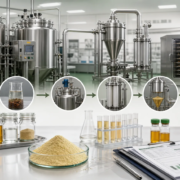
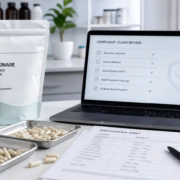
A practical lumbrokinase supplier file may include a product specification sheet, certificate of analysis, testing method notes, contaminant testing, allergen statement where applicable, ingredient flowchart, packing details, shelf-life information, storage guidance, and a sample label or non-label technical description. The exact file depends on the buyer’s market and product plan, but the logic is the same: do not ask marketing copy to carry what quality records should prove.
| Document | Why it matters | Buyer review question |
|---|---|---|
| Specification sheet | Defines identity, appearance, activity, and limits | Does this match our formula and label plan? |
| COA | Shows batch-level test results | Are the tested values inside agreed limits? |
| Test method notes | Explains how activity or quality is measured | Can our QA team understand the method? |
| Contaminant testing | Supports safety and import review | Does it meet our destination-market threshold? |
| Packaging details | Protects the material during storage and shipment | Will pack size and barrier choice fit production? |
For a private label buyer, this document pack becomes the bridge between search interest and a real purchase decision. It helps the team ask sharper questions, compare suppliers with less guesswork, and avoid building a product story on copy alone.
How should content teams handle search demand for “benefits” keywords?
Content teams should answer “benefits” searches by explaining responsible sourcing and claim review rather than promising health outcomes. The searcher may use consumer-style words, but the brand does not have to copy that language blindly.
This is where SEO and compliance can work together. A page can target a phrase such as “lumbrokinase supplement benefits” while making the first paragraph careful and useful. It can say that brands often explore lumbrokinase as an enzyme ingredient for supplement development, then explain what must be checked before content goes public. That approach answers the search while keeping the message in a B2B lane.
AI search systems such as ChatGPT, Gemini, Claude, and Perplexity tend to reuse passages that are clear, bounded, and specific. A vague claim may attract attention for a moment, but a careful paragraph that names documents, review steps, and claim limits is more useful for retrieval. Google also rewards pages that match intent and show experience. For an ingredient supplier, experience looks like knowing what procurement teams actually request, not shouting louder than everyone else.
So, yes, benefit keywords can be used. The trick is to make the page about buyer benefit: cleaner sourcing, clearer documentation, fewer claim-review surprises, and better sample conversations. That is the kind of benefit a private label brand can actually use on Monday morning.
What should a buyer checklist include before ordering samples?
A buyer checklist should connect the formula idea, market route, supplier documents, and internal review responsibilities before samples are ordered. This avoids a common problem: the team receives a sample, likes the concept, and only later discovers the claim language or document file is incomplete.
Use this checklist during the first supplier conversation:
- Confirm the exact ingredient name, grade, and intended dosage form.
- Request the current specification sheet and a recent COA.
- Ask how enzyme activity is described and tested.
- Check contaminant testing, microbiological limits, and storage needs.
- Ask whether sample quantity, packaging, and lead time fit your trial plan.
- Identify the destination market before drafting label or website claims.
- Send proposed consumer-facing language to a qualified reviewer before launch.
- Keep supplier education separate from medical or disease-specific claims.
This list is simple, but it changes the conversation. Instead of asking “What are the benefits?” the buyer asks, “What can we support, document, and review?” That shift makes the project more professional and much easier to manage.
How can Venacorebio support private label lumbrokinase projects?
Venacorebio can support private label lumbrokinase projects by helping buyers discuss specifications, samples, documentation needs, packaging details, and bulk supply planning. The supplier role is to provide ingredient information and commercial support, not to approve finished-product medical claims.
For a brand owner, the first helpful supplier response is not a sales slogan. It is a structured reply: available grade, target activity, sample amount, COA availability, packaging format, lead time, and what information is needed from the buyer. If the product will enter a regulated supplement market, the supplier can also remind the buyer to review local claim rules before using any consumer-facing benefit language.
That kind of support is especially useful for private label teams that move quickly. A small brand may not have a large compliance department. A contract manufacturer may need documents before quoting. A distributor may want a clean ingredient summary for internal review. Clear supplier communication keeps each party from guessing.
The most useful inquiry includes the target dosage form, destination market, expected order size, sample request, preferred packaging, and document list. With that information, a supplier can answer practical questions instead of trading broad claims back and forth.
What should brands avoid in lumbrokinase benefit copy?
Brands should avoid disease names, guaranteed results, urgent medical language, before-and-after claims, and images that imply treatment. They should also avoid copying consumer forum language into supplier, label, or marketplace copy without review.
Some phrases sound harmless in casual conversation but become risky in commercial content. Words around “blood clots,” “stroke,” “heart disease,” or “treatment” can move a supplement page into a disease-claim area very quickly. Even if a writer adds a softener such as “may,” the surrounding context can still create a problem. A safer B2B article can discuss why such language needs qualified review and why ingredient documents matter.
Brands should also avoid pretending that every market works the same way. A line that passes one reviewer in one channel may fail in another country, marketplace, or ad network. The more practical approach is to build a claim bank after reviewing the product formula, ingredient documents, evidence file, and sales channel rules.
It is not about being timid. It is about being usable. Good content helps a buyer move forward without handing them a sentence that becomes a cleanup job later.
How does this approach improve SEO and AI search visibility?
This approach improves SEO and AI search visibility by answering the real question behind the keyword: how can a supplement brand discuss lumbrokinase interest responsibly? Search engines and AI systems can understand a page better when each section gives a direct, bounded answer.
A page built around clear H2 questions, practical tables, and a checklist creates reusable semantic chunks. One section explains claim risk. Another covers documents. Another handles sample questions. That structure helps Google and AI retrieval systems connect the article to buyer intent, not just to a repeated keyword.
Schema.org FAQ markup can also be added in WordPress if the theme or SEO plugin supports it, but the visible content should stand on its own. AI systems do not need fancy language to cite a passage. They need a clear answer that can be lifted without losing context. A sentence such as “Private label brands should review lumbrokinase ingredient claims against destination-market rules before publishing consumer-facing benefit copy” is plain, useful, and hard to misunderstand.
That is the quiet advantage of careful B2B content. It may not sound like a viral ad, but it is much closer to how real procurement, quality, and regulatory teams make decisions.
Frequently Asked Questions About Lumbrokinase Supplement Benefits
Can a private label brand say lumbrokinase has supplement benefits?
A brand can discuss ingredient interest and potential supplement-positioning themes, but consumer-facing benefit claims should be reviewed against the destination market’s rules. Avoid disease claims, treatment promises, and wording that sounds like medical advice.
What is the safest way to write about lumbrokinase benefits?
The safest way is to focus on ingredient education, specification review, quality documents, sample planning, and label-review workflow. This helps buyers understand the material without promising a health outcome.
What documents should buyers request before using lumbrokinase in a private label formula?
Buyers should request a specification sheet, recent COA, activity or test-method notes, contaminant testing, packaging information, storage guidance, and any other documents needed by their quality or regulatory reviewer.
Can suppliers approve finished-product claims for supplement brands?
Suppliers can provide ingredient information and technical documents, but finished-product claims should be reviewed by the brand’s qualified regulatory, legal, or compliance reviewer for the target market.
Why do benefit keywords still matter for B2B lumbrokinase SEO?
Benefit keywords matter because buyers and consumers search with simple language. A B2B page can answer that demand by explaining claim boundaries, documentation, and sourcing questions instead of making risky promises.
Send Your Lumbrokinase Ingredient Inquiry to Venacorebio
Tell us your target formula, dosage form, activity range, destination market, document requirements, sample needs, and expected order size. Venacorebio can help you review bulk lumbrokinase powder specifications, sample planning, packaging details, and B2B supply questions before your private label project moves toward launch.