
How Is Lumbrokinase Produced? From Earthworm Raw Material to Enzyme Powder
How Is Lumbrokinase Produced? From Earthworm Raw Material to Enzyme Powder
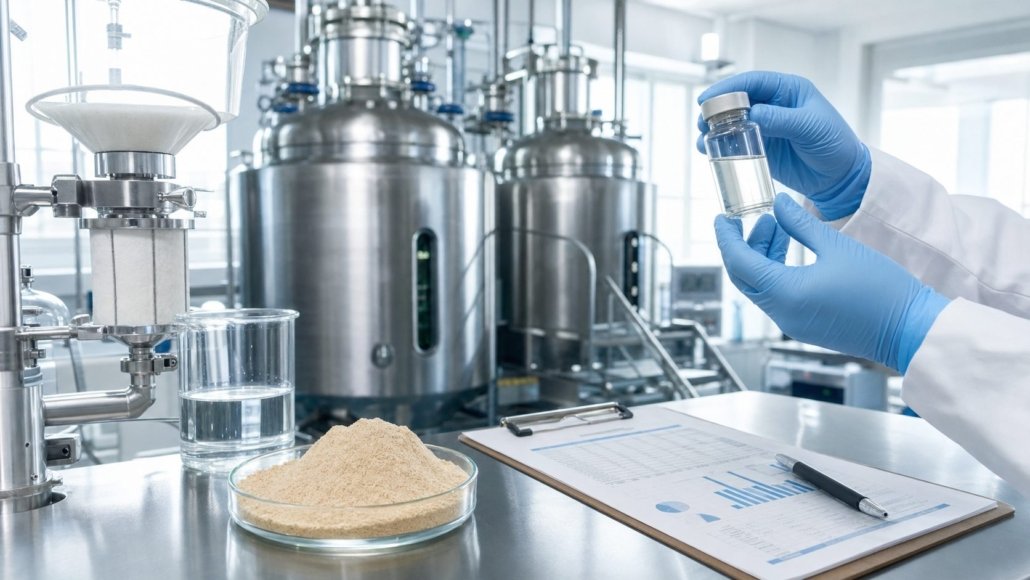
Lumbrokinase is produced by extracting and refining fibrinolytic enzymes from selected earthworm raw material, then concentrating and drying those enzymes into a stable powder. For supplement brands, the production story matters because enzyme activity, purity, moisture control, and batch documentation all affect the quality of finished capsules or custom formulas.
That sounds simple at first: start with earthworms, end with powder. But the real work sits in the middle. A reliable lumbrokinase powder manufacturer has to control raw material identity, extraction conditions, filtration, purification, drying temperature, microbial limits, and enzyme activity testing. Miss one of those steps, and the powder may still look fine in a bag, while the technical performance tells a different story.
What raw material is used to produce lumbrokinase?
Lumbrokinase production starts with earthworm-derived biological material that contains fibrinolytic enzyme fractions. The raw material must be identified, cleaned, inspected, and handled under controlled conditions before extraction begins.
For B2B buyers, this first step is easy to underestimate. Raw material quality shapes everything that follows. If the source is inconsistent, the final enzyme activity can drift from batch to batch. If the cleaning and handling process is weak, microbial risk rises. If traceability is missing, regulatory and customer audits become awkward fast. Nobody wants to discover those issues after printing labels or booking a production slot.
A serious supplier should be able to explain where the raw material comes from, how it is inspected, how incoming batches are documented, and which quality checks happen before production. The point is not to turn every buyer into a factory auditor. The point is to make sure the ingredient has a controlled starting line.
| Raw material checkpoint | Why it matters | Buyer document to request |
|---|---|---|
| Source traceability | Supports batch tracking and supplier accountability | Raw material traceability statement |
| Identity control | Confirms the material used is suitable for enzyme extraction | Incoming material specification |
| Cleaning and handling | Reduces contamination risk before extraction | Process control summary |
| Storage conditions | Protects enzyme-containing material before processing | Storage and handling record |
How does extraction separate lumbrokinase enzymes from earthworm material?
Extraction separates enzyme-containing fractions from prepared earthworm material using controlled liquid processing conditions. The goal is to move useful enzyme components into solution while limiting unwanted degradation, contamination, and loss of activity.
Enzyme extraction is a careful step because proteins can be sensitive. Temperature, pH, processing time, and agitation can influence the quality of the extracted material. Too harsh, and enzyme activity may fall. Too loose, and extraction efficiency may suffer. It is a little like brewing tea, except the “flavor” buyers care about is measurable enzyme activity, not aroma. Tiny process choices can leave a real technical fingerprint.
In a commercial setting, the manufacturer should define process parameters and keep batch records. Buyers do not always need the full proprietary process, but they should expect a supplier to explain the production logic: controlled extraction, separation of solids, clarification of liquid fractions, and protection of enzyme activity before drying.
One practical sourcing question is worth asking early: does the supplier test activity after extraction or only at the finished powder stage? Finished testing is essential, but in-process checks often reveal whether the factory truly understands enzyme preservation.
What happens during filtration and purification?
Filtration and purification remove insoluble material and reduce unwanted impurities while keeping the target fibrinolytic enzyme activity in the process stream. These steps help turn crude extracted material into a more controlled enzyme ingredient.
The exact purification method can vary by manufacturer, product grade, and specification. Some production flows may use staged filtration, separation, concentration, or other refining methods. What matters from the buyer side is not a glamorous process name. What matters is whether the supplier can deliver a powder that meets the promised specification again and again.
Purification is also where cost and quality start to have a very honest conversation. More control usually means more testing, better equipment, more process discipline, and sometimes lower yield. A very low price may reflect a lower activity grade, looser purification, weak documentation, or simply a different specification. That is why buyers should compare COAs line by line, not only price per kilogram.
- Clarification removes larger insoluble particles.
- Filtration improves the consistency of the liquid enzyme fraction.
- Concentration helps prepare the enzyme material for drying.
- In-process checks help protect activity before final powder production.
How is lumbrokinase dried into powder?
Lumbrokinase is dried into powder by removing water from the concentrated enzyme material under conditions designed to protect activity. Drying is one of the most important steps because enzymes can lose performance when exposed to excessive heat or moisture stress.
Different manufacturers may use different drying approaches depending on their equipment and target specification. The buyer does not need to memorize every machine in the production room. The buyer does need to ask whether drying conditions are controlled, whether moisture is tested, and whether finished powder stability is monitored. A powder can look beautiful and still be a poor ingredient if the activity has been damaged during drying.
After drying, the powder may be milled, sieved, or blended to meet particle-size and uniformity requirements. For capsule manufacturers, particle behavior matters. A powder that clumps, absorbs moisture, or flows poorly can create headaches during blending and filling. Yes, enzyme activity gets the spotlight, but physical handling properties quietly decide whether production runs smoothly.
| Production stage | Main control point | Risk if poorly controlled |
|---|---|---|
| Extraction | Temperature, pH, time, separation | Low yield or reduced enzyme activity |
| Purification | Removal of unwanted fractions | Inconsistent purity and specification drift |
| Drying | Moisture and heat exposure | Activity loss or poor stability |
| Sieving and blending | Particle size and uniformity | Poor capsule filling or blend variation |
| Packaging | Moisture and oxygen protection | Shorter shelf life or clumping |
How is enzyme activity tested in finished lumbrokinase powder?
Finished lumbrokinase powder is tested for enzyme activity using a defined method that measures fibrinolytic performance or a related activity marker. Activity testing is central because lumbrokinase is purchased for enzyme function, not just for appearance or botanical origin.
Buyers should treat activity units with care. A number on a COA is only useful when the method is clear and comparable. If two suppliers quote different activity units, different test methods, or different sample preparation conditions, the numbers may not be directly comparable. That little detail can cause big confusion during sourcing.
A proper COA should show the batch number, manufacturing date, test date, specification limits, actual test result, and quality release information. For export buyers, additional documents may include specification sheet, SDS, allergen statement, heavy metal results, microbial results, and sometimes third-party test reports depending on the target market.
For a wider ingredient overview, the article What Is Lumbrokinase Powder? explains how supplement brands can evaluate the ingredient before sourcing. This production article goes one level deeper into the manufacturing logic behind that specification.
What quality-control tests should buyers expect?
Buyers should expect lumbrokinase powder to be tested for enzyme activity, appearance, odor, moisture, particle size, microbial limits, heavy metals, and other specification items required by the target market. Quality control should prove that the batch is suitable for the intended supplement or nutraceutical use.
A COA is the beginning, not the whole story. For a serious B2B purchase, ask whether the COA belongs to the exact batch being shipped. Ask whether testing is done in-house, externally, or both. Ask how the supplier handles out-of-spec results. You are not being difficult; you are protecting your brand, your formulation, and your future reorder stability.
Here is a practical checklist for supplement brands and ingredient buyers:
- Confirm the enzyme activity unit and test method.
- Request a batch-specific COA, not only a sample document.
- Check moisture and storage conditions for stability risk.
- Review microbial limits against your target product category.
- Check heavy metal limits against the destination market.
- Ask whether third-party testing is available when needed.
- Confirm packaging material, net weight, and shelf life.
- Run a pilot formulation test before bulk production.
Why does production consistency matter for supplement brands?
Production consistency matters because supplement brands need repeatable activity, stable blending behavior, and predictable documentation across multiple orders. A great sample is not enough if the second and third bulk batches behave differently.
This is where a specialized supplier earns trust. Enzyme ingredients are less forgiving than many commodity powders. A brand may build a label claim, serving size, capsule count, and marketing story around a specific activity range. If the next batch shifts too much, the brand may need to reformulate, retest, or explain delays to its own customers. Not fun. Not cheap either.
Consistency also affects sourcing timelines. When the supplier understands its process, document review becomes faster. Sample approval becomes cleaner. Reorders become less dramatic. The best production work often feels quiet from the buyer side, and that is exactly the point.
How should brands compare lumbrokinase manufacturers?
Brands should compare lumbrokinase manufacturers by specification clarity, activity testing, documentation quality, production control, sample support, packaging options, and export experience. Price matters, of course, but it should be compared only after technical requirements are aligned.
A useful RFQ should include target activity, order quantity, dosage form, required documents, destination market, packaging preference, and sample request details. If you send a vague request, you may receive a vague quote. A clear RFQ helps the supplier respond like a technical partner rather than a price machine.
Buyers developing capsules or private-label formulas may also want to ask about excipient compatibility, bulk density, flow behavior, and OEM support. A powder that looks good on a COA still needs to behave well in real production. The factory floor has a way of telling the truth, quietly but firmly.
Frequently asked questions about lumbrokinase production
Is lumbrokinase made from earthworms?
Yes. Lumbrokinase is an earthworm-derived enzyme ingredient. Commercial production extracts and refines enzyme-containing fractions from selected earthworm raw material before drying them into powder.
Is lumbrokinase production the same as grinding earthworms into powder?
No. Quality lumbrokinase production involves extraction, separation, purification, concentration, drying, and activity testing. Generic earthworm powder is not the same as enzyme-standardized lumbrokinase powder.
Why does enzyme activity matter in lumbrokinase powder?
Enzyme activity matters because lumbrokinase is purchased for functional enzyme performance. Buyers should compare activity results only when the test method and unit are clear.
What documents should a lumbrokinase supplier provide?
A supplier should provide a batch-specific COA, specification sheet, SDS, storage guidance, shelf-life information, and relevant microbial or heavy metal testing data for the target market.
Can lumbrokinase powder be used for private-label capsules?
Yes. Lumbrokinase powder can be used in private-label capsules when the brand confirms activity, safety documentation, formulation compatibility, and compliant labeling before production.
Send Your Lumbrokinase Production Inquiry to Venacorebio
Tell us your target activity, dosage form, order quantity, packaging preference, and destination market. Venacorebio can help you review bulk lumbrokinase powder options, sample requirements, quality documents, and production details for your next supplement project.




Leave a Reply
Want to join the discussion?Feel free to contribute!