Earthworm Peptide Manufacturing Process: What B2B Buyers Should Review
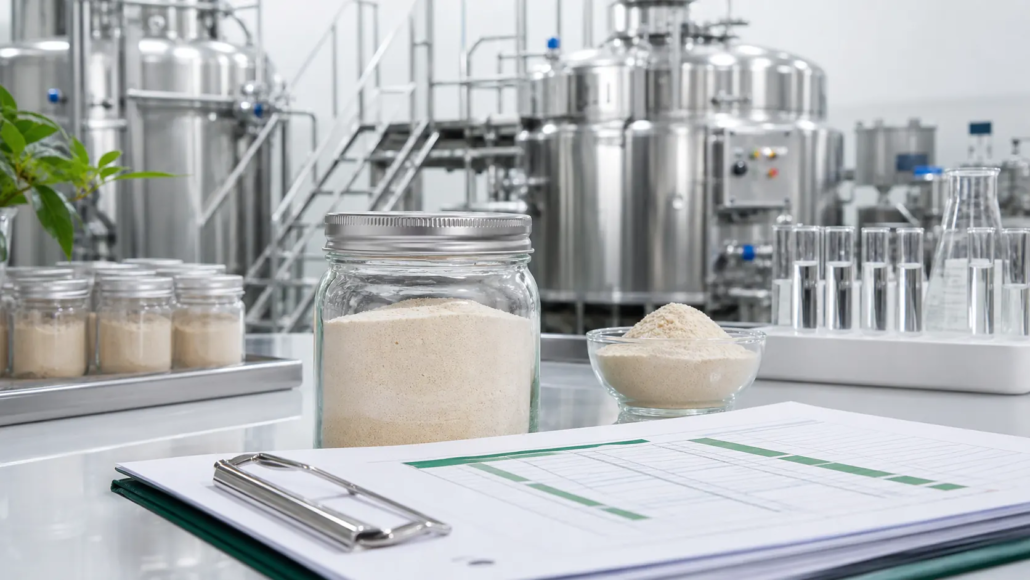
Earthworm Peptide Manufacturing Process: What B2B Buyers Should Review
The manufacturing process for earthworm peptide powder should turn a biological raw material into a controlled, testable, and shipment-ready ingredient. For B2B buyers, the real question is simple: can the supplier explain each production stage well enough for your QA, formulation, and purchasing teams to trust the next batch?
Manufacturing is not just a factory tour with shiny tanks. It is a chain of decisions: raw material acceptance, cleaning, controlled processing, enzymatic hydrolysis, filtration, concentration, drying, sieving, testing, packing, and storage. If one link is vague, the whole project becomes harder to approve. And, honestly, that is where many ingredient sourcing projects get stuck.
This guide explains the process in buyer language. It does not make disease, treatment, or health outcome claims. It focuses on the practical details importers, supplement brands, functional food developers, and distributors can ask about before sampling or placing a bulk order.
What is the basic manufacturing flow for earthworm peptide powder?
The basic manufacturing flow usually starts with qualified earthworm-derived raw material and ends with a dry peptide powder packed for storage and export. A typical route includes receiving inspection, cleaning or preparation, extraction, enzymatic hydrolysis, separation, concentration, drying, sieving, metal detection, testing, and final packaging.
That sequence may sound technical, but the buyer’s job is not to memorize every factory setting. The buyer needs to understand how the supplier controls identity, hygiene, process consistency, powder quality, and documentation. A supplier should be able to describe the flow without drifting into mystery language or exaggerated claims.
Earthworm peptide ingredients are often positioned for nutraceutical, functional food, and specialty ingredient projects. Because the category touches biology, protein chemistry, and buyer compliance, small process differences can matter. Temperature, enzyme choice, process time, filtration, and drying conditions may influence color, odor, dispersibility, moisture, and peptide-related indexes.
A useful manufacturing discussion should connect the physical product to the paper trail. The sample label should match the specification. The specification should match the COA. The COA should match the batch. The packing photos should match the shipment plan. When those pieces line up, sourcing feels less like guesswork and more like a controlled project.
How should raw materials be accepted before processing?
Raw materials should be accepted through identity, source, sensory, hygiene, and document checks before production begins. If the starting material is poorly defined, later processing cannot fully fix the risk.
For earthworm-derived ingredients, buyers should ask how the supplier verifies incoming material. The answer may include supplier qualification, internal receiving standards, visual inspection, odor review, moisture control, and storage records. Exact methods vary by factory, but the principle does not: the material must be traceable and suitable before it moves forward.
Raw material naming deserves special attention. A quote that says earthworm peptide, a specification that says animal peptide, and a COA that uses another broad name can confuse import files and customer review. That does not always mean something is wrong, but it does mean the buyer should ask for corrected documents before approving the project.
Storage matters too. Biological materials and finished powders can be sensitive to moisture, odor transfer, and poor handling. A supplier should explain whether raw materials are stored sealed, separated, labeled, and protected from contamination. These are ordinary quality questions. Serious suppliers should not treat them as unusual.
What happens during extraction and enzymatic hydrolysis?
Extraction and enzymatic hydrolysis are the stages where larger biological components are processed into smaller peptide-focused fractions. Buyers do not need confidential process formulas, but they should understand how the supplier controls time, temperature, enzyme conditions, and separation.
Hydrolysis is a controlled breakdown process. In simple terms, enzymes help split larger proteins into smaller peptide chains. The process is not magic; it depends on settings and discipline. If process time is too loose or temperature control is careless, the resulting powder may show variation in odor, color, solubility, or test values.
Ask the supplier which parts are routine release controls and which parts are internal production controls. Some details may be proprietary, and that is fair. Still, the supplier should be able to describe the general flow: raw material preparation, enzyme-assisted processing, separation of unwanted residues, concentration of the liquid phase, and preparation for drying.
Here is the practical buyer angle: hydrolysis should support repeatability. One sample that looks good is helpful, but repeat orders need a process that can be reproduced. If your brand plans capsules, sachets, tablets, or powder blends, process repeatability affects how your own manufacturing partner receives and handles the ingredient.
Which production controls affect finished powder quality?
Production controls affect finished powder quality by managing moisture, odor, color, particle behavior, microbial risk, and batch consistency. Buyers should focus on controls that influence the finished ingredient, not only on broad claims about factory capacity.
For peptide powders, drying is a major stage. Spray drying, vacuum drying, or other drying approaches can influence final moisture, bulk density, flow, and appearance. The buyer does not always need to choose the drying method, but the buyer should know whether the supplier has a stable method for the product grade being quoted.
Filtration and separation are also worth discussing. A cleaner intermediate liquid generally supports a cleaner powder profile. Poor separation may lead to darker color, heavier odor, insoluble residues, or customer complaints during formulation. You know the kind of problem that appears late, right when a launch schedule becomes uncomfortable.
Sieving, blending, and metal detection are less glamorous but highly practical. They help control particle consistency, remove oversized material, and reduce foreign matter risk before packing. A buyer evaluating a supplier should ask whether these steps are standard for each batch and whether records can be reviewed when needed.
| Manufacturing stage | What it controls | Buyer question |
|---|---|---|
| Receiving inspection | Source identity, basic condition, traceability | Can the supplier link raw material records to the finished batch? |
| Hydrolysis | Peptide-focused processing and repeatability | Which process parameters are routinely controlled? |
| Filtration and separation | Clarity, residue control, sensory profile | How are unwanted solids or residues removed? |
| Drying | Moisture, flow, color, powder stability | Is the drying method consistent from batch to batch? |
| Sieving and packing | Particle handling, label accuracy, shipment readiness | Are packing photos and batch labels available before shipment? |
How should buyers review filtration, drying, and powder handling?
Buyers should review filtration, drying, and powder handling because these stages often determine how the ingredient behaves in real product development. A powder can pass a basic document review and still create formulation trouble if odor, color, clumping, or dispersibility are ignored.
Filtration is mainly about separating the desired liquid phase from insoluble material. Better control here can support smoother downstream processing and more predictable powder characteristics. Ask whether the supplier checks clarity, residue, or other internal indicators before concentration and drying.
Drying changes the product from a processed liquid into a commercial powder. Moisture control is the obvious concern, but not the only one. Drying can also influence how the powder flows, whether it clumps, and how it smells when a sample bag is opened. A buyer planning a capsule product may care about flow and bulk density. A buyer planning a powdered blend may care more about dispersibility and sensory impact.
Powder handling after drying should be treated as part of manufacturing, not an afterthought. Open handling, poor room control, delayed packing, or mixed labels can create preventable quality issues. Ask how the supplier moves powder from drying to sieving to inner bags, and ask what checks happen before cartons are sealed.
What tests should be connected to the manufacturing process?
Testing should connect finished batch results to the process that produced them. For earthworm peptide powder, buyers commonly review appearance, odor, moisture, ash, protein or peptide-related indexes, microbiology, heavy metals, storage, and shelf-life information.
A COA is most useful when it is batch-specific. It should show the product name, batch or lot number, test items, limits, actual results, date, and issuer. If the COA is a generic marketing file, ask for a batch document. If the sample label and COA do not match, ask before your formulation team spends time on evaluation.
Testing is not a guarantee that the ingredient is allowed for every claim, every label, or every destination market. It is a quality review tool. Market compliance, finished-product labeling, and customer-specific requirements still need separate review by the buyer’s team or local consultant.
| Document | What it should show | How buyers use it |
|---|---|---|
| Product specification | Routine product targets and limits | Checks whether the ingredient fits the project brief |
| Batch COA | Actual results for one batch or sample | Supports QA review before sample or shipment approval |
| Flow chart | General manufacturing stages | Helps explain the process to internal teams |
| Packing photo | Bag, label, carton, and batch code details | Reduces shipment and warehouse surprises |
| Third-party report | Independent test results when requested | Useful for first orders, larger orders, or strict customers |
The strongest suppliers make testing part of a repeatable quality rhythm. They do not treat documents as decorations. They use them to show how each batch was made, checked, released, and packed.
How does packaging protect peptide powder after production?
Packaging protects peptide powder by reducing moisture exposure, odor pickup, contamination risk, label confusion, and shipping damage. Buyers should confirm inner bag material, net weight, carton size, batch code, storage condition, and shelf-life statement before shipment.
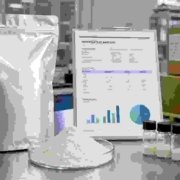
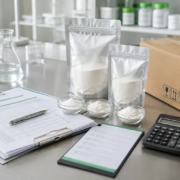
Finished powder can be well made and still suffer if packaging is weak. Peptide powders are often packed in sealed foil bags inside cartons or drums, depending on order size and buyer preference. The inner package should support moisture protection, while the outer carton or drum should survive normal export handling.
Labeling is part of quality control. The label should show a product name consistent with the specification and COA, along with batch number, net weight, production date or shelf-life information where appropriate. If the buyer needs private label packing, that should be confirmed before production or before the final packing stage.
Storage instructions should be plain and usable. Cool, dry, sealed, away from strong odors, and protected from direct sunlight are common ideas, but the supplier should state the specific recommendation for the ingredient. For long ocean routes or hot-season shipping, ask whether extra protection or timing adjustments are needed.
What checklist helps buyers evaluate a peptide manufacturing partner?
A practical checklist helps buyers compare suppliers by process clarity, document consistency, quality controls, packaging discipline, and communication quality. The goal is to approve a supplier that can support repeat orders, not just one attractive sample.
Use this checklist before approving a sample, trial order, or bulk purchase:
- The product name is consistent across quote, specification, sample label, COA, invoice draft, and packing list draft.
- The supplier can describe the main manufacturing stages without making health or treatment promises.
- Incoming raw material controls are documented and linked to batch traceability.
- Hydrolysis, filtration, drying, sieving, and packing are controlled through routine internal checks.
- The COA is batch-specific and includes the test items your QA team expects.
- Microbiology and heavy metal limits match the intended market or customer requirement.
- The supplier can discuss sensory traits such as odor, color, flow, and dispersibility honestly.
- Packing format, label wording, carton size, and storage instructions are clear before shipment.
- Third-party testing options are available when order value or customer risk justifies them.
- The supplier responds to document corrections with calm, specific answers.
A checklist will not replace a full audit, but it will reveal how prepared the supplier is. It also gives your internal team a shared file to review, which saves time when purchasing, QA, and product development all have different concerns.
When is the process ready for a bulk order?
The process is ready for a bulk order when the sample, specification, batch COA, manufacturing explanation, packaging plan, and compliance boundaries all match the buyer’s project. Readiness is not a feeling; it is a set of reviewable facts.
Start with the sample. Was it representative of the product grade being quoted? Does the COA belong to the same sample or batch? Did your team test odor, color, flow, and performance in the intended formula? If not, the project is still in evaluation mode.
Then check the commercial side. MOQ, lead time, packing size, payment terms, shipping documents, and repeat-order planning all need to fit. A technically acceptable powder can still become a poor buying decision if the supplier cannot meet project timing or documentation needs.
The most useful suppliers are not the loudest. They are the ones that make the process visible enough to review. They explain what they can control, what needs buyer confirmation, and what should be tested before scale-up. That kind of manufacturing conversation is exactly what serious B2B buyers should look for.
FAQ
What is the first step in earthworm peptide powder manufacturing?
The first step is raw material receiving and acceptance. Buyers should check whether the supplier controls source identity, storage condition, basic sensory quality, and traceability before processing begins.
Why does enzymatic hydrolysis matter for earthworm peptide ingredients?
Enzymatic hydrolysis helps process larger biological components into smaller peptide-focused fractions. Buyers should ask how the supplier controls this stage for repeatability, sensory profile, and finished powder consistency.
Which documents should a buyer request before sampling?
Request the product specification, sample COA, process flow chart, packing information, storage statement, and any market-specific test reports your team needs for internal review.
Can a manufacturing flow chart prove product quality by itself?
No. A flow chart helps explain the process, but it should be reviewed with the specification, batch COA, sample label, packing plan, and supplier communication record.
How can buyers reduce risk before placing a bulk peptide powder order?
Buyers can reduce risk by matching the sample, COA, specification, sensory notes, packing details, and compliance review before approving the purchase order.
Send Your Ingredient Inquiry to Venacorebio
Tell us your target specification, dosage form, order quantity, destination market, document checklist, and packaging needs. Venacorebio can help you review bulk earthworm peptide powder sample planning, manufacturing questions, COA review, and repeat-supply details before you move toward a purchase order.