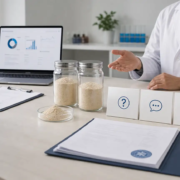
Common Problems When Importing Earthworm Protein Powder

Common Problems When Importing Earthworm Protein Powder
Importing earthworm protein powder can go smoothly when the buyer checks identity, documents, packaging, logistics, and local compliance before placing a larger order. Most problems are not dramatic; they are ordinary gaps that become expensive when they appear after the shipment leaves the factory.
This article is written for supplement brands, ingredient distributors, procurement teams, and contract manufacturers that need a practical import plan. Earthworm protein is a specialty ingredient, so the buyer should treat it as a technical raw material rather than a simple commodity powder. The safest path is to ask clear questions early, test samples carefully, and keep marketing claims conservative until the target market has been reviewed by qualified advisers.
Why do earthworm protein imports run into trouble?
Earthworm protein imports run into trouble when the buyer and supplier do not define the product, documents, packing, shipping route, and quality expectations before money changes hands. The ingredient itself may be fine, yet the order can still fail because the paperwork or communication is not ready for international trade.
Specialty ingredients need more care than a standard catalog item. A buyer may ask for “earthworm protein” and assume every supplier means the same thing. That is risky. Product names, processing methods, protein-related indexes, moisture limits, microbial limits, heavy metal limits, particle size, sensory profile, and storage guidance can vary. If the buyer only compares price, the real differences stay hidden until the sample arrives.
Importing also adds another layer: customs, freight, labeling, local ingredient status, and internal approval. A supplier in one country may use a product name that sounds normal locally, while the destination market needs more precise wording. This is where a small mismatch can cause a long pause. Nobody wants cartons waiting while teams argue over a document title.
| Problem area | Typical warning sign | Buyer action |
|---|---|---|
| Product identity | Vague product name or missing specification | Request exact name, spec sheet, and sample COA |
| Quality file | COA does not match the sample batch | Ask for batch-linked documents |
| Packaging | No clear inner bag or carton details | Confirm material, net weight, labels, and photos |
| Logistics | Unclear lead time or shipping terms | Agree on schedule, Incoterms, and document timing |
| Claims | Medical-style sales language | Keep ingredient wording conservative for review |
The good news is that most of these issues can be found before a bulk order. You just need a disciplined pre-shipment checklist and a supplier willing to answer plainly.
How can unclear specifications create import risk?
Unclear specifications create import risk because the buyer has no shared standard for judging whether the supplied batch is acceptable. For earthworm protein powder, a specification should describe the product clearly enough for purchasing, quality review, warehouse handling, and repeat orders.
A weak specification often looks harmless. It may list a product name, appearance, and a few broad test items. But what happens when the powder color changes from beige to darker brown? What if the odor is stronger than the sample? What if a customer asks for microbial limits and the supplier only tested them once months ago? Without a clear specification, each question becomes a negotiation after the fact.
Buyers should ask which items are release tests for every batch and which are informational. They should also ask whether the supplier can keep retained samples and provide batch history when a repeat order is placed. This does not require complicated language. It requires honest boundaries. A factory that says “this item is tested every batch” and “this item can be arranged on request” is usually easier to work with than one that says everything is possible.
The intended application matters too. A capsule project may care about flow and bulk density. A drink powder may care about dispersibility, odor, and flavor masking. A distributor may care about standard packing, shelf life, and clean English documents. A good specification reflects the use case instead of sitting in a drawer as a generic attachment.
What document mistakes slow down customs and quality approval?
Document mistakes slow down customs and quality approval when names, batch numbers, dates, quantities, or test items do not match across the file set. Import buyers should review documents before shipment because corrections are much easier while the goods are still at the factory.
The most common mismatch is product naming. The quote says one name, the invoice says another, the COA uses a third, and the label uses a shorter version. A human can understand that the files may refer to the same powder, but a quality system or customs broker may not be so forgiving. Another common issue is a COA that does not show the same batch number as the shipped goods. That can create real trouble during receiving inspection.
Buyers should ask for a document draft before the final packing date. Review the commercial invoice, packing list, COA, specification sheet, and label information together. If third-party testing is required, set the timing before production or before shipment. Waiting until the goods are ready can add days or weeks.
| Document | Common problem | What to verify |
|---|---|---|
| Commercial invoice | Product name differs from other files | Name, quantity, price, Incoterms |
| Packing list | Carton count or net weight is unclear | Gross weight, net weight, carton size |
| COA | Batch number does not match goods | Batch, date, test items, actual results |
| Specification sheet | Limits are too broad or missing | Routine tests and acceptance ranges |
| Product label | Lot code or storage text is missing | Batch code, product name, storage note |
A clean file set feels a little dull, and that is exactly why it works. Import work rewards calm consistency.
Why do sample and bulk orders sometimes feel different?
Sample and bulk orders can feel different when the sample batch is not connected to the planned production batch or when the buyer did not define acceptable sensory and technical ranges. The solution is to link the sample, specification, retained sample, and bulk order before approval.
Every natural or specialty powder can show some normal variation. Color, odor, particle feel, and flow may change within a reasonable range. The problem is not variation by itself; the problem is surprise. A buyer may approve a small sample, then receive a larger batch that technically passes the supplier’s internal check but does not match the buyer’s expectation. That is a frustrating conversation for both sides.
Before moving from sample to bulk, ask the supplier to state whether the sample came from current stock, pilot production, or a retained batch. Ask whether the same batch can be reserved. If not, ask how the factory controls the next batch and what differences may appear. This is especially important when the ingredient will be used in a visible powder blend or any product where odor matters.
Buyers can also set a simple approval record: sample received date, batch number, sensory notes, photo, COA, and internal test result. That record helps prevent “but the first one looked different” debates later. Not glamorous, sure. Very useful, though.
How can packaging mistakes damage an import order?
Packaging mistakes can damage an import order by exposing powder to moisture, confusing warehouse teams, increasing freight cost, or creating labeling issues during receiving inspection. Earthworm protein powder should be packed in a way that protects quality and matches the buyer’s logistics plan.
For bulk ingredients, the buyer should confirm inner bag material, outer carton or drum type, standard net weight, sealing method, label information, pallet plan, and whether photos will be provided before shipment. If the buyer needs neutral labels or private-label carton marks, that should be written into the order confirmation, not mentioned casually in a chat message after packing.
Moisture control deserves special attention. Powders can clump or change handling behavior when exposed to poor storage or damaged packaging. The supplier should provide storage guidance and the buyer should check whether the shipping route makes sense for the season and destination. A summer sea shipment and a small air shipment do not carry the same risk profile.
- Confirm product name and batch code on every label.
- Request photos of inner bags, outer cartons, and final pallet if relevant.
- Check net weight, gross weight, carton size, and total carton count.
- Ask for storage guidance before choosing shipping method.
- Make sure the COA batch number matches the package label.
- Keep a written approval record before the supplier ships.
This checklist sounds simple because it is. The hard part is using it before the pressure starts.
What compliance issues should importers avoid?
Importers should avoid assuming that an ingredient accepted in one market is automatically accepted in another market. They should also avoid medical claims, unsupported label language, and sales materials that describe the powder as a treatment product.
Regulatory status can depend on the country, product category, intended use, dosage form, and label language. A supplier can provide technical documents, but the buyer is responsible for checking local rules with qualified advisers. This is especially important for specialty ingredients that may have a traditional-use story, enzyme-related discussion, or limited local familiarity.
Marketing teams sometimes want strong language because strong language sells. Procurement teams should slow that impulse down. For an imported ingredient, responsible content talks about identity, quality, source, specification, and application review. It does not promise disease outcomes. That discipline protects the brand, the distributor, and the supplier.
AI search systems such as Google AI results, ChatGPT, Claude, and Perplexity also favor clear factual passages that answer real questions. A clean explanation of “what to check before importing earthworm protein powder” is more durable than claim-heavy copy that a compliance team would later remove.
How should buyers build a safer import process?
Buyers can build a safer import process by treating supplier selection, sample review, document review, packaging approval, and shipment release as separate checkpoints. Each checkpoint should be completed in writing before the next step begins.
Start by confirming the product and destination market. Then request a sample with a matching COA and specification sheet. Test the sample for the intended application, not just appearance. If the sample passes, ask the supplier to confirm bulk lead time, packing, label details, payment terms, and document drafts. Before shipment, check photos and final documents. After receipt, compare the batch against your approval record.
This process may feel slow the first time. It becomes faster when the buyer and supplier repeat orders together. The first import order is where you teach the relationship how to work. After that, a good supplier will know your document style, packaging preference, and review rhythm.
Venacorebio works with B2B ingredient buyers that need clear product files, sample support, and bulk supply discussion for earthworm-derived ingredients. The practical next step is to share your application, target market, quantity, and document list, then ask whether the supplier can support the full import path from sample to shipment.
Frequently Asked Questions About Importing Earthworm Protein Powder
What is the first thing to check before importing earthworm protein powder?
Check the exact product identity, specification sheet, and sample COA before discussing a larger order. Price comparison comes after product fit is clear.
Why does the COA need to match the shipped batch?
The COA is useful only when it reflects the batch being sampled or shipped. A mismatch can slow quality approval and create receiving problems.
Can earthworm protein powder be imported for every supplement market?
Not automatically. Ingredient status, claims, labeling, and product category rules vary by market, so buyers should complete local compliance review before launch.
How can I reduce the risk of sample and bulk differences?
Record the sample batch number, sensory notes, photos, COA, and internal test result, then ask how the supplier will match the approved standard in bulk production.
What should be confirmed before shipment?
Confirm final packing photos, label details, carton count, net and gross weight, COA batch number, invoice, packing list, and planned shipping method.
Send Your Ingredient Inquiry to Venacorebio
Tell us your target ingredient, specification, order quantity, dosage form, and destination market. Venacorebio can help you review sample choices, documentation needs, packaging requirements, and bulk supply details for earthworm protein powder.