Earthworm Peptide Quality Control Process: How B2B Buyers Should Review Supply
Earthworm Peptide Quality Control Process: How B2B Buyers Should Review Supply
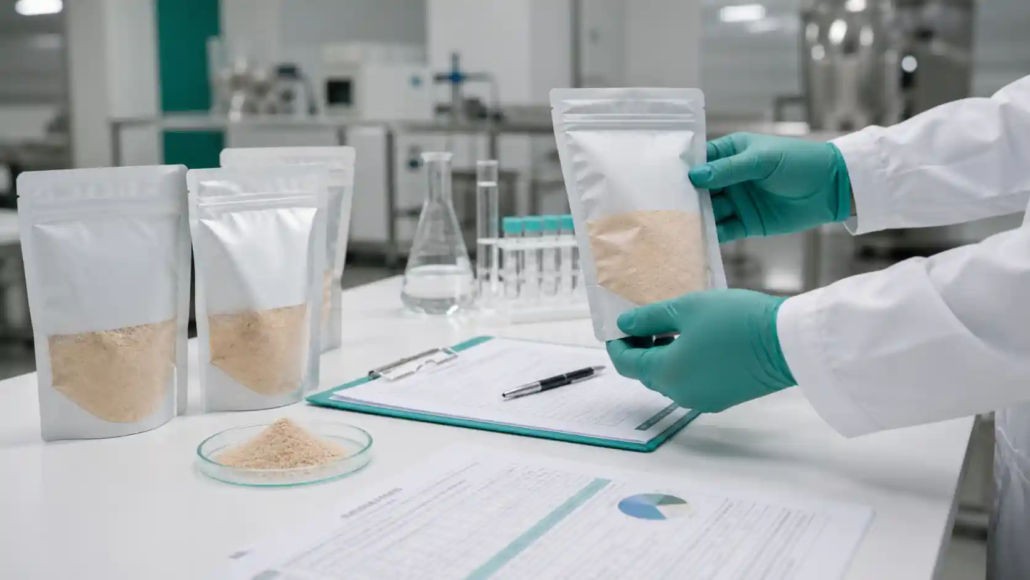
A reliable quality control process for earthworm peptide powder should connect raw material checks, production controls, batch testing, document review, packaging inspection, and buyer-side sample approval. For B2B buyers, the goal is not a perfect-looking sales file; it is a supply process that can be checked before money, launch dates, and customer promises are on the line.
That sounds plain, but it is where many sourcing projects become messy. A peptide ingredient may look fine in a product photo, and the price may look attractive in a spreadsheet. Still, the buying team has to ask harder questions: What exactly was tested? Which batch does the COA describe? How are odor, moisture, microbes, heavy metals, and peptide-related indexes controlled? And when a future order is produced, will the same review path be used again?
This guide explains the quality control process from a buyer’s point of view. It is written for importers, supplement brands, contract manufacturers, and ingredient distributors that need a practical way to judge supplier readiness without making medical claims or treating one document as proof of everything.
What does quality control mean for earthworm peptide powder?
Quality control means checking whether the ingredient matches its agreed specification before it moves into sampling, production, export, or repeat supply. For earthworm peptide powder, that usually includes identity, appearance, peptide-related parameters, protein content, moisture, ash, microbial limits, heavy metals, sensory profile, packaging, and document consistency.
The phrase can feel bigger than it really is. In daily sourcing work, QC is a chain of small confirmations. The supplier checks incoming material. The production team controls processing conditions. The lab checks selected batch items. The warehouse protects the material from moisture and mix-ups. The export team prepares documents that match the batch. The buyer then reviews the file before approval.
Each link matters because peptide ingredients can be sensitive to process variation. A change in source material, hydrolysis condition, drying, storage, or packaging can influence powder color, odor, dispersibility, and test results. Buyers do not need to become factory engineers, but they do need to know which parts of the process are controlled and which parts require extra confirmation.
A useful way to think about QC is this: it should make future conversations calmer. When the buyer asks for a sample COA, batch label, storage note, and packing photo, the supplier should not treat those as unusual requests. They are ordinary B2B checks. If the supplier can answer them clearly, the project starts with less guesswork.
Which quality checks should happen before production starts?
Before production starts, the supplier should confirm material identity, source consistency, internal acceptance criteria, processing plan, packaging requirement, and buyer specification. These pre-production checks reduce the chance that the finished batch looks acceptable but fails the buyer’s real requirement.
For earthworm-derived ingredients, source and naming consistency are the first things to check. The product name used in the quotation should match the specification, sample label, COA, invoice, and packing list. If one document says earthworm peptide, another says animal peptide, and another uses a broad protein powder phrase, the buyer should ask for corrected wording before the file moves forward.
Pre-production review should also include the target application. A buyer making capsules may care most about flow, bulk density, odor control, and COA items. A buyer developing a powder blend may care more about dispersibility, color, taste masking, and moisture protection. A distributor may focus on shelf life, carton size, document language, and repeat supply stability. The same ingredient category can create different QC priorities depending on the job.
One overlooked point is packaging planning. If the buyer needs 1 kg foil bags, 10 kg cartons, private labels, or palletized export packing, those details should be discussed before production or packing begins. Changing packaging late can cause relabeling, extra handling, or document mismatch. Nobody wants to fix carton labels while a shipment clock is already ticking.
How should buyers read the product specification?
The product specification should describe the routine quality target for the ingredient. Buyers should read it as the standard that future batches are expected to meet, then compare it with the actual COA for the sample or shipment under review.
A good specification is not a brochure. It should give a buyer enough information to decide whether the ingredient is worth sampling and whether the internal QA team can review it. Common items include product name, source material, process description, appearance, odor, peptide or protein-related indexes, moisture, ash, microbiology, heavy metals, storage, shelf life, and packaging.
The important habit is to separate routine limits from actual results. The specification may say what the product should meet. The COA should say what one batch actually tested. Buyers sometimes receive only one of these documents, then try to make a decision anyway. That is risky. You need both because they answer different questions.
| Specification area | Why buyers check it | Question to ask the supplier |
|---|---|---|
| Product identity | Confirms the exact ingredient being quoted | Does this name match the sample label and COA? |
| Peptide-related index | Shows the product’s peptide-focused positioning | Which method is used and is it routine for each batch? |
| Moisture and ash | Signals basic powder control and storage risk | Are these tested in every release batch? |
| Microbiology | Supports safety and handling review | Which limits apply to the intended market or customer? |
| Heavy metals | Supports quality and compliance screening | Can third-party testing be arranged when needed? |
| Packaging and shelf life | Connects QC to shipping and warehouse handling | What packing size and storage condition will be used? |
Buyers should not expect every supplier to use the same format. Different factories may organize documents differently. The practical question is whether the specification is complete enough to support a sourcing decision and whether the supplier can explain the limits without hiding behind vague sales language.
What does a batch COA prove and what does it not prove?
A batch COA proves selected test results for a specific lot, sample, or production batch. It does not prove that every future batch will be identical, that finished-product claims are allowed, or that destination-market rules have already been satisfied.
That distinction saves buyers from a lot of trouble. A COA is useful because it creates a record tied to a batch number. It can show tested values for appearance, moisture, ash, microbes, heavy metals, and other agreed items. It may also include a release date, testing method, approval line, or quality stamp. Those details make the document reviewable.
Still, a COA should not be stretched beyond its role. It cannot replace supplier qualification. It cannot replace incoming testing when the buyer’s customer requires it. It cannot turn a raw ingredient into a finished supplement with approved claims. If a supplier uses the COA to imply disease treatment, guaranteed health outcomes, or automatic legal acceptance, the buyer should slow down.
The COA should match the sample or proposed shipment. Check the product name, batch number, production date or release date, tested items, specification limits, actual results, and document issuer. If any item is missing, ask for clarification before sending the sample to a contract manufacturer or customer. A missing batch number today can become a traceability problem later.
How is sensory quality checked for peptide ingredients?
Sensory quality is checked by reviewing appearance, odor, color, taste impact, dispersibility, and behavior in the intended formula. For earthworm peptide ingredients, these checks are especially useful because a powder may meet lab limits but still create formulation problems.
Laboratory values are clean and tidy. Sensory work is messier, and that is exactly why it should be documented. A peptide powder can have a noticeable odor or color tone. That does not automatically make it unsuitable. It means formulators should test it honestly at the planned use level rather than making a decision from a tiny sample pinch.
Capsules, tablets, sachets, ready-to-mix powders, and functional food concepts all expose sensory issues differently. A capsule project may tolerate more odor than a drink mix. A powder blend may need flavor masking or color adjustment. A distributor may need to know how the product smells when a customer opens a sample bag. Those are not glamorous questions. They are real buying questions.
Keep sensory notes consistent. Record sample date, batch number, storage condition, test amount, formula base, odor before blending, odor after blending, color, flow, and any visible clumping. Photos help. So do retained samples. A simple sensory log can prevent repeated arguments when a second batch arrives and someone says, “Was the first one like this?”
Which microbiology and heavy metal items need attention?
Microbiology and heavy metal checks need attention because they influence buyer QA review, import screening, and customer acceptance. The exact test list should be confirmed against the product specification, destination market, and finished-product category.
Common microbiology review may include total plate count, yeasts and molds, coliforms, Salmonella, Staphylococcus aureus, or other items requested by the buyer. Heavy metal review may include lead, arsenic, cadmium, mercury, and market-specific limits. Exact limits can vary, so buyers should not assume one supplier’s COA will satisfy every customer or country.
There is a practical rhythm to these checks. For early sampling, a supplier’s batch COA may be enough to decide whether the material is worth a lab trial. For a larger order, the buyer may request third-party testing or incoming QC. For repeat supply, testing may become risk-based, with tighter checks for new batches, new sources, new markets, or larger customer programs.
When a result is near a limit, ask better questions. Was the test repeated? Which method was used? Was the sample pulled from the same batch? Was the powder stored correctly? Is the buyer comparing supplier limits with a stricter retailer requirement? A number alone rarely tells the whole story, but it tells the team where to look.
How should buyers compare in-process control and final testing?
In-process control checks whether production is staying within expected conditions, while final testing checks whether the finished batch meets selected release criteria. Buyers should care about both because a clean final COA is stronger when the supplier can also explain how the batch was controlled during production.
In-process control may include material handling, process time, temperature control, filtration, concentration, drying, sieving, metal detection, and packing hygiene. A buyer may not need every technical setting, but the supplier should be able to describe the general control points and explain what happens when a process falls outside its internal range.
Final testing is the buyer-facing part most people see. It turns into the COA, release record, and shipment document file. That file matters, yet it is only the last checkpoint. If the process before testing is loose, final testing can become a late alarm rather than a steady control method.
| Control stage | Typical focus | Buyer value |
|---|---|---|
| Incoming material check | Source, appearance, supplier lot, storage condition | Reduces identity and source variation risk |
| Processing control | Hydrolysis-related conditions, filtration, drying, hygiene | Supports consistent powder characteristics |
| Intermediate inspection | Color, odor, moisture trend, particle handling | Finds issues before final packing |
| Finished batch testing | COA items, microbiology, heavy metals, composition indexes | Creates a release record for buyer review |
| Packing inspection | Bag seal, label, carton count, batch code | Prevents shipment and traceability errors |
Ask for the story behind the COA. A supplier does not need to reveal confidential process details, but it should be able to explain the quality path well enough for a serious buyer to trust the conversation.
What packaging and storage checks protect quality after release?
Packaging and storage checks protect the ingredient after lab release by reducing moisture exposure, odor transfer, labeling errors, and shipping damage. Buyers should confirm inner bag material, net weight, carton size, batch label, storage condition, and shelf-life statement before shipment.
Powder quality can change after testing if storage is careless. A batch may pass release testing, then absorb moisture in weak packaging or sit in an unsuitable warehouse. That is why the QC process should include post-release handling, not only lab numbers.
For export orders, packing photos can be surprisingly valuable. They show bag type, label wording, carton count, and sometimes pallet condition. A buyer’s warehouse team may care about those details more than the sales team expects. If the shipment arrives with unclear labels or damaged cartons, the first question will be whether the issue began before or during transport.
Storage language should be practical. Cool, dry, sealed, away from strong odors, and protected from direct light are common ideas, but the supplier should state the actual recommendation used for the product. If the buyer needs a long ocean route, hot-season shipping, or warehouse storage before production, ask whether extra handling steps are needed.
How can buyers audit supplier communication without visiting the factory?
Buyers can audit supplier communication by checking response clarity, document consistency, batch traceability, sample matching, corrective answers, and willingness to discuss limits. A remote supplier can show a lot through the way it handles ordinary quality questions.
Not every buyer can visit a factory. That is normal, especially during early sourcing. The good news is that basic communication gives useful signals. Does the supplier answer the exact question? Does the COA match the sample label? Does the quotation use the same product name as the specification? Does the sales contact admit when a document is unavailable? Does the team avoid overblown health claims?
Remote review is not about suspicion. It is about making the project reviewable. A supplier that answers clearly helps the buyer build an internal approval file. A supplier that sends scattered screenshots, mixed product names, and vague promises creates extra work for everyone.
Buyers can also ask for short videos or photos of packing, batch labels, sample preparation, or warehouse handling when appropriate. These are not a replacement for audits or third-party inspection, but they help confirm that the file and physical goods are connected.
What checklist should buyers use before approving a peptide supplier?
Buyers should use a checklist that connects specification, COA, sample identity, sensory review, safety testing, packaging, compliance boundaries, and repeat-order control. The checklist keeps procurement, QA, formulation, and sales teams working from the same facts.
Use this before approving a sample, trial order, or repeat supply plan:
- The exact product name is consistent across quotation, specification, COA, sample label, invoice draft, and packing list draft.
- The specification includes identity, appearance, peptide-related parameters, moisture, ash, microbes, heavy metals, storage, shelf life, and packaging where relevant.
- The COA is tied to a batch or lot and matches the sample or proposed shipment.
- Sensory notes were recorded at the intended use level and in the planned product format.
- Microbiology and heavy metal items match the buyer’s market and customer review needs.
- Optional third-party testing has been discussed when order size or customer risk justifies it.
- Packaging photos, label wording, net weight, carton count, and storage conditions are clear.
- The supplier has explained routine batch testing versus buyer-paid extra testing.
- Marketing and label teams understand that ingredient QC documents do not approve disease or treatment claims.
- The buyer has saved the document file with sample photos, test notes, emails, and quotation history.
This list is deliberately practical. It helps the buyer catch ordinary gaps before those gaps become urgent. That is the quiet value of quality control: fewer surprises when the order becomes real.
When is a quality control process strong enough for repeat orders?
A quality control process is strong enough for repeat orders when the supplier can reproduce the document set, explain batch variation, protect packaging consistency, and respond to buyer feedback without confusion. Repeat supply depends on rhythm, not just one successful sample.
The first order often receives special attention. Everyone is alert. The sample is discussed carefully. The documents are reviewed twice. The real test comes with the second, third, and fourth order. Can the supplier keep the same naming, COA scope, packing format, and response quality? Can it explain a small color or odor shift honestly? Can it tell the buyer early when lead time or batch availability changes?
For B2B buyers, repeat confidence grows when the supplier treats QC as routine work. No drama, no mystery, no pressure to ignore missing details. Just clear batch files, realistic lead times, and a willingness to match supply to the buyer’s market and product format.
That is what serious procurement teams should look for. Not flashy promises. Not a perfect sample story. A repeatable quality process that makes each future order easier to review than the last one.
Frequently Asked Questions
What should a buyer check first in an earthworm peptide COA?
Check the product name, batch number, test items, limits, actual results, and release date first. The COA should match the sample or shipment under review, not a generic product file.
Does a clean COA mean the ingredient is approved for every market?
No. A COA supports batch quality review, but market acceptance, label wording, import rules, and finished-product claims still need local compliance review.
Why do sensory checks matter for peptide powder?
Sensory checks matter because odor, color, taste impact, and dispersibility can affect capsules, sachets, drink powders, and customer samples even when lab values look acceptable.
Should buyers request third-party testing for every batch?
Not always. Third-party testing is most useful for first orders, large orders, high-risk markets, customer-specific requirements, or cases where supplier and buyer results need independent confirmation.
How can buyers reduce quality risk before placing a bulk order?
Buyers can reduce risk by matching the sample, COA, specification, sensory notes, packaging plan, and document checklist before approving the purchase order.
Send Your Peptide Quality Checklist to Venacorebio
Tell us your target specification, application, order quantity, destination market, document checklist, and testing needs. Venacorebio can help you review bulk earthworm peptide powder sample planning, COA questions, packaging details, and repeat-supply expectations before you move toward a purchase order.