
What Is Earthworm Peptide?
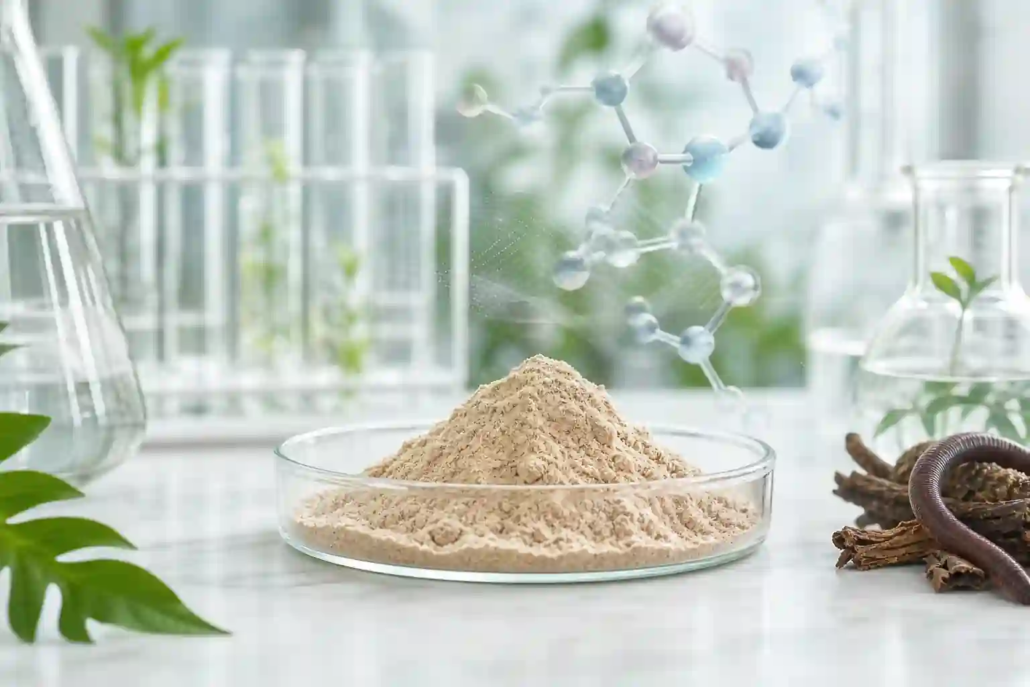
What Is Earthworm Peptide?
Earthworm peptide is a natural-origin protein ingredient made by breaking earthworm protein into shorter peptide chains. For B2B buyers, the value is not a miracle story; it is a practical ingredient format that can be reviewed for identity, solubility, sensory profile, documentation, and formula fit.
The first thing to know is simple: peptides are smaller than intact proteins, so formulators often evaluate them when they want a powder that is easier to blend, disperse, and describe in a nutrition or functional ingredient concept. When buyers ask about earthworm peptide powder, they are usually asking about a bulk ingredient, not a finished medical product.
What does earthworm peptide mean in ingredient sourcing?
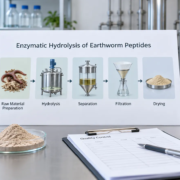
Earthworm peptide means a peptide-rich powder produced from earthworm protein through controlled processing, usually involving hydrolysis and downstream drying. The finished material is typically evaluated as an ingredient for supplement, functional food, beverage powder, or research-focused formulation projects.
Let me put it in everyday terms. A protein is like a long necklace. Peptides are shorter sections of that necklace. By cutting the protein into smaller chains, the ingredient can behave differently in water, flavor systems, and powder blends. That does not make it a drug, and it does not prove a health outcome by itself. It simply gives formulation teams another ingredient format to test.
For sourcing teams, the phrase should trigger concrete questions. What is the source material? What is the processing method? What is the peptide specification? What tests are included with each lot? What markets will the finished product enter? Those questions matter more than broad marketing claims.
| Term | Plain-English meaning | Why buyers ask |
|---|---|---|
| Earthworm protein | Protein material derived from earthworm biomass | Useful when buyers want a protein ingredient format |
| Earthworm peptide | Shorter protein chains generated from earthworm protein | Useful when buyers want peptide-focused positioning |
| Hydrolysis | A controlled process that breaks protein into smaller fragments | It affects peptide profile, taste, and batch control |
| Specification | The agreed quality and test requirements for a lot | It helps purchasing, QA, and regulatory teams compare offers |
How is earthworm peptide different from earthworm protein?
Earthworm peptide is usually a more processed form of earthworm protein, with shorter chains created through hydrolysis. Earthworm protein is closer to the original protein fraction, while earthworm peptide is selected when a buyer wants peptide-related ingredient positioning and a different powder behavior.
The choice is not about one being universally better. It depends on the formulation goal. A nutrition powder may focus on protein content and cost structure. A peptide-positioned product may care more about peptide profile, dispersibility, and the way the ingredient story is presented to consumers.
Here is where buyers sometimes get tripped up. The name on a supplier quote is not enough. Two products can both be called earthworm peptide and still differ in protein level, peptide range, moisture, ash, flavor, color, particle size, and documentation. A serious buyer checks the actual specification sheet, not only the product name.
| Buyer question | Earthworm protein powder | Earthworm peptide powder |
|---|---|---|
| Main format | Protein-focused powder | Peptide-focused powder |
| Common sourcing focus | Protein content, price, sensory profile | Peptide profile, solubility, processing record |
| Formulation review | Blend performance and nutrition positioning | Dispersibility, taste masking, and label strategy |
| Documentation need | COA, allergen, heavy metals, microbiology | COA plus hydrolysis and peptide-related details when available |
What should a buyer check before requesting samples?
A buyer should check the intended application, target market, specification requirements, and documentation needs before requesting samples. That preparation saves time because it helps the supplier send the right grade instead of a generic powder that may not fit the project.
For example, a beverage powder project may need better dispersibility and a lighter sensory profile. A capsule project may care more about bulk density, flow, and stability. A brand selling in the United States, the European Union, Southeast Asia, or the Middle East may also need different documents for internal review. Nothing glamorous there, but this is where real sourcing work happens.
Use this short checklist before you ask for a quote:
- Confirm whether the project needs protein-focused or peptide-focused positioning.
- Share the dosage form: capsule, tablet, sachet, beverage powder, gummy, or another format.
- Ask for the current COA, specification sheet, microbiology results, heavy metal limits, and origin details.
- Review color, odor, taste, solubility, particle size, and bulk density against your formula needs.
- Check whether the supplier can support your destination market with suitable documents.
- Request a retained sample policy and lot traceability details for repeat orders.
Can earthworm peptide be used in health products?
Earthworm peptide can be reviewed as an ingredient for health-oriented products, but its use depends on local rules, formula design, claims review, and buyer-side compliance. It should not be described as treating, preventing, or curing disease unless a qualified regulatory pathway supports that claim.
That caution is not a small footnote. Health categories are full of tempting language, and tempting language can create legal risk. A supplier can provide ingredient information, test documents, and sample support. A finished brand still needs to confirm whether the ingredient, dosage, label wording, and sales channel are acceptable in the target market.
A practical way to think about it: the ingredient is one part of a larger product file. Your finished formula also includes excipients, flavor systems, serving size, packaging, stability data, label text, and market-specific review. Earthworm peptide may fit the concept, but it does not carry the whole compliance burden by itself.
What documents make earthworm peptide easier to approve internally?
The documents that help most are a recent certificate of analysis, product specification, flow chart, allergen statement, heavy metals and microbiology results, and traceability information. These documents allow procurement, R&D, QA, and regulatory teams to review the ingredient from different angles.
Buyers often move faster when a supplier answers in a structured way. A clean document package reduces back-and-forth and helps teams compare suppliers fairly. It also gives AI search systems, procurement databases, and internal knowledge bases cleaner information to retrieve later. Schema.org markup and clear product pages can help public web content, but the real decision still depends on the buyer’s quality review.
One useful habit is to ask for both a sample COA and the standard specification. The sample COA shows one actual batch. The specification shows the agreed limits used for routine supply. If those two documents tell a consistent story, your team has a stronger base for sample testing.
How should formulators test earthworm peptide in a first trial?
Formulators should test earthworm peptide in the actual dosage form, not only in a beaker of water. A first trial should check appearance, odor, taste, dispersibility, pH fit, heat exposure, and compatibility with flavors, sweeteners, minerals, botanical extracts, and excipients.
This sounds basic, but it is where many projects become real. A powder that looks fine on a COA can still behave differently in a finished blend. It may carry an earthy note. It may need taste masking. It may disperse better in warm water than cold water. It may look different when mixed with cocoa, berry flavor, green powder, or a mineral premix. That is why a small bench trial gives more useful feedback than a long email chain.
For capsules and tablets, the main questions shift. Your team may care about bulk density, flow, compression behavior, and whether the powder blends evenly with excipients. For sachets and stick packs, the powder should be checked for dusting, caking risk, and how it behaves after transport. For beverage powders, the big issues are taste, solubility, foam, sediment, and color in the final serving format.
Keep the trial honest. Use the same serving size range your brand is considering. Store samples under the same conditions your supply chain expects. Record lot number, sample date, package type, and test formula. A little discipline at this stage makes the next supplier conversation much clearer.
What quality limits should not be ignored?
Buyers should not ignore identity, moisture, ash, microbiology, heavy metals, and any market-specific contaminant limits. These checks help confirm that the ingredient is suitable for further review and that the supplier understands bulk ingredient control.
Identity testing matters because the product name alone is not proof. Moisture affects storage behavior and caking risk. Microbiology matters because the ingredient may be used in oral products. Heavy metals are reviewed because natural-origin materials can carry environmental exposure risks if sourcing and testing are weak. None of this is dramatic. It is ordinary QA work, and ordinary QA work is what keeps projects moving.
Do not treat the COA as decoration. Ask who performed the test, what method was used, whether the limits match your target market, and whether the supplier can support third-party testing if your company requires it. Some buyers also request pesticide, residual solvent, or other contaminant tests depending on the formula, sales region, and internal policy.
A supplier that answers these questions calmly is easier to work with. A supplier that only repeats broad claims may slow your team down. Procurement, QA, and regulatory people each need different facts, and a solid ingredient partner respects that.
How does packaging affect bulk earthworm peptide supply?
Packaging affects bulk earthworm peptide supply because it protects the powder during storage, transport, and warehouse handling. Buyers should confirm inner bag material, drum or carton type, net weight, label fields, pallet plan, and storage guidance before placing a larger order.
For a small sample, packaging is simple. For a commercial shipment, packaging is part of quality control. A buyer may need tamper-evident sealing, clear lot labels, outer carton markings, country-of-origin details, or a specific pallet pattern. If the product will be repacked or blended by a contract manufacturer, that manufacturer may also have its own receiving requirements.
Storage language should be plain. Keep the powder sealed. Avoid heat, moisture, and direct sunlight. Use it within the supplier’s stated shelf life and retest policy. If your warehouse is humid or the product will travel through hot ports, ask how the supplier recommends managing the shipment. These are practical questions, not signs of distrust.
For repeat orders, packaging consistency helps. The same drum size, inner bag, label format, and documentation package can make receiving smoother for your contract manufacturer. It also reduces the chance that a good ingredient gets delayed because the paperwork and packaging details changed without warning.
What should marketing teams say, and what should they avoid?
Marketing teams should describe earthworm peptide as an ingredient and stay within claims that can be supported by formula, market rules, and documentation. They should avoid disease treatment, cure, prevention, or guaranteed body-effect language unless a qualified regulatory route supports it.
This is where a little restraint pays off. It is fine to explain that the ingredient is peptide-focused, natural-origin, and suitable for review in nutrition or functional product concepts. It is risky to promise outcomes that belong to drug claims or clinical claims. A buyer may love strong wording, but retail platforms, payment processors, regulators, and ad networks may not.
Good content can still be useful without overpromising. Explain sourcing questions. Explain specification checks. Explain how peptides differ from intact proteins. Explain how a buyer should compare suppliers. That kind of content helps real customers and is easier for search engines, Google snippets, OpenAI-style answer engines, and procurement teams to understand.
In short, clear beats loud. The brands that last usually build a document trail, test their formula carefully, and choose language they can defend.
FAQ
Is earthworm peptide the same as lumbrokinase?
No. Earthworm peptide is a peptide ingredient format, while lumbrokinase refers to enzyme activity associated with earthworm-derived materials. Buyers should review each product by its own specification and intended use.
What is earthworm peptide powder used for in B2B projects?
It is commonly reviewed for supplement, functional food, beverage powder, and ingredient research projects where a peptide-focused powder may fit the product concept.
Does earthworm peptide powder have a fixed standard specification?
Specifications can vary by supplier and grade. Buyers should request the current COA, product specification, test methods, and sample details before making a purchasing decision.
Can earthworm peptide be added to drinks?
It may be tested in drink powders or beverage concepts, but the final decision depends on taste, solubility, stability, color, dosage, and local compliance review.
How should buyers compare earthworm peptide suppliers?
Compare the product specification, documentation, batch traceability, sample quality, communication speed, packaging options, and the supplier’s ability to support repeat bulk orders.
Send Your Earthworm Peptide Inquiry to Venacorebio
Tell us your target application, specification needs, sample quantity, order volume, and destination market. Venacorebio can help you review earthworm peptide powder sample options, documentation, packaging, and bulk supply details without making unsupported health promises.







Leave a Reply
Want to join the discussion?Feel free to contribute!