
What Is Lumbrokinase Powder? A Practical Guide for Supplement Brands and Ingredient Buyers
What Is Lumbrokinase Powder? A Practical Guide for Supplement Brands and Ingredient Buyers
Lumbrokinase powder is a fibrinolytic enzyme ingredient derived from earthworms, usually processed into a concentrated powder for dietary supplement, research, and nutraceutical formulation use. For supplement brands and ingredient buyers, the real question is not only “what is it?” but also “how do I judge whether a batch is consistent, well documented, and suitable for my product line?”
Let’s make it plain. Lumbrokinase sits in a more technical corner of the enzyme ingredient market. It is not a casual flavor powder or a commodity plant extract. Buyers usually care about activity, purity, safety documentation, stability, and supplier reliability. That makes it especially important to understand the ingredient before asking for price, samples, or OEM support.
What is lumbrokinase powder made from?
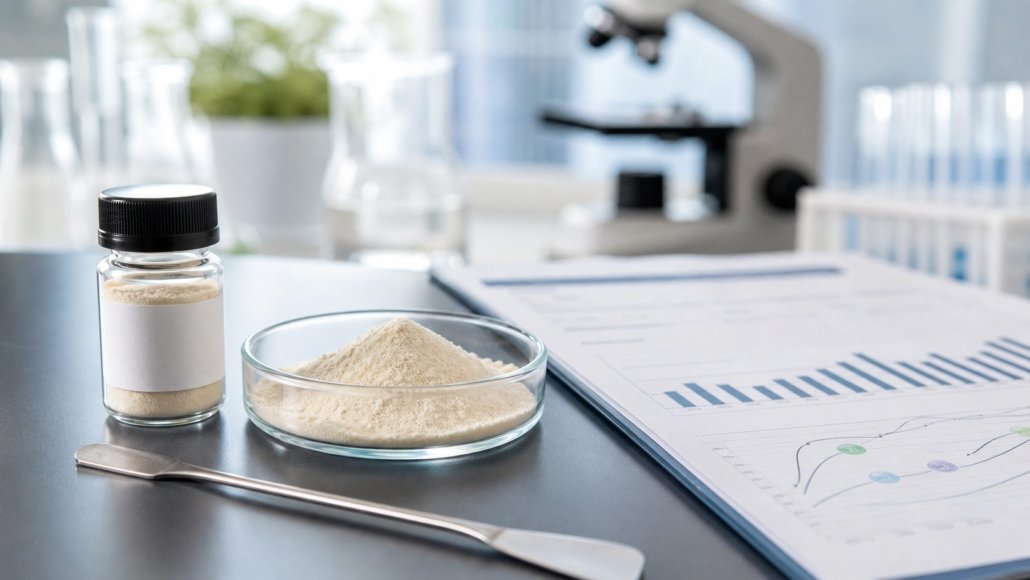
Lumbrokinase powder is made from earthworm-derived enzyme material that has been extracted, purified, concentrated, and dried into a powder. The ingredient is associated with fibrinolytic enzymes, a group of enzymes studied for their ability to break down fibrin, the protein network involved in clot structure.
In commercial sourcing, “lumbrokinase” usually refers to a mixture of enzyme components rather than one single simple molecule. That detail matters because buyers should not evaluate the ingredient by name alone. A serious supplier should be able to explain the source material, extraction process, activity testing method, specification sheet, and batch-to-batch quality controls.
The powder form makes the ingredient easier to ship, store, blend, encapsulate, or use in private-label supplement manufacturing. Still, enzyme ingredients are sensitive by nature. Heat, moisture, pH, and poor packaging can affect performance. So yes, the name on the label matters, but the manufacturing discipline behind the powder matters even more.
How does lumbrokinase powder work as an enzyme ingredient?
Lumbrokinase is commonly discussed as a fibrinolytic enzyme ingredient because research has examined its relationship with fibrin breakdown pathways. In simple terms, fibrinolytic enzymes are studied for how they interact with fibrin, which acts a bit like the structural mesh in a clot.
That said, supplement brands need to be careful with claims. Ingredient education is not the same thing as disease treatment. In most markets, lumbrokinase supplement copy should avoid implying that the product diagnoses, treats, cures, or prevents disease. A better approach is to focus on ingredient identity, enzyme activity, quality controls, manufacturing standards, and responsible use.
For B2B buyers, the useful sourcing question is this: how is enzyme activity measured, and is the method consistent from batch to batch? If a supplier cannot explain the activity unit, testing protocol, and acceptable range, the product may look attractive on a price sheet but become difficult to formulate at scale.
| Buyer question | Why it matters | What to request |
|---|---|---|
| What is the enzyme activity? | Activity is central to ingredient consistency. | COA with activity result and method reference |
| What is the source material? | Source affects traceability and buyer confidence. | Raw material statement and traceability record |
| How is the powder stabilized? | Enzymes may lose activity under poor storage. | Storage condition, shelf life, packaging details |
| Is each batch tested? | Batch variation can affect finished products. | Batch-specific COA and quality release record |
How is lumbrokinase powder produced?
Lumbrokinase powder production usually involves raw material preparation, enzyme extraction, purification, concentration, drying, sieving, and final quality testing. The exact process depends on the manufacturer, but the goal is always similar: preserve enzyme activity while producing a clean, stable powder.
A responsible factory treats enzyme production as a controlled workflow, not a simple grinding process. The manufacturing team must manage temperature, microbial controls, drying conditions, and contamination risks. Even small process differences can influence final activity. You know what that means for buyers: two powders with the same ingredient name may not perform the same way.
- Raw material selection and inspection
- Controlled extraction and separation
- Purification and concentration of enzyme fractions
- Drying under conditions designed to protect activity
- Sieving, blending, and packaging
- Finished-batch testing before release
For supplement brands, this is where supplier transparency becomes a commercial advantage. A manufacturer that can explain process controls clearly is usually easier to work with during sample approval, formulation trials, documentation review, and repeat orders.
What specifications should buyers check before sourcing lumbrokinase powder?
Buyers should check enzyme activity, appearance, odor, moisture, particle size, microbiological limits, heavy metals, residual solvents where relevant, and shelf-life data. For B2B supplement projects, documentation often decides whether a supplier is truly usable.
A low quote can be tempting. Really tempting. But with enzyme powders, the cheapest offer may become expensive if the activity is unclear, the COA is incomplete, or the ingredient cannot pass your local compliance review. A serious purchasing team should compare technical files before comparing price alone.
| Specification item | Typical buyer concern | Business impact |
|---|---|---|
| Enzyme activity | Is the powder strong and consistent? | Affects dosage design and product positioning |
| Moisture | Will the powder remain stable? | Affects shelf life and storage risk |
| Microbial limits | Is it suitable for supplements? | Affects compliance and release testing |
| Heavy metals | Does it meet market requirements? | Affects import, retail, and brand risk |
| Particle size | Will it blend well? | Affects capsule filling and uniformity |
What forms can lumbrokinase powder be used in?
Lumbrokinase powder is commonly used in capsules, tablets, custom blends, and private-label supplement formulas. Capsules are often the most practical format because they help protect the ingredient from excessive handling and allow brands to control serving size more easily.
Formulation teams should think about compatibility. Enzymes may be sensitive to moisture, high compression force, aggressive excipients, and certain processing conditions. If a brand plans to use tablets, sachets, or complex multi-ingredient blends, sample testing is not optional. It is the calm, boring, very useful step that prevents bigger problems later.
For a broader comparison of enzyme positioning, see Lumbrokinase vs Nattokinase: Which Fibrinolytic Enzyme Is Right for You?. If your audience asks about timing expectations, this related guide may also help: How Long Does Lumbrokinase Take to Work?
How should supplement brands evaluate a lumbrokinase powder supplier?
Supplement brands should evaluate a supplier by technical documentation, production capability, batch consistency, communication speed, packaging options, and export experience. A good lumbrokinase supplier should not only sell powder; it should reduce uncertainty for your purchasing, R&D, and compliance teams.
Here is a practical checklist buyers can use before approving a sample or placing a bulk order:
- Request a recent COA from an actual batch.
- Confirm enzyme activity and testing method.
- Ask for specification sheet, SDS, and allergen statement if required.
- Check microbial and heavy metal limits against your target market.
- Review packaging, shelf life, and storage conditions.
- Ask whether OEM capsules or custom blends are available.
- Confirm MOQ, lead time, sample policy, and export documents.
- Test the sample in your intended formula before bulk approval.
One practical sourcing tip: compare suppliers using the same requested specification. If every supplier quotes a different activity level, package size, or test method, the price comparison becomes messy fast. Standardize the RFQ first, then compare offers.
Is lumbrokinase powder safe to use in supplement products?
Lumbrokinase powder should be evaluated carefully because it is an active enzyme ingredient, not a general food powder. Brands should review safety documentation, local regulations, intended claims, serving size, contraindication language, and finished-product testing before launch.
Consumers who use anticoagulant or antiplatelet medication, have bleeding disorders, are preparing for surgery, are pregnant or nursing, or have complex medical conditions should speak with a qualified healthcare professional before using fibrinolytic enzyme supplements. This kind of safety language is not just legal padding. It helps protect the consumer and the brand.
For B2B buyers, the safest commercial path is conservative and clear: source from a documented supplier, avoid disease claims, test finished products, and create labeling that matches the rules of the target market.
Why do brands source lumbrokinase powder from specialized manufacturers?
Brands source lumbrokinase powder from specialized manufacturers because enzyme ingredients require controlled processing, technical testing, and consistent documentation. A general trading company may be able to quote a product, but a manufacturing partner is better positioned to support specifications, samples, repeat supply, and formulation questions.
For nutraceutical brands, the value of a supplier is not limited to price per kilogram. It includes fewer email loops, faster document review, stable repeat orders, and better support when your capsule factory asks a technical question at the worst possible time. That is where an experienced ingredient partner quietly earns its place.
Venacorebio focuses on earthworm-derived functional ingredients, including lumbrokinase powder, earthworm protein, and earthworm peptide. For brands developing enzyme supplements, private-label capsules, or custom ingredient projects, the sourcing conversation should begin with your target specification, market, dosage form, and documentation needs.
Frequently asked questions about lumbrokinase powder
Is lumbrokinase powder the same as earthworm powder?
No. Lumbrokinase powder is an enzyme-focused ingredient derived from earthworm material through extraction and processing. Generic earthworm powder is broader and may not provide the same enzyme activity specification.
What should I ask for before buying bulk lumbrokinase powder?
Ask for a COA, specification sheet, enzyme activity method, microbial and heavy metal data, packaging details, shelf life, storage conditions, and sample availability before confirming a bulk order.
Can lumbrokinase powder be used in capsules?
Yes, capsules are a common finished-product format for lumbrokinase powder. Brands should test blend uniformity, capsule fill weight, stability, and compatibility with other ingredients before production.
How should lumbrokinase powder be stored?
It should generally be stored in sealed packaging, away from heat, direct sunlight, and moisture. The exact storage condition should follow the supplier’s specification and stability data.
Is lumbrokinase powder suitable for private-label supplements?
Yes, it can be suitable for private-label enzyme supplements when the buyer has clear specifications, compliant labeling, proper safety language, and a supplier that can support documentation and repeatable quality.
Send your lumbrokinase powder inquiry to Venacorebio
If you are developing a lumbrokinase supplement, enzyme capsule, or custom earthworm-derived ingredient project, send Venacorebio your target specification, dosage form, order quantity, and destination market. Our team can help review sample options, documentation needs, packaging requirements, and bulk supply details for your next product run.






Leave a Reply
Want to join the discussion?Feel free to contribute!