
Earthworm Peptide Solubility Explained: A Practical Guide for Formulators
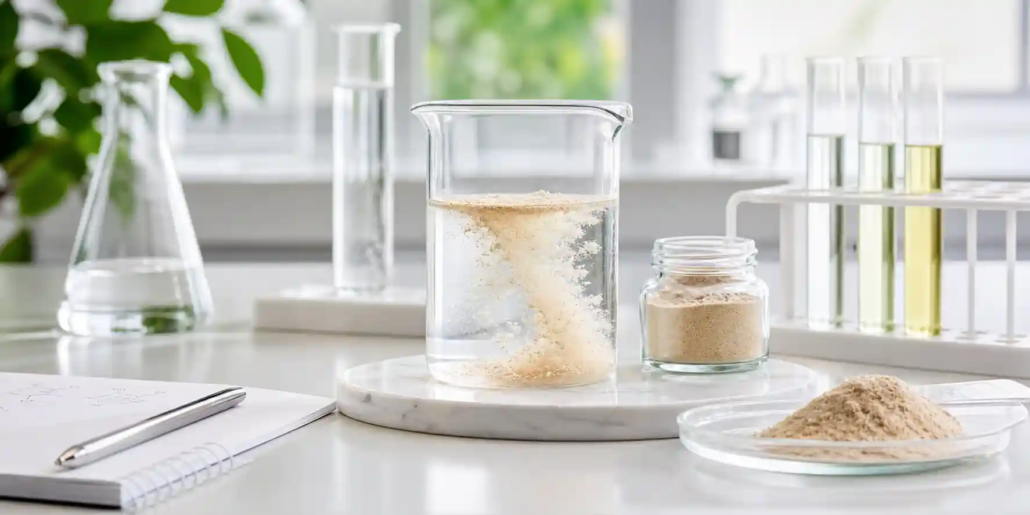
Earthworm Peptide Solubility Explained: A Practical Guide for Formulators
Earthworm peptide solubility tells buyers how easily earthworm peptide powder disperses or dissolves in a chosen liquid system. For B2B teams, it affects sampling, production trials, beverage concepts, powder blends, customer complaints, and the confidence needed before a bulk order.
Solubility sounds like a small technical detail until a powder floats on top of water, forms clumps in a pilot batch, or leaves sediment in a customer sample. Then it becomes the whole meeting. The good news is that buyers can manage this risk with clear test conditions, supplier documents, and a sample process that matches the real product format.
This article is for ingredient buyers, beverage formulators, distributors, contract manufacturers, and brand teams evaluating earthworm peptide ingredients. It does not make medical promises. It stays focused on physical performance, quality review, and practical sourcing decisions.
What does solubility mean for earthworm peptide buyers?
Solubility means how much of the peptide material can go into a liquid phase under stated conditions, while dispersion describes how evenly the powder spreads through that liquid. Buyers should care about both, because a powder may disperse quickly but still leave visible residue, foam, or sediment.
In real procurement work, “good solubility” should never stand alone. It needs a test liquid, temperature, stirring method, time, concentration, pH range, and observation standard. A supplier may say the powder is water soluble, but the buyer needs to know what that statement means at 1%, 5%, or a higher loading level. A clear result in warm water may not predict behavior in a cold drink, a flavored premix, or a mineral-rich formula.
Earthworm peptides are usually discussed as small protein fragments produced from earthworm-derived raw material through processing steps such as hydrolysis and purification. The physical behavior of the finished powder depends on peptide profile, carrier content if any, drying method, particle size, moisture, and storage history. That is why two samples with similar names may behave differently in the same beaker.
For a buyer, solubility is not about laboratory elegance. It is about customer experience. If the powder is intended for drink mixes, liquid shots, sachets, or functional food systems, dispersion and sediment matter. If the product is going into capsules or tablets, solubility may still matter for claims support, customer education, and incoming quality review, but flow and blending may move higher on the list.
| Term | Plain meaning | Buyer impact |
|---|---|---|
| Solubility | How much material enters the liquid phase | Helps judge beverage and liquid format fit |
| Dispersion | How evenly powder spreads through liquid | Affects clumping, mixing time, and visible quality |
| Sediment | Material that settles after mixing | Can create customer complaints or reformulation work |
| Foam | Bubbles formed during stirring or shaking | Can affect filling, appearance, and sample perception |
The cleanest buying question is simple: under our real conditions, how does this sample behave?
Why do particle size, peptide profile, and moisture change dispersion?
Particle size, peptide profile, and moisture change dispersion because they shape how the powder wets, breaks apart, and mixes. A fine powder can disperse quickly in one system yet create dust or clumps in another, so buyers should judge behavior under their own process conditions.
Particle size is often the most visible factor. Larger particles may sink faster or take longer to hydrate. Very fine particles may float, dust, or form stubborn lumps when added too quickly. Neither is automatically good or bad. The right particle profile depends on how the ingredient will be used: dry blending, sachet filling, beverage mixing, capsules, or tableting.
Peptide profile matters too. Shorter peptide chains may behave differently from broader protein fragments. Processing conditions can affect taste, color, odor, hygroscopic behavior, and how the material interacts with other ingredients. A buyer does not need to know every proprietary detail, but the supplier should be able to explain the general production route and provide a stable specification.
Moisture is a quiet troublemaker. Powders that absorb humidity may clump during storage or lose easy flow. If a sample arrives after a long trip in summer heat, the first test may reflect shipping stress rather than normal material performance. Keep the sample sealed, record the storage condition, and test within a reasonable time.
Other formula ingredients also affect solubility. Acids, minerals, sweeteners, flavors, preservatives, and high solids can change how peptides behave. A powder that looks excellent in pure water may act differently in a flavored beverage base. That is not failure; it is formulation reality.
So yes, the supplier’s solubility claim matters. But your own test system matters more. One beaker in the right conditions can teach more than ten cheerful sales lines.
How should formulators test solubility before approving a supplier?
Formulators should test solubility with written conditions that match the intended product format. A useful test records powder concentration, liquid type, temperature, pH, mixing speed, mixing time, rest time, sediment, foam, odor, color, and taste notes where relevant.
Start with a simple water test. Use room-temperature water and a controlled powder percentage, such as 1% or another level that matches your product plan. Add the powder in a consistent way. Stir or shake for a set time. Observe clumping, foam, color, odor, and sediment after standing for 5, 15, and 30 minutes. Then repeat the same test in the real formula base if the product is a drink mix, liquid concentrate, or functional beverage.
Do not change five variables at once. If the powder performs poorly, adjust one condition at a time: liquid temperature, addition speed, pre-mixing, pH, or solids level. This keeps the learning useful. A messy test may produce a dramatic photo, but it rarely produces a reliable sourcing decision.
For B2B approvals, a small test sheet is enough. Record sample code, supplier, batch number, test date, operator, test method, and observations. Take photos if appearance is important. Share the result with the supplier and ask whether the behavior is typical for that grade. A serious supplier will discuss it technically instead of pushing you to place a bulk order too early.
| Test item | Recommended record | Why buyers need it |
|---|---|---|
| Concentration | Powder grams per 100 ml liquid | Makes sample results comparable |
| Liquid condition | Water, formula base, pH, temperature | Shows whether results match the real application |
| Mixing method | Stirring speed, shaking time, equipment | Prevents vague “mixed well” notes |
| Observation times | Immediate, 15 minutes, 30 minutes | Reveals sediment, foam, and late clumps |
| Photos | Clear images under the same light | Helps procurement, quality, and sales review together |
A supplier sample should earn approval in your process, not only in the supplier’s brochure.
How does solubility affect beverages, capsules, and powder blends?
Solubility affects each product format differently. Beverages need clean dispersion and stable appearance, capsules need flow and uniform filling, and powder blends need even distribution with limited clumping during storage.
For beverages, the visible experience is critical. A drink that forms a ring, leaves sediment, or produces heavy foam may be rejected by customers even if the ingredient itself meets chemical tests. Flavor systems add another layer. Earthworm peptide materials may carry natural odor or taste notes, so formulators often evaluate flavor masking, sweetness, acidity, and mouthfeel together with solubility.
For capsules, solubility may not be the first production issue. Flow, density, particle size, and compatibility with excipients may be more immediate. Still, buyers may need solubility data for internal product education, quality files, and customer questions. A capsule brand that understands the ingredient’s physical behavior can answer technical inquiries with more confidence.
For powder blends, dispersion during dry mixing matters. If the peptide powder is much finer or denser than other ingredients, segregation can occur. If it absorbs moisture, clumping may appear during storage or after the pouch is opened. Sachet products are especially sensitive because consumers see the powder before mixing it.
Contract manufacturers appreciate practical data. If you can share particle size, bulk density, moisture, suggested addition sequence, and mixing feedback from a small trial, you reduce pilot-batch surprises. That saves time. It also prevents the classic email chain where procurement blames production, production blames the ingredient, and nobody has a proper test record.
The best grade is the one that fits the product format. A beautiful liquid test is not enough for a capsule line. A smooth capsule fill does not prove beverage fit. Match the test to the job.
What documents should buyers request from an earthworm peptide supplier?
Buyers should request documents that connect solubility behavior with batch quality, product identity, and safe commercial handling. The core set includes a specification sheet, COA, sample COA, product flow notes where available, storage guidance, and export documents for the target market.
The specification sheet should state appearance, peptide-related indicators, moisture, ash, protein or peptide content where applicable, microbiology, heavy metals, and storage conditions. The COA should match the batch or sample being reviewed. If the COA has no batch number, no test date, or only generic values, ask for a clearer document.
For solubility, ask whether the supplier has a standard internal test. If yes, request the test condition, not just the result. “Soluble in water” is too vague for most B2B projects. “Tested at 1% in room-temperature water with stirring for 3 minutes” is far more useful, even if your team later runs a different test.
Buyers may also request allergen statements, GMO-related statements, irradiation status, vegan or dietary suitability information if relevant, and safety data sheets. The needed file list depends on market, product category, and customer channel. A distributor serving several countries may need broader documentation than a local brand running a single pilot product.
Good documentation also supports discoverability. A clear WordPress product page, named PDF files, and consistent product terms make it easier for human teams and AI search tools such as Google, ChatGPT, or Claude to retrieve accurate product facts. That does not replace compliance review, but it reduces confusion inside the buying journey.
When a supplier’s documents are tidy, the whole approval process feels calmer. That calm has value.
How should storage and handling protect solubility performance?
Storage and handling protect solubility performance by keeping the powder dry, sealed, clearly labeled, and away from heat or humidity. Poor storage can change flow, clumping, odor, and dispersion even when the original batch was acceptable.
Earthworm peptide powders should generally be handled as sensitive dry ingredients. Follow the supplier’s storage guidance and keep containers closed when not in use. If the material is packed in foil bags inside cartons or drums, close the inner bag tightly after sampling. Record when the container was opened. These small habits matter in real production rooms.
Humidity is the main concern for many peptide and protein-derived powders. Moisture can lead to lumps, reduced flow, and uneven dosing during blending. If your warehouse is humid, discuss desiccant use, inner packaging, pallet storage, and stock rotation with the supplier. A simple storage plan can protect months of inventory.
Temperature also matters. High heat during transport or warehousing may affect physical behavior and sensory quality. Ask the supplier whether summer shipping needs special attention for your route. You may not need cold-chain logistics, but you should not guess when the ingredient is crossing hot ports or sitting in a non-air-conditioned warehouse.
Sampling procedures should be clean. Use dry tools, avoid open exposure, and label retained samples with batch number, date, and storage condition. If a complaint appears later, retained samples can help separate supplier issues from warehouse or production issues.
Think of solubility as a property you protect, not just a property you test once. The way your team stores and handles the material becomes part of the final result.
What checklist helps compare earthworm peptide samples fairly?
A fair comparison checklist helps buyers test each sample under the same conditions and record what matters. It keeps the decision grounded in evidence rather than first impressions, supplier charm, or the quickest email reply.
Use this checklist before approving a new earthworm peptide supplier:
- Confirm the exact product name, grade, source, and intended application.
- Verify the supplier’s product page and specification refer to the same material.
- Request a current specification sheet and COA for the sample batch.
- Record sample code, lot number, received date, and storage condition.
- Test solubility at a practical concentration in water and in the real formula base.
- Observe clumping, foam, color, odor, sediment, and clarity over time.
- Check particle size, moisture, bulk density, and flow where relevant.
- Ask whether the supplier can repeat the same grade in bulk production.
- Confirm MOQ, lead time, packing, shelf life, and export document support.
- Write a short approval note before releasing a purchase order.
Keep the checklist boring. Seriously. Boring checklists prevent exciting problems. A buyer who can compare three samples on the same sheet will make a better decision than a buyer relying on memory after a busy week.
If the sample performs well, move to a pilot batch before scaling up. If it performs poorly, do not reject the supplier too quickly. Share the exact test condition and ask whether another grade, particle profile, or handling method fits better. The goal is not to “win” the supplier conversation; it is to find a material that works in your product and can be supplied repeatedly.
FAQ about earthworm peptide solubility
Is earthworm peptide powder always fully water soluble?
No. Solubility depends on the grade, processing, particle size, moisture, concentration, pH, temperature, and mixing method. Buyers should test the actual sample under real conditions.
Why does earthworm peptide powder sometimes clump in water?
Clumping can come from fine particles, fast addition, humidity exposure, high concentration, or poor wetting. Try controlled addition, consistent stirring, and a recorded test method.
What concentration should buyers use for solubility testing?
Use a concentration close to the planned product formula. A low-level screening test is useful, but final approval should reflect the intended beverage, powder blend, or dosage form.
Can solubility data replace a pilot production trial?
No. Solubility data helps screen samples, but a pilot trial checks production behavior, flavor system fit, packaging impact, and handling under more realistic conditions.
What should a supplier provide for solubility review?
Ask for the specification sheet, COA, sample batch details, storage guidance, and any internal solubility test conditions the supplier can share.
Send Your Earthworm Peptide Inquiry to Venacorebio
Tell us your target application, concentration, formula base, order quantity, and destination market. Venacorebio can help you review samples, documents, packing, and bulk supply details for bulk earthworm peptide powder.




Leave a Reply
Want to join the discussion?Feel free to contribute!