Earthworm Protein and Sustainable Agriculture: Circular Nutrients, Feed Research, and Evidence Limits
Earthworm Protein and Sustainable Agriculture: Circular Nutrients, Feed Research, and Evidence Limits
Earthworm protein can be discussed in sustainable agriculture through managed biological conversion, potential feed applications, and the relationship between biomass and vermicompost production. Those pathways need evidence about the actual system. An earthworm protein powder is not a live soil organism or automatically a fertilizer, and its name alone does not demonstrate reduced emissions, improved soil, or better crop yields.
The useful question is how a documented production system might recover resources while maintaining safety and an appropriate use for each output. This guide examines agricultural pathways and research limits. It does not establish a farm’s environmental performance, a feed inclusion rate, a fertilizer recommendation, or an environmental advantage for a particular commercial ingredient.
Separate Live Earthworms, Protein Ingredients, and Vermicompost
These materials occupy different places in an agricultural system. Live earthworms are organisms involved in biological processes. Earthworm biomass can be harvested and processed into a material for a defined application. Vermicompost is a separate output of a managed system, not another name for an extracted protein or a packaged ingredient.
The distinction matters when evaluating an agricultural claim. Evidence about organisms in soil does not establish the effect of adding protein powder to soil. Evidence about vermicompost does not automatically describe an earthworm meal. A feed trial concerns the tested diet and animal population rather than the performance of a soil amendment.
Identify which material is being discussed before asking what it contributes. For a commercial powder, request its actual source and processing description. Do not imply that it was produced in a particular circular farming system unless the supplier has evidence connecting that system to the material offered.
| Material or activity | Agricultural question | Evidence that cannot simply be transferred |
|---|---|---|
| Live earthworms | What happens in the specified soil or managed rearing system? | A soil-organism finding is not a protein-powder performance claim |
| Harvested biomass | What is produced, how is it handled, and what is its intended use? | Fresh biomass is not identical to a dried or extracted ingredient |
| Protein ingredient | Does the characterized material fit a reviewed application? | Composition alone does not prove environmental benefit or animal performance |
| Vermicompost | What properties and use conditions support its proposed agricultural role? | Results for a soil amendment do not establish benefits of a separate powder |
Where Circular Resource Recovery Can Enter the System
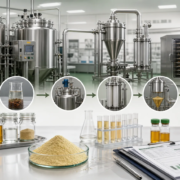
A managed bioconversion project can be studied as a pathway connecting selected organic inputs, rearing operations, harvested biomass, and residual material. The potential agricultural contribution lies in what those operations actually recover and how the outputs can be used responsibly. It should not be described as a system without losses or environmental burdens.
A 2020 pilot study of earthworms as food and feed resources followed a fruit-and-vegetable-residue rearing project and examined its outputs and safety questions. It provides an example of a studied conversion system, not proof that all discarded material is suitable for rearing or that every commercial powder has the same production history.
For a proposed project, map the actual inputs and outputs before assigning benefits. Record what material enters, what usable material leaves, what remains to be managed, and which measurements support the account. A circular narrative becomes more useful when it can be checked against a physical record rather than inferred from a product photograph.
Input Suitability Comes Before Waste-Recovery Claims
A residual material is not automatically a suitable growth substrate merely because recovering it sounds desirable. The proposed input needs review for the actual rearing system and the intended destination of its outputs. Ask where it comes from, how it is separated and stored, and which hazards or restrictions need to be assessed.
The safety discussion in the cited pilot study also identified a microbiological issue in a processed preparation and investigated additional treatment. That finding is a reminder that resource recovery and product safety are separate questions. Its treatment conditions are not a universal manufacturing instruction or a validated control for another material.
Keep input qualification, traceability, process controls, and appropriate testing connected. If the substrate changes, identify whether the earlier review still applies. Do not use the words natural, recycled, or circular to replace evidence about contaminants, microbiological quality, or suitability for the intended use.
How Protein Recovery Relates to Animal Nutrition
An earthworm-derived material may be investigated as an ingredient in a particular animal diet, but application requires more than a reported protein result. The relevant preparation, composition, processing, animal species, full diet, and intended use all need attention. A general alternative-protein story is not a feeding recommendation.
Ask the animal-nutrition team which information and studies are needed for the proposed diet. A meaningful comparison should address the actual nutritional role the material is intended to serve, rather than treating equal masses of different ingredients as interchangeable. No universal replacement ratio or inclusion level is established here.
Regulatory acceptability is also separate from technical interest. FDA’s animal food ingredient information describes requirements and review routes relevant to intended ingredient uses in the United States. It does not establish permission for every earthworm preparation. Confirm the relevant species, use, and destination with qualified reviewers.
Evaluate the Vermicompost Stream on Its Own Merits
Agricultural resource recovery may involve both biomass and vermicompost, but each output needs its own identity, quality assessment, and use decision. If vermicompost is proposed for soil use, evaluate that material and the intended crop or soil context directly. Do not assign its possible role to the protein fraction.
A project team can ask what measurements are available for the proposed amendment, how it has been handled, and what application evidence is relevant to the destination. Decisions about field use should involve appropriate agronomic expertise. This guide establishes no application rate, fertilizer replacement amount, or crop-yield response.
The same separation should appear in commercial records. If one company sells a protein ingredient while another manages the residual output, identify those boundaries. The existence of a useful coproduct in a research system does not demonstrate that every supplier captures, sells, or beneficially uses the same stream.
What Life Cycle Research Adds to the Discussion
Environmental evaluation should account for burdens as well as recovered outputs. A 2019 life cycle study of earthworm meal production examined fruit-and-vegetable-residue conversion and alternative meal-production scenarios. It identified rearing emissions, input transport, and processing electricity as relevant contributors, and showed that allocation choices affected reported results. Those findings are system-specific, not a universal footprint for earthworm protein powder.
ISO 14040’s public description outlines a life cycle assessment framework covering goal and scope, inventory, impact assessment, interpretation, reporting, and review. A product claim should therefore be connected to a clearly scoped assessment rather than a single favorable input or process feature. Mentioning the standard is not a claim that a supplier is certified or that its product has been assessed.
Before comparing alternatives, state what is being compared and what activities are included. Fresh biomass, dried meal, and an extracted ingredient are different outputs. A result ending at a rearing site does not automatically describe processing, packaging, shipment, or use beyond that point.
Ask How Shared Burdens Are Assigned
A system with more than one output needs a transparent account of how environmental burdens are attributed in the assessment. The protein ingredient should not be credited with every possible coproduct benefit while the associated burdens are assigned elsewhere without explanation.
Ask the assessor how the chosen method treats biomass, vermicompost, rejected material, and other relevant streams. Also ask whether a different justified treatment would materially change the interpretation. This is a question for the assessment, not an invitation to select whichever method creates the most attractive marketing number.
A comparison needs consistent units and functions. A quantity of wet biomass cannot be casually compared with a quantity of dry protein ingredient. If the proposed function is nutritional, ask how composition and relevant nutritional differences are addressed. If the purpose is residue management, make that purpose explicit instead of quietly changing it during the comparison.
Build a Farm-to-Ingredient Evidence Map
An agricultural project can prepare a focused evidence map without claiming to have completed a full environmental assessment. Identify the records already available, the boundaries they cover, and important gaps. Distinguish measured information from estimates and explain the period and location represented.
The following questions are a suggested project framework. They are not a description of Venacore Bio’s farms, processing sites, suppliers, or verified environmental controls. Request the actual scope of available information rather than assuming that a commercial ingredient listing contains it.
| System area | Record to discuss | Question it helps answer |
|---|---|---|
| Input origin | Material identity, source, handling, and qualification | What enters the system and is it suitable for the proposed use? |
| Rearing | Location, operating period, relevant inputs, and recorded outputs | Which activities and quantities does the evidence represent? |
| Processing | Actual route, material balance, energy records, and quality review | What is required to obtain the offered ingredient? |
| Coproducts | Identity, quantity, handling, and actual destination | Which output roles are demonstrated rather than presumed? |
| Comparison | Consistent scope, unit, methods, and documented limitations | Does the comparison answer the stated agricultural question? |
Choose Improvement Questions Before Making Rankings
A project does not need to declare an ingredient universally superior to identify useful improvement work. It can investigate a specific source of loss, compare documented processing alternatives, or improve the quality of its material records. Set the question and decision criteria before evaluating a change.
For example, a team might compare alternative input collection arrangements while keeping the output specification fixed, or investigate a processing change while maintaining the required quality review. These are proposed study designs, not claims that a particular route has already reduced impact or that safety controls can be relaxed.
Record trade-offs rather than hiding them. A change could improve one measured aspect while creating additional questions elsewhere. The conclusion should identify the actual result and its limits instead of converting a narrow observation into an unsupported statement about the whole agricultural system.
Use Environmental Language That Matches the Evidence
Explain which agricultural pathway is under discussion and what has actually been measured. The FTC’s Green Guides resources address environmental claims and the need to avoid misleading impressions. This U.S. marketing context is not a product endorsement or a substitute for reviewing requirements in the target market.
Distinguish a research opportunity from an established supply-chain attribute. It is reasonable to describe a documented experiment involving residue conversion. It is not reasonable to imply that an unrelated commercial powder has the same input history, a verified low footprint, or demonstrated soil benefits without supporting evidence.
Keep the material, scope, date, methods, and limitations accessible to the people using the statement. Procurement, agronomy, nutrition, environmental assessment, and marketing may ask different questions. A precise account of what is known is more useful than asking one broad green label to answer them all.
FAQ
Is earthworm protein powder a fertilizer?
It should not be treated as one merely because earthworms participate in agricultural systems. A commercial protein ingredient, living organisms, and vermicompost are different materials. Any proposed soil application needs its own evidence, product classification, and use review.
Does using organic residue guarantee a low environmental footprint?
No. The relevant system includes inputs, rearing, emissions, processing, outputs, and the assessment scope. A recovered input can be part of the story without determining the final result. Evaluate actual project data rather than assigning a universal advantage.
Can earthworm meal replace conventional feed protein at any level?
No universal replacement level is established here. Review the specific preparation, animal species, complete diet, evidence, and destination requirements with qualified specialists. A reported protein content or a circular-economy narrative is not a feeding instruction.
Can findings about vermicompost be claimed for a protein ingredient?
Not automatically. The materials and proposed functions differ. Keep evidence about soil amendments connected to the evaluated amendment, and evidence about a feed or ingredient connected to its actual preparation and use.
What should a buyer request before discussing agricultural sustainability?
Start with material identity and intended use, then ask which records support the actual production pathway. Identify any available environmental assessment and its boundaries. Keep unknowns explicit rather than describing an unverified circular farm or environmental result.
Send Your Ingredient Inquiry
Discuss earthworm protein sourcing with Venacore Bio through the form below. Share the intended application, destination, sample needs, and the material or environmental documents your review team requires. Confirm the actual supply scope and available evidence in writing. Visit the Venacore Bio home page for the wider ingredient range.