
What Is Earthworm Protein?
What Is Earthworm Protein?
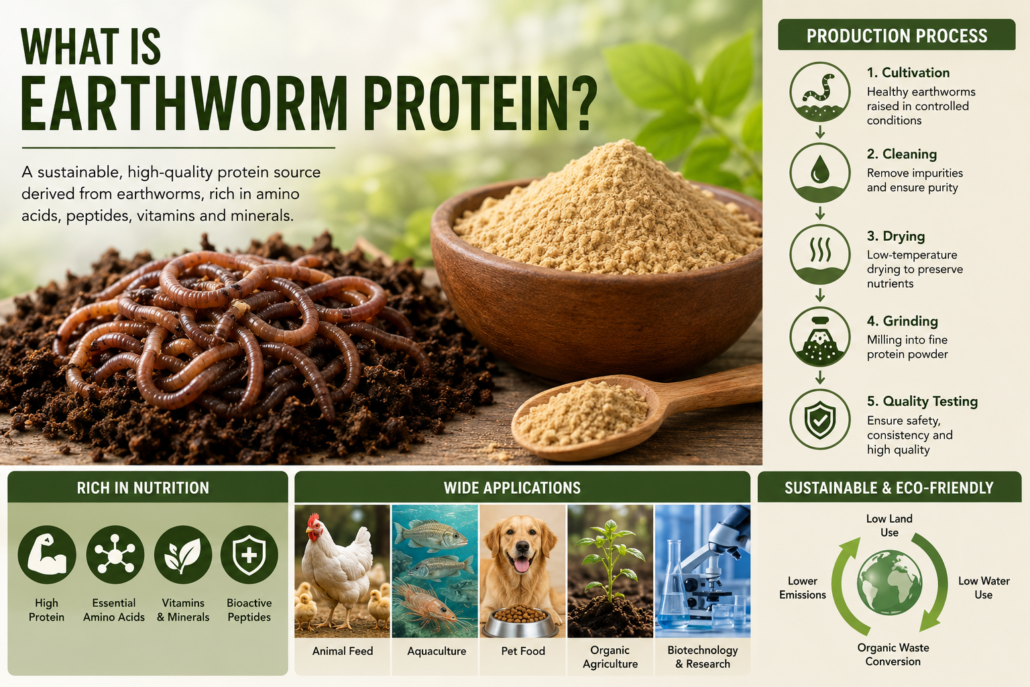
Earthworm protein is a high-protein ingredient extracted from carefully processed earthworms. It contains a broad spectrum of amino acids, bioactive peptides, vitamins, and minerals, making it an interesting raw material for applications in animal nutrition, aquaculture, agriculture, biotechnology, and ongoing scientific research. While earthworms have been used in traditional practices for centuries, modern earthworm protein is produced using controlled processing methods that focus on quality, consistency, and safety.
As global demand for sustainable protein sources continues to rise, earthworm protein has attracted attention because earthworms efficiently convert organic matter into nutrient-rich biomass. This makes them a promising alternative protein source for several industries.
Why Is Earthworm Protein Gaining Attention?
The growing interest in earthworm protein comes down to three major factors:
- High nutritional value
- Sustainable production
- Diverse industrial applications
Unlike many conventional protein sources, earthworms require relatively little land, water, and feed. They can also contribute to organic waste recycling through vermiculture, making their production environmentally attractive.
Researchers are also investigating various naturally occurring compounds within earthworms, including proteins, peptides, enzymes, and other bioactive substances.
How Is Earthworm Protein Produced?
Earthworm protein is typically manufactured through several carefully controlled steps.
| Production Stage | Purpose |
|---|---|
| Earthworm Cultivation | Raise healthy earthworms under controlled conditions |
| Cleaning | Remove soil and impurities |
| Sterilization | Reduce microbial contamination |
| Drying | Preserve nutritional quality |
| Grinding | Produce fine powder |
| Protein Extraction (Optional) | Increase protein concentration |
| Quality Testing | Verify purity, safety, and consistency |
Manufacturers often use low-temperature drying or freeze-drying techniques to help preserve sensitive nutrients.
Depending on the intended application, the final product may be:
- Whole earthworm powder
- Earthworm protein powder
- Hydrolyzed earthworm protein
- Earthworm peptide powder
- Enzyme-rich extracts
Nutritional Composition of Earthworm Protein
Although the exact composition varies by species and processing method, earthworm protein is generally rich in essential nutrients.
| Nutrient | Typical Characteristics |
|---|---|
| Crude Protein | High concentration |
| Essential Amino Acids | Comprehensive amino acid profile |
| Bioactive Peptides | Naturally occurring after hydrolysis |
| Minerals | Iron, calcium, zinc, magnesium |
| Vitamins | Various B vitamins |
| Low Fat | Relatively lean protein source |
The amino acid profile often compares favorably with traditional animal proteins, making it valuable in nutritional formulations.
Amino Acid Profile
Earthworm protein contains many essential amino acids that animals cannot synthesize themselves.
Common amino acids include:
- Lysine
- Leucine
- Isoleucine
- Valine
- Methionine
- Threonine
- Phenylalanine
- Histidine
- Arginine
- Glycine
- Alanine
- Glutamic acid
A balanced amino acid composition contributes to its nutritional value in feed formulations and research applications.
What Are Bioactive Peptides?
Bioactive peptides are short chains of amino acids released when proteins are broken down through enzymatic hydrolysis.
Earthworm-derived peptides have attracted research interest because scientists are studying their potential biological activities, including interactions with enzymes, antioxidant properties, and immune-related functions. However, the specific effects depend on the peptide sequence, processing method, and intended application, and many areas remain under investigation.
This is one reason manufacturers often produce both Earthworm Protein and Earthworm Peptide as separate ingredients.
Applications of Earthworm Protein
Earthworm protein is used across several industries.
Animal Feed
One of the largest applications is livestock nutrition.
Earthworm protein can be incorporated into feed for:
- Poultry
- Swine
- Dairy cattle
- Sheep
- Companion animals
Its high digestibility and balanced amino acid profile make it an attractive supplementary protein ingredient.
Aquaculture
Aquaculture producers increasingly seek sustainable protein alternatives to fishmeal.
Earthworm protein has been explored for feeding:
- Shrimp
- Tilapia
- Carp
- Catfish
- Eel
- Ornamental fish
Studies suggest that partial replacement of conventional protein sources with earthworm-derived ingredients may support growth performance in certain species, although optimal inclusion rates vary.
Pet Food
Premium pet food manufacturers are continually searching for novel protein ingredients.
Earthworm protein offers:
- High digestibility
- Rich amino acid content
- Sustainable sourcing potential
Its suitability depends on formulation goals, regulatory requirements, and consumer acceptance.
Organic Agriculture
Earthworms are already well known for improving soil health through vermicomposting.
In addition to producing vermicompost, earthworm biomass can be processed into protein-rich materials, supporting more efficient use of resources within integrated agricultural systems.
Biotechnology and Research
Earthworm proteins, enzymes, and peptides are also used in laboratory research.
Scientists continue to investigate their potential roles in:
- Enzyme studies
- Protein chemistry
- Functional food research
- Agricultural biotechnology
- Biomaterial development
These applications are generally research-focused and should not be interpreted as established therapeutic uses.
Earthworm Protein vs. Earthworm Peptide
Although the names are similar, they are different products.
| Feature | Earthworm Protein | Earthworm Peptide |
|---|---|---|
| Molecular Size | Larger proteins | Small peptide molecules |
| Production | Drying or protein extraction | Enzymatic hydrolysis |
| Solubility | Moderate | Higher |
| Digestibility | High | Often easier to absorb |
| Typical Applications | Feed, nutrition, industrial use | Functional ingredient research, specialized formulations |
Peptides are produced by breaking larger proteins into smaller fragments, which can alter properties such as solubility and digestion.
Sustainability Advantages
One reason earthworm protein is receiving growing attention is its environmental profile.
Compared with many conventional livestock systems, earthworm cultivation can offer:
- Lower land requirements
- Reduced water consumption
- Organic waste conversion
- Circular agriculture support
- Lower greenhouse gas emissions potential
These characteristics align with broader efforts to develop more sustainable protein production systems.
Quality Standards Matter
Not all earthworm protein products are manufactured to the same standards.
Reliable manufacturers typically emphasize:
- Controlled breeding environments
- Species identification
- Heavy metal testing
- Microbiological testing
- Moisture control
- Batch traceability
- GMP-compliant production where applicable
Buyers should also request documentation such as Certificates of Analysis (COAs) and product specifications to verify quality.
Is Earthworm Protein Safe?
Commercially produced earthworm protein intended for industrial or feed applications should be manufactured under strict quality control to minimize contamination risks.
Safety depends on factors such as:
- Earthworm species
- Cultivation conditions
- Processing methods
- Microbiological quality
- Heavy metal monitoring
- Compliance with local regulations
Requirements vary by country and by intended use, so buyers should ensure products meet the applicable standards in their target markets.
Frequently Asked Questions
What is earthworm protein made from?
Earthworm protein is produced by processing cultivated earthworms into a protein-rich powder or extract using cleaning, drying, grinding, and, in some cases, protein extraction or hydrolysis techniques.
Is earthworm protein rich in amino acids?
Yes. Earthworm protein contains a broad range of essential and non-essential amino acids, making it a nutritionally valuable protein source for various industrial applications.
What industries use earthworm protein?
Common industries include animal feed, aquaculture, pet nutrition, agriculture, biotechnology, and scientific research.
What is the difference between earthworm protein and earthworm peptide?
Earthworm protein consists mainly of intact proteins, while earthworm peptide contains smaller protein fragments produced through enzymatic hydrolysis, often offering improved solubility and digestibility.
Why is earthworm protein considered sustainable?
Earthworms efficiently convert organic matter into nutrient-rich biomass while requiring relatively low land, water, and feed inputs. This supports circular agriculture and offers an alternative protein source with a potentially lower environmental footprint.
Final Thoughts
Earthworm protein represents an emerging protein ingredient with strong nutritional value, sustainability advantages, and broad industrial potential. Its high protein content, balanced amino acid profile, and naturally occurring bioactive compounds have made it a subject of growing interest in animal nutrition, aquaculture, agriculture, and biotechnology.
As production technologies continue to improve and research expands, earthworm protein is likely to play an increasingly important role in sustainable protein innovation. For manufacturers, distributors, and formulators, partnering with a supplier that emphasizes quality control, traceability, and regulatory compliance is essential to ensuring consistent product performance and meeting market expectations.
Looking for a reliable earthworm protein manufacturer or bulk supplier? Contact our team today to discuss your specifications, request technical documentation, or obtain a customized quotation for your business needs.


Leave a Reply
Want to join the discussion?Feel free to contribute!