Lumbrokinase Applications in Nutraceuticals: A Practical Guide for Brands
Nutraceutical brands use lumbrokinase in a narrow but valuable way: as an enzyme ingredient for adult supplement formulas where buyers care about source control, activity testing, documentation, and compliant language. For teams evaluating lumbrokinase powder, the real question is not simply “Can we put it in a capsule?” It is “Can we build a formula, label, and supply plan that holds up under quality review?”
That distinction matters. Lumbrokinase is often discussed in enzyme and fibrinolytic contexts, yet supplement brands must be careful with consumer-facing claims. A strong nutraceutical application starts with ingredient identity and manufacturing discipline, then moves toward formula fit, documentation, and market positioning. If that sounds less flashy than a big health promise, good. It is also much safer.
Where does lumbrokinase fit in nutraceutical formulas?
Lumbrokinase fits best in specialized adult supplement formulas where enzyme identity, activity consistency, and clean documentation matter more than broad lifestyle marketing. It is usually reviewed by brands that already understand enzyme ingredients and need a bulk raw material for capsule, tablet, or powder blend development.
In practical terms, lumbrokinase is not a casual “add it anywhere” ingredient. It belongs in formulas where the buyer can explain why an enzyme ingredient is present, how much is used, how activity is measured, and what wording will appear on finished product labels. The formulation team should also think about excipients, moisture control, capsule fill weight, and packaging conditions. Enzymes can be sensitive, so careless handling may create a weak finished product even when the incoming material looks fine on paper.
| Application area | What buyers usually check | Why it matters |
|---|---|---|
| Capsule formulas | Particle size, flow, fill weight, activity level | Supports repeatable production runs |
| Tablet concepts | Compression tolerance and excipient fit | Helps avoid activity loss during processing |
| Powder blends | Uniform mixing, moisture, flavor impact | Reduces segregation and sensory issues |
| Premium ingredient lines | COA, origin records, allergen notes, test methods | Gives quality teams enough evidence to approve supply |
A simple rule helps: if the brand cannot describe the ingredient’s role without drifting into disease language, the application needs more work. Regulatory teams would rather shape a modest, support-oriented message early than repair a risky label later.
What makes lumbrokinase different from ordinary supplement powders?
Lumbrokinase is different because buyers must review both common powder specifications and enzyme-specific activity details. A color, odor, mesh, or loss-on-drying result is useful, but it does not tell the whole story for an enzyme ingredient.
A nutraceutical brand should ask how enzyme activity is defined, which test method is used, whether the method is used consistently from batch to batch, and how the supplier handles results near the lower limit. This is where sourcing becomes more than a price conversation. A cheap offer with vague activity units can slow a launch, confuse contract manufacturers, or trigger extra testing costs. You know what procurement teams dislike? A bargain that becomes expensive after the first quality review.
The same logic applies to certificates of analysis. A COA should not read like a decoration. It should connect to a batch number, manufacturing date, expiry or retest date, test items, limits, results, and responsible quality sign-off. When possible, buyers should request third-party testing for heavy metals, microbiology, and relevant contaminants, especially for export markets with stricter finished product review.
How should brands handle claims and compliance?
Brands should handle lumbrokinase claims with restraint. Nutraceutical content can explain ingredient identity, sourcing, quality control, and formulation considerations, but it should not promise to treat, cure, or prevent disease.
In the United States, dietary supplement companies commonly review label and marketing language against FDA dietary supplement rules, current good manufacturing practice requirements under 21 CFR Part 111, and advertising expectations from the FTC. Other markets may ask for different claim files, registration steps, or finished product wording. So the safer path is to build the application around quality and suitability, not medical certainty.
That does not make the article bland. It simply keeps the story honest. A brand can say that its team is reviewing a lumbrokinase ingredient for an adult enzyme supplement. It can discuss quality documents, activity testing, origin, formula format, and batch consistency. It should not make disease outcomes sound guaranteed. For consumers, health decisions belong with qualified professionals. For brands, claim review belongs with regulatory counsel and market-specific compliance teams.
| Content angle | Lower-risk phrasing | Phrasing to avoid |
|---|---|---|
| Ingredient education | Explain source, activity testing, and formula use | Promise a disease result |
| Quality story | Discuss COA, batch records, and third-party tests | Suggest testing proves a medical effect |
| Buyer guidance | Recommend supplier document review | Tell consumers to self-treat |
| Finished product planning | Use adult supplement and enzyme formula language | Use drug-style claims or guaranteed outcomes |
What should formulators check before using lumbrokinase?
Formulators should check activity, excipient fit, moisture control, processing stress, and packaging before using lumbrokinase. The goal is to protect enzyme performance from raw material receipt through finished product shelf life.
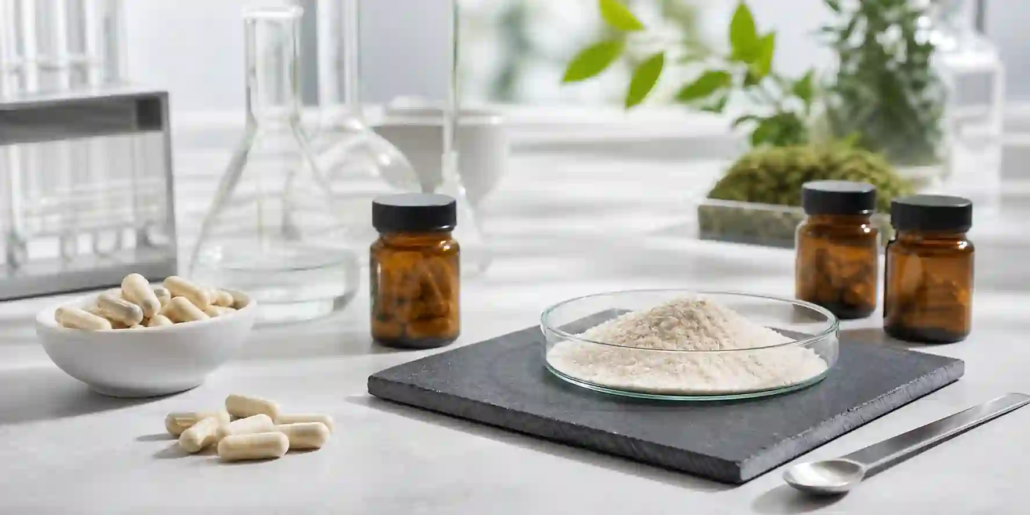
Here is the practical part. An enzyme ingredient may look like an ordinary beige powder, but the manufacturing environment can change the finished result. High heat, moisture, aggressive compression, or long exposure during blending can all create avoidable risk. Contract manufacturers should receive handling notes before the first pilot batch, not after a production issue appears.
- Confirm the activity unit and test method used on the COA.
- Ask for particle size and flow information if the formula will be encapsulated.
- Review moisture limits and storage conditions before booking production.
- Check compatibility with fillers, capsules, and other active ingredients.
- Request a pilot batch before committing to a large commercial run.
- Keep claim review separate from formula enthusiasm. It saves time later.
A neat formula on a spreadsheet is only the first step. The real formula is the one that survives sampling, mixing, filling, packaging, quality release, and customer feedback.
How do buyers compare suppliers for nutraceutical use?
Buyers compare lumbrokinase suppliers by looking at documentation quality, batch consistency, activity testing, production capacity, communication speed, and export readiness. Price matters, of course, but it should sit beside evidence rather than replace it.
A serious supplier should be able to provide a recent COA, basic specification sheet, allergen or GMO notes when available, packaging details, sample policy, lead time, and support for export documents. Some buyers also request stability data or method notes. Not every document will be available in the same format for every market, but vague answers should be treated as a signal. The issue is not perfection. The issue is whether the supplier understands the questions a quality manager will ask.
For new product development, a brand may start with a small lab sample, then request a pilot quantity, then move to a commercial batch after formula and document review. This staged path feels slower at first, yet it often prevents bigger delays. A rushed raw material approval can make the launch calendar look good for a week and painful for a month.
Which buyers are a good match for lumbrokinase applications?
The best-fit buyers are supplement brands, contract manufacturers, ingredient distributors, and private-label teams that already manage enzyme ingredients or premium functional formulas. These buyers usually have enough technical context to review activity, specifications, and compliant claims.
A weaker fit would be a brand looking for a quick trend ingredient without a regulatory review path. Lumbrokinase deserves more care than that. The buyer needs a clear formula concept, a target market, a finished dosage form, and a plan for quality release. If the brand sells across several countries, it should also check whether the ingredient and claim approach fit each destination market. That work is not glamorous, but it is the work that keeps products moving.
For distributors, the application story is slightly different. They need samples, documents, stable packaging, and credible supply timing so they can support many downstream customers. Their customers may ask the same question ten different ways. A well-organized supplier answer saves everyone from a long email chain.
What documents should be ready before a buying decision?
Before a buying decision, buyers should gather the specification sheet, COA, test method summary, safety and handling notes, packaging details, and any market-specific statements needed for review. These documents help quality, regulatory, purchasing, and manufacturing teams reach the same decision with fewer delays.
A good document pack is not just a folder. It is a workflow tool. Purchasing uses it to compare offers. Quality uses it to approve raw material entry. Formulators use it to plan dosage form trials. Regulatory teams use it to screen claims and market entry needs. When the document pack is thin, every team adds questions. When it is clear, decisions move faster.
That is why application planning should start with evidence. A brand can always refine flavor, capsule size, or packaging later. It is much harder to repair an unclear ingredient identity or a weak activity record after launch assets are already in motion.
FAQ
Can lumbrokinase be used in nutraceutical capsules?
Yes, many buyers review lumbrokinase for capsule concepts, but they should confirm activity, flow, excipient fit, and storage conditions before commercial production.
What is the most important specification for lumbrokinase powder?
Activity testing is central, but buyers should also review identity, moisture, microbiology, heavy metals, particle size, packaging, and batch traceability.
Can a supplement brand make medical claims for lumbrokinase?
Brands should avoid disease treatment, cure, or prevention claims. Market-specific regulatory review is needed before any consumer-facing claim is used.
How should buyers request samples for formula testing?
Buyers should share the dosage form, target activity range, order forecast, destination market, and document needs so the supplier can prepare a useful sample.
What makes a lumbrokinase supplier suitable for B2B nutraceutical brands?
A suitable supplier provides clear specifications, consistent activity testing, batch documents, responsive technical support, and realistic bulk lead times.
Send Your Ingredient Inquiry to Venacorebio
Tell us your target formula, activity requirement, sample quantity, order forecast, and destination market. Venacorebio can help you review bulk lumbrokinase powder options, documentation needs, packaging details, and practical supply timing for B2B nutraceutical projects.