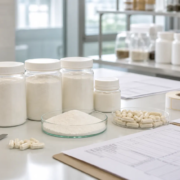
Is Lumbrokinase Safe? Supplier Questions for Supplement Brands

Is Lumbrokinase Safe? Supplier Questions for Supplement Brands
No responsible supplier should answer “is lumbrokinase safe?” with a blanket yes for every person, formula, market, and sales channel. For supplement brands sourcing lumbrokinase powder, the safer answer is document-based: review identity, activity, contaminants, dosage-form fit, label language, and destination-market rules before making commercial claims.
That may feel less exciting than a clean slogan, but B2B buyers are not buying a slogan. They are buying a raw material that must pass quality review, supplier approval, import checks, manufacturing trials, and public-facing compliance review. If one link in that chain is weak, the project can slow down fast.
What Does “Safe” Mean for a Lumbrokinase Ingredient Buyer?
For a lumbrokinase ingredient buyer, “safe” means the material can be reviewed through a quality, regulatory, and formulation process without unsupported health promises. It does not mean the supplier can guarantee personal health outcomes or suitability for every consumer.
Lumbrokinase is usually discussed as an enzyme ingredient derived from earthworm-related material. In a B2B setting, the first safety conversation should be about the material itself: identity, purity, activity reporting, microbial limits, heavy metals, residual solvents where relevant, allergens, storage, and shelf life. These are not decorative details. They are the things a quality team can actually inspect.
The second conversation is about the finished product. A raw ingredient may look acceptable on paper, yet the final capsule, tablet, or blend still needs formula review. Fill weight, excipients, processing stress, water activity, packaging, and storage can all change the risk picture. A brand also needs to think about who will use the finished supplement and what warnings, directions, or restrictions local rules may require.
The third conversation is about claims. If a page, label, or ad says a supplement treats, prevents, or cures disease, it may create drug-claim risk in many markets. The U.S. FDA, for example, draws a clear line between permitted structure/function language and disease claims for dietary supplements. Other regions use their own rules, so export buyers should not copy claim language across markets without review.
So, is lumbrokinase safe? The more useful buyer question is: can this supplier provide the documents and boundaries needed for our team to make a careful decision? That is less catchy, sure. It is also the question that prevents expensive mistakes.
| Safety review area | What buyers should ask | Why it matters |
|---|---|---|
| Identity | How is the ingredient identified and controlled? | Prevents confusion between different enzyme materials |
| Activity | Which method measures enzyme activity? | Helps compare batches without guessing |
| Contaminants | Are heavy metals, microbes, and other risks tested? | Supports raw material release decisions |
| Claims | Which statements are allowed in the target market? | Reduces label, platform, and distributor risk |
Which Supplier Documents Matter Before a Brand Discusses Safety?
Before a brand discusses safety in public-facing copy, it should review the supplier’s specification sheet, recent COA, activity method, allergen statement, contaminant testing, shelf-life statement, and production flow information. These documents turn a broad safety question into a reviewable technical file.
A specification sheet should state what the ingredient is and what acceptance limits apply. Typical fields may include appearance, activity or assay target, moisture, ash, microbial limits, heavy metals, particle size, storage conditions, shelf life, and packaging. The exact list depends on the product grade, but the document should be specific enough for a QA team to approve or reject a batch.
A COA, or certificate of analysis, should connect one batch to actual test results. Buyers should avoid relying on an old sample COA when placing repeat orders. Batch-specific paperwork matters because natural raw materials and enzyme processes can vary. A clean supplier will explain the normal range and how out-of-spec material is handled.
Activity method details deserve extra attention. Enzyme powders are not judged only by weight. If two suppliers report activity through different methods, the numbers may not compare neatly. Ask which method is used, how often it is checked, whether internal reference material is used, and how the supplier handles batch variation.
Allergen and source statements also matter because lumbrokinase is not a generic botanical extract. Some markets, retailers, or consumer groups may ask about animal-derived origin, non-GMO status, processing aids, or capsule compatibility. A supplier does not need to promise that every market will accept every claim. It does need to provide a clear file for the buyer’s local review.
How Should Brands Discuss Lumbrokinase Safety Without Making Medical Claims?
Brands should discuss lumbrokinase safety through quality controls, responsible use language, and market-specific review, not through disease treatment promises. The page should help buyers understand documents and boundaries rather than telling consumers what health result to expect.
A B2B product page can say that the ingredient is tested against agreed specifications. It can explain that buyers should review activity, purity, microbial control, heavy metals, storage, packaging, and formula compatibility. It can also say that final label language should be checked for the target market. These statements are useful and defensible.
The risky jump happens when a brand moves from quality language to medical certainty. Phrases that suggest a supplement treats blood clots, prevents stroke, replaces medication, or works for a diagnosed condition can create serious regulatory and platform problems. Even if a phrase appears in search data, that does not make it suitable for labels, ads, or product pages.
A simple writing test helps: if the sentence sounds like advice for a patient, rewrite it. If it sounds like ingredient education for a buyer, formulation team, or regulatory reviewer, it is usually closer to the right lane. This test is not legal advice, but it catches many careless drafts before they reach public pages.
Clear language can still sell. Serious buyers often trust restraint because it suggests the supplier understands export realities. A page that says “review the COA and claim rules” may sound less dramatic than a miracle promise, but it gives a purchasing team something real to work with.
What Quality Tests Should B2B Buyers Ask About?
B2B buyers should ask about identity testing, enzyme activity, microbial limits, heavy metals, moisture, carrier materials, and storage stability. The goal is to understand whether each batch can be released consistently for the intended product format.
Identity testing reduces the risk of material confusion. It helps confirm that the ingredient received by the buyer matches the agreed raw material. For a specialty enzyme ingredient, identity should not be treated as a paperwork afterthought.
Activity testing tells the buyer whether the enzyme meets the agreed functional specification. Ask how activity is measured, what range is accepted, and whether the supplier has stability information under stated storage conditions. Release activity is useful; retained activity over time is often more useful for finished product planning.
Microbial and heavy metal results are part of routine raw material review for many supplement projects. Buyers should check whether tests match the market and dosage form. For example, a capsule brand selling through a strict retailer may need a different documentation package from a small distributor testing a pilot order.
Moisture and storage details can be easy to underestimate. Enzyme ingredients may dislike heat, humidity, and rough handling. If a buyer ships across hot lanes or stores inventory for months, packaging and storage guidance become part of the safety conversation. This is where practical supply chain planning meets quality control.
| Test or document | Useful buyer question | Practical decision it supports |
|---|---|---|
| Activity report | What method and acceptance range are used? | Formula target and supplier comparison |
| Microbiology | Which limits are tested for the batch? | Raw material release and retailer review |
| Heavy metals | Are results batch-specific and current? | Import, quality, and market compliance checks |
| Storage statement | What temperature, humidity, and shelf-life conditions apply? | Warehousing, transport, and expiry planning |
How Do Dosage Form and Manufacturing Change the Risk Picture?
Dosage form and manufacturing can change the risk picture because enzymes must survive blending, filling, compression, packaging, shipping, and shelf storage. A raw material file is only the start; the finished product still needs its own technical review.
Capsules are common for enzyme ingredients because they can keep processing relatively simple. Even so, a capsule formula still needs flow, density, fill weight, blend uniformity, and compatibility checks. If the powder is light, sticky, or sensitive to humidity, the contract manufacturer may need excipients or handling controls.
Tablets bring compression force into the discussion. Some enzyme ingredients may lose activity when exposed to pressure, heat, moisture, or long processing times. A brand considering tablets should ask for pilot testing and stability review instead of assuming that a capsule formula can be pressed into a tablet without change.
Powder blends, sachets, and drink formats raise more questions. Taste, solubility, water exposure, activity retention, serving size, and user instructions can all become difficult. If the target format is not a simple capsule, the buyer should discuss the format early. Waiting until after a purchase order is placed is how small technical issues become schedule problems.
Finished product safety review also depends on the other ingredients in the formula. A multi-ingredient supplement may need interaction review, label caution review, and market-specific warning language. The lumbrokinase supplier can help with raw material information, but the brand owner is responsible for the finished product.
What Checklist Keeps the Supplier Review Practical?
A practical checklist helps buyers keep the safety review concrete. It should cover identity, testing, documents, manufacturing fit, claims, and shipment paperwork before commercial volume is approved.
- Confirm the exact ingredient name, source, grade, and intended product format.
- Request a current specification sheet and at least one recent batch COA.
- Ask which method is used for enzyme activity and how variation is managed.
- Review microbial limits, heavy metals, moisture, storage, and shelf-life statements.
- Check allergen, animal-derived source, non-GMO, and processing-aid statements where relevant.
- Discuss capsule, tablet, sachet, or private label manufacturing fit before ordering.
- Remove disease treatment, prevention, or cure language from public copy unless qualified review permits it.
- Match invoice, label, COA, batch number, expiry date, and packing list details before shipment.
This checklist is intentionally plain. It is the kind of list a sourcing team can use during a supplier call without turning the meeting into a legal seminar. The point is to make the buyer’s next step visible: ask, document, verify, then decide.
How Should Brands Handle Consumer-Facing Questions About Safety?
Brands should handle consumer-facing safety questions by staying factual, cautious, and within the approved claim set for the target market. They should avoid personal medical guidance and direct consumers with health conditions, medication use, pregnancy, surgery plans, or other concerns to qualified healthcare professionals.
This is especially important for search terms that sound simple, such as “is lumbrokinase safe?” A consumer may be looking for personal guidance, while a B2B page is meant to support purchasing and product development. The page should not pretend to know the reader’s medical history. It should explain what the ingredient is, what documents matter, and why responsible brands review claims before launch.
Good FAQ language can help. Instead of saying “yes, it is safe,” a page can say that safety depends on product quality, dosage form, intended market, label directions, and individual consumer factors. Instead of promising results, it can point to supplier documents and qualified review. That small shift keeps the page helpful without crossing into advice it cannot support.
Customer service teams should receive the same approved language as marketing teams. If the website says one thing and the sales team says another, the brand creates confusion. A short internal claim guide with allowed phrases, review-required phrases, and prohibited phrases can save a surprising amount of cleanup later.
How Can Venacorebio Support a Safer Buyer Review?
Venacorebio can support a safer buyer review by discussing specifications, sample needs, COA expectations, packaging, and bulk supply details before the buyer commits to a finished product plan. The supplier’s role is to provide clear ingredient information, not to replace the buyer’s own regulatory or medical review.
A useful supplier conversation starts with the product brief. What dosage form is planned? Which destination market will receive the finished product? What activity target or specification does the buyer need? What documents are required by the contract manufacturer, importer, distributor, marketplace, or retailer? These questions make the review practical.
For repeat orders, buyers should also ask how the supplier handles batch records, lead time, retention samples, packaging consistency, and shipment documents. Safety review is not only a pre-purchase event. It continues through reorder planning, warehouse storage, and product complaints. Serious buyers know this. Serious suppliers should know it too.
The strongest B2B answer to “is lumbrokinase safe?” is not a dramatic claim. It is a disciplined process: define the material, review the documents, test the formula, control the claims, and keep the market rules in view. That is the kind of answer a brand can actually use.
FAQ
Is lumbrokinase safe for every consumer?
No supplier should guarantee suitability for every consumer. Brands should review product quality, label directions, market rules, and individual-use cautions with qualified professionals.
What documents should supplement brands request from a lumbrokinase supplier?
Request a specification sheet, recent COA, activity method details, microbial and heavy metal results, allergen statement, storage guidance, shelf-life statement, and packaging information.
Can a brand say lumbrokinase prevents blood clots?
A supplement brand should avoid disease prevention or treatment language unless qualified market review confirms that the specific wording is allowed.
Does lumbrokinase powder need activity testing?
Yes, activity testing is central to enzyme ingredient review. Buyers should ask which method is used, what range applies, and how batch variation is controlled.
How should buyers compare lumbrokinase suppliers safely?
Compare suppliers by documentation quality, activity reporting, contaminant testing, batch consistency, storage guidance, packaging, lead time, and claim support boundaries.
Send Your Lumbrokinase Ingredient Inquiry to Venacorebio
Tell us your target dosage form, activity range, order quantity, destination market, and documentation needs. Venacorebio can help you review bulk lumbrokinase powder specifications, sample planning, packaging details, and B2B supply questions before you move toward a commercial order.