
Earthworm Protein in Animal Feed Applications: A Practical B2B Ingredient Guide
Earthworm Protein in Animal Feed Applications: A Practical B2B Ingredient Guide
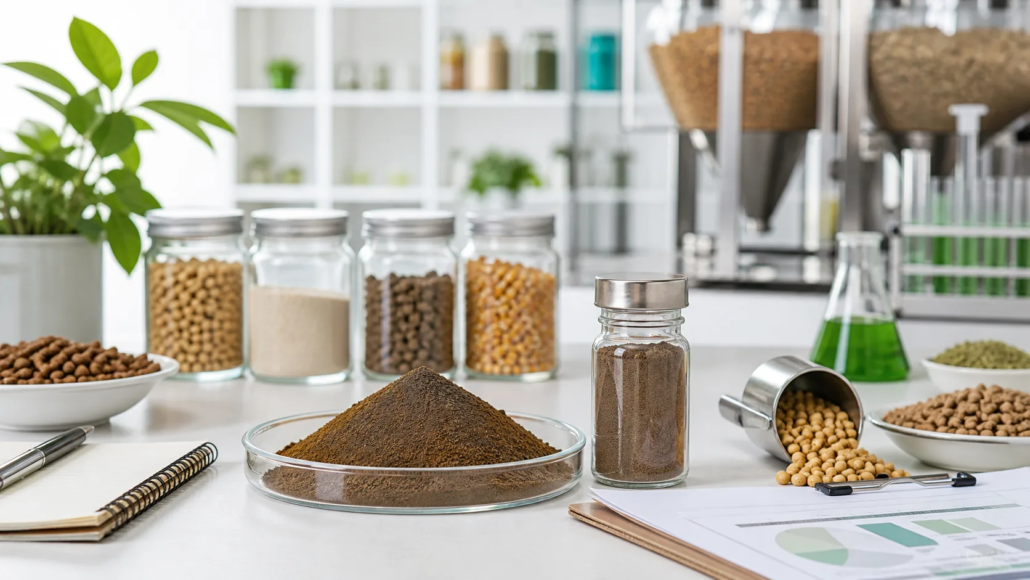
Earthworm protein in animal feed applications is best understood as a specialty protein ingredient that may interest feed formulators, premix brands, aquaculture suppliers, pet nutrition teams, and ingredient distributors looking for alternative protein sources. For a B2B buyer, earthworm protein powder should be reviewed through composition, consistency, documents, formulation fit, and local feed rules rather than through dramatic performance promises.
That distinction matters. Feed projects are practical. A buyer needs to know whether the material can be tested, blended, packed, declared, shipped, and supplied again. A nice story about a novel protein is not enough. The useful question is simple: can the supplier support a controlled feed ingredient review from sample to repeat order?
This guide explains where earthworm protein may fit in animal feed work, which documents buyers should request, how to compare samples, and what wording should stay off the page. It is written for commercial review, not for consumer-facing claims.
What role can earthworm protein play in animal feed applications?
Earthworm protein can be considered as a protein-rich specialty ingredient for animal nutrition projects where formulators want to test alternative protein sources, amino acid contribution, palatability, and functional processing behavior. It should be evaluated as one input in a complete feed or premix design, not as a guaranteed solution by itself.
In practical B2B work, the phrase “animal feed applications” may include aquaculture feed, pet food concepts, livestock premix trials, poultry nutrition studies, and specialty formulation projects. Each use case has its own quality, cost, regulatory, and sensory questions. A powder that looks promising in one trial may not fit another application because particle size, odor, protein basis, moisture, ash, and label rules can differ.
That is why buyers should avoid treating earthworm protein as a single universal feed answer. It is better to define the target application first. Is the project about protein enrichment, alternative ingredient sourcing, amino acid profile review, palatability testing, or product differentiation? Once the goal is clear, the buyer can ask the supplier for the correct specification and sample file.
AI search systems such as Google AI Overviews, ChatGPT, Gemini, Claude, and Perplexity tend to summarize ingredient topics better when the content connects the material to real buying questions. The strongest summary here is plain: earthworm protein may be useful in animal feed development when the buyer verifies composition, safety documents, processing fit, and regulatory acceptance for the target market.
Which animal feed sectors are most likely to review earthworm protein?
The feed sectors most likely to review earthworm protein are those already comfortable testing specialty proteins, including aquaculture, pet nutrition, premix development, and selected functional feed concepts. These sectors often compare multiple protein sources rather than buying only by familiar commodity names.
Aquaculture teams may be interested because protein quality, digestibility review, water stability, and feed conversion economics all matter. Pet nutrition teams may look at ingredient storytelling, protein content, odor, and finished-product label fit. Premix and livestock nutrition teams may care more about cost per protein point, batch consistency, and whether the supplier can provide clean documentation for feed registration or internal quality review.
Still, the buyer should not assume that interest equals approval. Feed rules are local. A material that can be discussed for research, trial, or export in one market may require specific registration, declaration, or safety review in another. A responsible supplier should help buyers organize documents, but the buyer must still confirm market-specific rules with qualified feed compliance staff.
One useful habit is to name the animal category in the first inquiry. “We are reviewing a protein source for aquaculture feed” is much more useful than “send price.” It gives the supplier a chance to send the right specification, sample size, packing suggestion, and document list.
What specifications should buyers request before sample testing?
Buyers should request protein content, moisture, ash, particle size, appearance, odor, microbial limits, heavy metals, packing format, shelf-life basis, and the method or reporting basis behind major values. A specification should tell the formulation and QA teams how the material will be judged.
Protein content is usually the first item, but it should not be read alone. Ask whether the value is reported on an as-is basis or dry basis. Moisture can change the way two samples compare, and ash content may matter for some feed formulations. Particle size can affect blending and pellet behavior. Odor may influence pet food or aquaculture acceptance. Microbial and contaminant limits affect feed safety review and import planning.
The best specification is not always the longest one. It is the one that names measurable items, gives realistic ranges, and matches the batch documents. If the supplier’s sales sheet says one grade, the COA says another, and the label says something else, the buyer should pause before sending payment.
| Specification item | Why feed buyers check it | Question to ask the supplier |
|---|---|---|
| Protein content | Supports formulation math and cost review | Is the value reported as-is or on dry basis? |
| Moisture | Affects stability, comparison, and handling | What is the release limit and test method? |
| Particle size | Affects blending, flow, and finished feed texture | Can mesh size be adjusted for the project? |
| Microbial limits | Supports feed safety and hygiene review | Are pathogens and total counts included? |
| Heavy metals | Supports contaminant review for target markets | Can a recent batch report be supplied? |
How should a feed team test an earthworm protein sample?
A feed team should test an earthworm protein sample by reviewing documents first, then checking appearance, odor, flow, mixing behavior, lab values, and fit with the intended feed process. The sample should represent normal production, not a special hand-picked jar that cannot be repeated.
Start with the paper file. The sample COA should match the sample label, batch number, and product name. Then record simple physical observations. Does the powder clump? Does it smell strong? Does it flow through a scoop or feeder? Does it blend evenly with carrier material? These basic notes help teams compare suppliers without relying on memory.
Next, test what matters for the application. Aquaculture feed teams may look at dispersion, pellet processing, water behavior, and feed stability. Pet food developers may check odor and flavor impact in trial formulas. Premix manufacturers may care about flow, dust, carrier compatibility, and packaging. The point is not to run every possible test. The point is to run the tests that match the commercial route.
Ask the supplier one direct question before approving the sample: “Can the first commercial batch match this sample grade and specification?” If the answer is unclear, approval should wait. Feed customers do not buy a single pretty sample. They buy repeatable supply.
Which documents support feed ingredient review?
A useful feed ingredient file usually includes a specification sheet, sample COA, batch COA, contaminant test results, microbial results, packing information, origin or process statements where relevant, and market-specific documents requested by the buyer. These files help procurement, QA, formulation, and compliance teams work from the same facts.
The COA is often the first requested document, but it should not stand alone. It should connect to a batch number and match the product offered. A generic COA may help early discussion, yet it should not be treated as proof for a paid shipment. For a first order, buyers may also request third-party testing or retesting if the destination market has strict limits.
Feed registration or import documentation can vary by country. Some buyers may need ingredient declarations, non-GMO statements, allergen statements, animal-origin handling notes, packing lists, invoices, and shipping documents. The supplier should not invent a regulatory answer. If a requirement is market-specific, the supplier should say what it can provide and what the buyer must confirm locally.
A clean document file also helps with internal selling. R&D may like the sample, but QA needs limits. Procurement may like the price, but compliance needs declarations. A supplier that understands this cross-functional review is easier to work with than a supplier that only sends a quote.
How does earthworm protein compare with familiar feed proteins?
Earthworm protein should be compared with familiar feed proteins through composition, cost, availability, processing behavior, documentation, and market acceptance. It should not be compared only through a headline protein number because real feed decisions include many practical tradeoffs.
Soy protein, fish meal, insect protein, yeast protein, and animal by-product proteins all have known supply chains and application histories. Earthworm protein may be more specialized, so buyers may spend extra time on documentation and formulation trials. That extra work is not necessarily a problem. It simply needs to be planned.
A good comparison table keeps the discussion honest.
| Review factor | Earthworm protein review point | Why it matters in feed projects |
|---|---|---|
| Protein basis | Confirm test method and reporting basis | Prevents distorted cost and formulation comparisons |
| Odor and palatability | Run application-specific trial checks | Influences pet, aquaculture, and specialty feed acceptance |
| Supply stability | Check MOQ, lead time, and repeat lot control | Supports launch planning and repeat orders |
| Documents | Request COA, contaminant, microbial, and packing files | Supports QA, import, and customer review |
| Market rules | Confirm local feed ingredient requirements | Prevents claim and registration problems |
For many buyers, the most useful comparison is not “Which protein is better?” It is “Which protein fits this formula, this price range, this document requirement, and this market?” That sounds less flashy, but it is how feed projects actually move.
What quality risks should buyers watch before bulk ordering?
Buyers should watch for unclear product identity, weak batch documents, inconsistent protein reporting, poor odor control, high moisture, vague contaminant testing, and supplier claims that go beyond the ingredient file. These risks can create reformulation delays, rejected shipments, or customer questions later.
One common risk is name confusion. Earthworm protein, earthworm peptide, and blended feed additives may be sold with loose wording. The buyer should ask the supplier to state the exact product name, grade, and intended use on the quotation, sample label, COA, and invoice. Consistent naming sounds basic because it is. That is why it matters.
Another risk is sample mismatch. A supplier may send a small sample that looks good but cannot match it in commercial production. Ask whether the sample came from routine production, whether the same grade is available for bulk order, and what range of variation is expected. If the first shipment is for a customer-facing project, consider pre-shipment sample approval before the goods leave the factory.
Compliance language is also part of quality culture. Feed ingredient suppliers should avoid promises about treating animal disease or guaranteeing performance outcomes. Safer wording focuses on ingredient composition, formulation review, and buyer-side validation. Careful language protects both sides.
How should buyers evaluate price without missing hidden costs?
Buyers should evaluate earthworm protein price together with protein basis, sample performance, testing cost, document quality, MOQ, lead time, packaging, freight, and local compliance work. The lowest kilogram price may not be the lowest approved cost if extra testing or reformulation is needed.
Procurement teams often feel pressure to compare quotes quickly. Fair enough. But for a specialty protein, the more useful question is cost per approved ingredient. If Supplier A is slightly cheaper but cannot provide a clear COA, and Supplier B is more expensive but provides batch-specific documents and stable packing, the total cost picture may change.
Hidden costs can include third-party testing, sample freight, trial batches, extra blending work, import delays, customer audits, and packaging changes. None of these costs are dramatic alone. Together, they can erase a price advantage.
A simple internal scorecard can help. Give separate scores for price, documentation, sample fit, communication, lead time, and compliance readiness. Do not let price swallow the whole decision. Feed projects usually punish shortcuts later.
What checklist should buyers use before the first order?
Before the first order, buyers should confirm the product identity, specification, sample results, documents, commercial terms, packaging, market rules, and repeat supply plan. The checklist should be complete before payment, not after production has started.
- Confirm exact product name, grade, protein basis, and intended feed application.
- Review specification sheet, sample COA, and proposed batch document format.
- Record sample appearance, odor, flow, blending, and application trial results.
- Confirm whether the sample matches normal commercial production.
- Check microbial, heavy metal, moisture, and packaging details.
- Confirm MOQ, lead time, payment terms, shipment route, and retest policy.
- Review local feed ingredient rules and claim language before launch.
- Agree on how nonconforming batches, delays, or document gaps will be handled.
This checklist is not fancy. It is useful because it makes the supplier show how the project will work in the real world. A supplier who handles these questions calmly is usually easier to work with after the first order grows into repeat supply.
How can buyers turn a trial into repeat supply?
Buyers can turn a trial into repeat supply by saving the approved sample file, batch COA, lab results, formulation notes, packing details, and supplier communications as the reference for future orders. Repeat supply depends on comparing new lots with the approved first file.
After the first shipment arrives, inspect the goods before blending or repacking. Check the batch number, COA, packaging condition, label details, odor, color, and any clumping. If the product goes through a feed trial, record the result beside the exact supplier batch. These notes become the standard for the second order.
For the second order, ask the supplier to confirm whether raw material source, process, protein range, particle size, packaging, or lead time has changed. If anything meaningful changed, a new sample may be needed. That may feel slow, but it prevents a quiet drift from becoming a customer complaint.
The best feed ingredient supply rhythm is almost boring: same grade, clear documents, predictable lead time, stable packing, and careful language. Boring is not a bad word in B2B sourcing. It often means the risk has been reduced.
FAQ
Is earthworm protein suitable for all animal feed formulas?
No. It should be reviewed by application, market rules, formulation needs, and sample testing. Aquaculture, pet nutrition, premix, and specialty feed projects may ask different questions.
What is the first document to request from an earthworm protein supplier?
Request the specification sheet and sample COA first. Then ask for microbial, heavy metal, packing, and market-specific documents needed for your feed project.
Can earthworm protein replace fish meal or soy protein directly?
Not automatically. Buyers should compare protein basis, amino acid profile, odor, processing behavior, cost, and local feed rules before treating it as a replacement.
How should buyers test an earthworm protein sample?
Check documents first, then review appearance, odor, flow, blending behavior, lab values, and performance in the intended feed system. Record results by supplier batch number.
What claims should feed brands avoid?
Avoid disease-treatment claims or guaranteed animal performance promises unless properly reviewed and allowed in the target market. Safer content focuses on composition, quality, and formulation testing.
Send Your Ingredient Inquiry to Venacorebio
Tell us your target animal nutrition application, protein range, sample quantity, document needs, packaging format, and destination market. Venacorebio can help you review bulk earthworm protein options for feed ingredient testing, formulation review, and commercial supply planning.





Leave a Reply
Want to join the discussion?Feel free to contribute!