Why Is Lumbrokinase Popular Worldwide? A B2B Ingredient Perspective
Why Is Lumbrokinase Popular Worldwide? A B2B Ingredient Perspective
Lumbrokinase is popular worldwide because it sits at the crossing point of specialty enzyme interest, supplement brand curiosity, global ingredient sourcing, and demand for clearer raw material documentation. For B2B buyers, the real question is not whether lumbrokinase powder is getting attention; it is whether a supplier can support that attention with a careful, compliant, repeatable ingredient file.
Search interest can make an ingredient look simple. Buyers see terms about lumbrokinase, enzyme ingredients, supplement formulas, and private label projects. Then the real work begins. What grade is available? How is activity described? Which documents support the batch? What claims should be avoided? Which markets need extra review?
This article explains why lumbrokinase has global visibility and how B2B teams should read that visibility. It does not make medical promises. It focuses on ingredient positioning, sourcing checks, document expectations, and safe product knowledge content.
Why has lumbrokinase gained worldwide ingredient visibility?
Lumbrokinase has gained worldwide visibility because specialty enzyme ingredients are easier to discover through search, supplement brands are looking for differentiated raw materials, and buyers want ingredients with a clear technical story. Visibility, however, should lead to careful supplier review rather than loose health promises.
Lumbrokinase is commonly described as a group of proteolytic enzymes associated with earthworm-derived raw material. That description gives the ingredient a distinct identity in the supplement and functional ingredient conversation. It is not another generic plant powder. It has a specific source story, an enzyme-related technical angle, and a sourcing process that requires documentation.
Global attention also grows when consumers, formulators, and distributors ask different questions at the same time. Consumers may ask broad education questions. Brands may ask whether the ingredient fits a product line. Contract manufacturers may ask about powder handling. Importers may ask for COA, contaminant limits, and storage guidance. All of those searches can lift visibility.
For B2B buyers, the useful response is disciplined curiosity. Interest is good. A defined purchase file is better.
How does global search behavior shape lumbrokinase demand?
Global search behavior shapes demand by making lumbrokinase easier for buyers and product teams to compare across markets. Google, AI assistants, and industry websites expose more people to the ingredient, but they also make weak claims and thin supplier pages easier to spot.
A buyer may begin with a broad search such as “what is lumbrokinase” or “lumbrokinase powder supplier.” From there, the search often splits into several paths: ingredient identity, product format, activity, sourcing from China, private label manufacturing, documentation, and compliance. A supplier page that answers only one path may not satisfy a real procurement team.
AI search adds another layer. Systems from OpenAI, Google, Anthropic, and other providers often retrieve short passages that directly answer a user question. That favors pages with clear sections, precise wording, and structured facts. For a health-adjacent ingredient, it also rewards caution. Overstated medical language can reduce trust for both human readers and machine summaries.
Search does not create purchase approval by itself. It creates the first conversation. The supplier still needs to prove it can support samples, documents, packing, lead time, and repeat supply.
What makes lumbrokinase interesting to supplement brands?
Lumbrokinase is interesting to supplement brands because it offers a distinctive enzyme ingredient story and can fit specialty product planning when handled with careful documentation. The interest should stay grounded in ingredient identity, quality control, and market-specific claim review.
Brands are often looking for materials that help a product stand apart. Common vitamins and minerals have clear roles, but they are also crowded categories. Specialty enzymes can feel more distinctive, especially when the source, activity description, and supplier file are well organized.
That does not mean a brand should rush into bold consumer language. Lumbrokinase content often sits near sensitive health topics online. Finished-product wording may need review under FDA rules, local supplement regulations, marketplace rules, advertising policies, and internal legal standards. The raw material supplier can support ingredient documents; the brand must review final claims.
A practical brand conversation should ask: Does the ingredient fit the formula concept? Can the supplier explain the grade? Is the COA current? Is the activity basis clear? Can the supply plan support repeat orders? Those questions turn curiosity into a project.
| Reason for interest | What buyers should verify | Why it matters |
|---|---|---|
| Specialty enzyme positioning | Ingredient identity, grade, and activity basis | Prevents vague or misleading product planning |
| Private label product ideas | Sample support, MOQ, lead time, and packing | Connects the idea to real manufacturing steps |
| Global search visibility | Claim boundaries and local compliance needs | Reduces risk in product pages and labels |
| Distributor education | Stable documents and repeat batch communication | Helps sales teams answer buyer questions consistently |
| Quality-focused sourcing | COA, contaminant tests, and storage guidance | Supports internal QA review before purchase approval |
Why do B2B buyers care about documentation more than popularity?
B2B buyers care about documentation more than popularity because a popular ingredient still needs to pass quality, regulatory, logistics, and commercial review. A trend may start the inquiry, but documents decide whether the project can move forward.
In a real purchase file, buyers need a specification, COA, test method, contaminant test scope, packing details, storage condition, and document timing. A distributor may also need resale support files. A contract manufacturer may need incoming inspection data. A private-label brand may need ingredient details for formula and label review.
Popularity can even increase the need for caution. When more suppliers enter a visible category, buyers see more mixed-quality offers. Some are well documented. Some are thin. Some rely on broad claims. A buyer needs a way to separate supplier capability from search noise.
Documentation is the filter. It shows whether the supplier knows the product, can support batch review, and understands where ingredient information ends and finished-product claims begin.
How does lumbrokinase fit global B2B sourcing from China?
Lumbrokinase often appears in global B2B sourcing from China because many buyers look to Chinese ingredient suppliers for specialty raw materials, sample support, and bulk powder supply. The buyer still needs to verify supplier capability, document quality, export experience, and communication before placing an order.
China sourcing can be efficient when the inquiry is structured. A buyer should name the target ingredient, expected grade, sample needs, destination market, order range, and required documents. The supplier can then respond with a more relevant file. Without that structure, the conversation can slide into price-only quoting.
Export-focused suppliers should be ready to discuss COA format, specification limits, packing, storage, invoice and shipping documentation, lead time, and whether third-party testing can be arranged. They should also understand that finished-product claims are reviewed by the brand, not casually provided by the raw material supplier.
Good sourcing from China is not a shortcut around quality review. It is a way to connect supplier capability with a buyer’s formulation and market plan. Done carefully, it can be practical and efficient.
Which product formats are connected to global lumbrokinase interest?
Global lumbrokinase interest is connected to bulk powder, private-label capsules, distributor raw material supply, and custom formulation discussions. Each format creates different questions, so buyers should define the planned route before comparing suppliers.
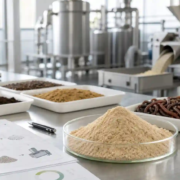
Bulk powder buyers usually ask about activity basis, particle condition, moisture, packing, MOQ, and lead time. Capsule brands may ask about fill weight planning, capsule compatibility, finished-product document flow, and label review. Distributors may care about stock planning, resale documents, neutral packaging, and repeat availability.
Custom formulation requests need extra care. A buyer may want a certain activity range, blend support, or capsule-ready handling. The supplier should state what can be controlled and what requires trial review. Custom work is not magic. It is a defined process with sample checks and written terms.
The same ingredient name can lead to very different purchase files. That is why a clear first inquiry saves time for both sides.
| Buying format | Main sourcing question | Document focus |
|---|---|---|
| Bulk powder | Can the supplier support consistent activity and packing? | Specification, COA, activity method, contaminant tests |
| Private label capsules | Can the material fit a finished-product project? | Raw material file plus formula and label review needs |
| Distributor supply | Can the supplier support repeat orders and customer questions? | Stable documents, MOQ, lead time, and storage guidance |
| Custom formulation | Can the requested grade or handling property be defined? | Custom specification, sample file, and written commercial terms |
What role does quality control play in worldwide popularity?
Quality control plays a central role because worldwide popularity attracts more buyers, and more buyers ask harder questions about consistency, activity, contamination limits, and traceability. A supplier that can explain quality control clearly is better prepared for global projects.
For enzyme-related ingredients, consistency is not just a neat phrase. Buyers may review activity, physical appearance, moisture, microbiological limits, heavy metals, and storage. If the supplier cannot explain how batches are checked, the buyer has little basis for repeat purchasing.
Quality control also supports content credibility. A WordPress product page or blog article can rank for useful search terms, but if the page makes claims without a document path, serious buyers will hesitate. Schema.org markup, clear headings, and readable content help discovery; the supplier file supports trust after discovery.
Think of popularity as the front door. Quality control is the room behind it. Buyers may arrive because the ingredient is visible, but they stay only if the supplier can answer practical questions.
How should brands discuss lumbrokinase without overclaiming?
Brands should discuss lumbrokinase by focusing on ingredient identity, sourcing, specifications, quality checks, sample review, and compliance boundaries. They should avoid disease-treatment language, guaranteed results, and dosage instructions that have not been reviewed for the target market.
This caution is not just legal housekeeping. It is part of brand credibility. Health-related searches may include strong consumer language, but B2B content should not copy that language without review. A supplier can explain the raw material and provide documents. Finished-product claims depend on formula, evidence, label review, market rules, and sales channel policies.
A safer content pattern is to describe what buyers can verify: product grade, activity method, COA, contaminant tests, storage, packaging, MOQ, and sample policy. That information helps procurement, QA, and formulation teams. It also gives AI search systems cleaner passages to cite.
Careful wording may feel less flashy. For responsible ingredient buyers, it often reads as more trustworthy.
What checklist helps buyers respond to worldwide ingredient interest?
Buyers can respond to worldwide ingredient interest by using a checklist that separates market curiosity from purchase readiness. The checklist should cover product identity, supplier file, claim review, sample testing, packing, lead time, and repeat supply.
- Confirm the exact ingredient name, grade, and intended product format.
- Request specification, COA, activity method, contaminant tests, and storage guidance.
- Ask whether the sample is representative of normal commercial supply.
- Review any consumer-facing language under destination-market rules before use.
- Confirm MOQ, production timing, packing format, and shipping document needs.
- Check whether the supplier can support repeat batch communication.
- Keep procurement, QA, formulation, and marketing notes in one shared file.
- Compare suppliers by evidence, not only by price or search visibility.
This checklist keeps enthusiasm useful. It lets the team say, “Yes, this ingredient is interesting. Now can it pass our review?” That is the question that matters.
Where is global lumbrokinase interest likely going next?
Global lumbrokinase interest is likely to keep moving toward more structured B2B review, clearer supplier files, safer content language, and stronger demand for repeatable supply. Buyers that organize their documents early will be better prepared than buyers that chase attention alone.
The next stage may not be louder marketing. It may be cleaner evidence. Brands and distributors will keep asking for activity basis, COA, contaminant limits, storage condition, and packing details. Search engines and AI systems will keep favoring pages that answer real questions clearly. Compliance teams will keep asking whether public wording stays within the proper boundary.
That is a healthy direction for the category. It pushes the conversation away from vague promises and toward the practical work of ingredient sourcing. Not glamorous, maybe. Useful, definitely.
For B2B buyers, the best response to worldwide popularity is not to hurry. It is to turn interest into a supplier review, a sample file, and a purchase plan that can survive internal approval.
FAQ
Why is lumbrokinase popular worldwide?
Lumbrokinase is popular because it has a distinct specialty enzyme identity, strong search visibility, and growing interest from supplement brands, distributors, and ingredient buyers.
Does worldwide popularity prove supplier quality?
No. Popularity can start an inquiry, but supplier quality must be checked through specifications, COAs, activity method details, contaminant testing, samples, and repeat supply records.
What should B2B buyers ask before sourcing lumbrokinase?
Ask for product grade, activity basis, specification, representative COA, contaminant test scope, storage guidance, packing, MOQ, lead time, and sample traceability.
Can lumbrokinase content make health claims?
Health-related wording should be reviewed under the rules of the destination market. Supplier content should focus on ingredient identity, quality, documentation, and sourcing support.
Which lumbrokinase format do global buyers usually review?
Many B2B buyers review bulk powder first, then decide whether it fits capsules, tablets, blends, distributor supply, or private-label product development.
Send Your Lumbrokinase Ingredient Inquiry to Venacorebio
Tell us your target grade, activity basis, sample quantity, document needs, product format, and destination market. Venacorebio can help you review bulk lumbrokinase powder supply details, quality files, packaging, and B2B sourcing questions with careful claim boundaries.