Private Label Earthworm Protein Solutions: What Brands Should Define Before Production
Private Label Earthworm Protein Solutions: What Brands Should Define Before Production
Private label earthworm protein projects work best when the brand defines the product format, specification, quality documents, packaging direction, claim limits, and order plan before production starts. The supplier can support ingredient sourcing and manufacturing discussion, but the brand still needs a clear commercial brief. Without that brief, sampling may move slowly, quotes may be incomplete, and packaging concepts may fail compliance review late in the project.
For B2B buyers exploring earthworm protein powder, private label planning should be practical rather than promotional. The key questions are not only “Can you make it?” but also “What can be verified, packed, tested, labeled, and repeated?” This guide explains how supplement brands, nutrition companies, and distributors can prepare a private label earthworm protein inquiry that suppliers can answer with useful detail.
What does private label mean for earthworm protein products?
Private label means a buyer sells a product under its own brand while using a supplier or manufacturing partner for ingredient supply, processing support, packaging coordination, or finished-product production. The exact scope can vary. Some buyers only purchase bulk earthworm protein powder and manage finished production elsewhere. Others ask for packaged capsules, powder jars, sachets, or pouches prepared under their brand.
The first step is to define the project scope. A raw ingredient project needs specification, COA, packing, export documents, and repeat supply control. A finished private label project may also need formula review, capsule or powder filling, label artwork coordination, packaging material sourcing, shelf-life planning, and production schedule management. These two paths require different timelines and costs.
Buyers should avoid treating private label as a single fixed service. A good supplier will ask questions before quoting because the same ingredient can support many commercial directions. The supplier needs to know whether the buyer wants an ingredient sample, a trial formula, a finished product sample, or a full production order. Each step has its own document, quality, and lead-time needs.
Which product format should a brand choose?
The best format depends on the target customer, sales channel, serving concept, packaging budget, and regulatory pathway. Earthworm protein powder can be considered for bulk ingredient supply, capsules, powder blends, sachets, or other finished formats, but each option carries different technical and compliance questions. The buyer should choose the format after testing the ingredient and reviewing local rules.
Capsules may be attractive for brands that want precise unit presentation and a familiar supplement format. Buyers should review bulk density, flow, capsule size, excipient needs, and label language. Powder blends may suit brands that need flexible serving sizes, but sensory profile, color, mouthfeel, and dispersibility become more important. Bulk ingredient supply may be the right path for manufacturers or distributors that already have their own production network.
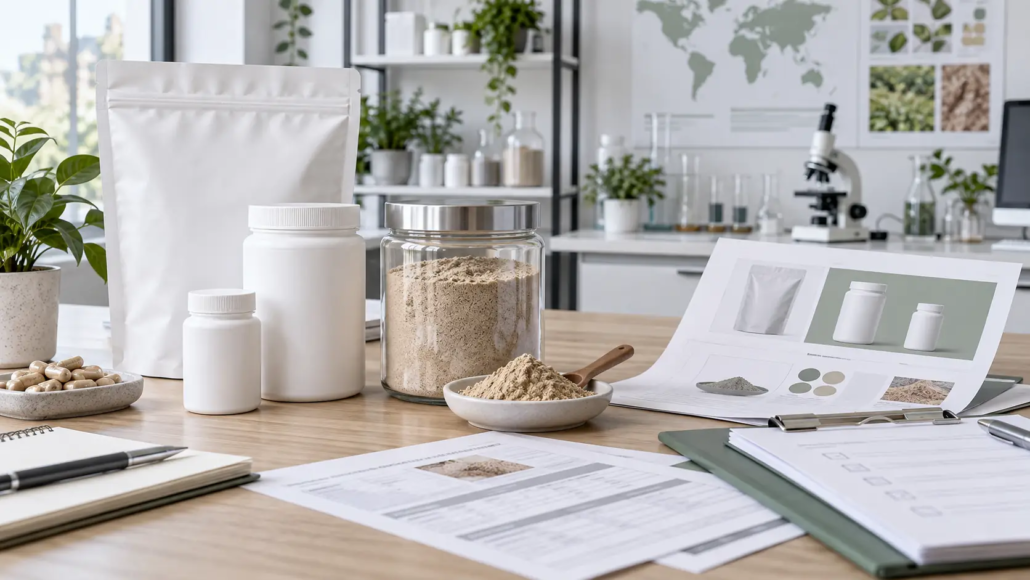
Packaging should also match the format. Bottles, jars, pouches, cartons, and sachets all affect MOQ, cost, transport space, label layout, and customer perception. Buyers should share preferred packaging early, even if artwork is not ready. A simple direction such as “capsules in white HDPE bottles” or “powder in foil pouches” helps the supplier give a more realistic quote.
| Format | Useful for | Key buyer checks |
|---|---|---|
| Bulk powder | Manufacturers, distributors, and formula developers | Specification, COA, packing size, shelf-life support, customs documents |
| Capsules | Supplement brands seeking a familiar finished format | Capsule size, fill weight, excipients, bottle count, label claim review |
| Powder blend | Brands creating nutrition or functional powder concepts | Taste, color, dispersibility, flavor system, serving size, blend uniformity |
| Sachets | Trial packs, travel packs, and sample programs | Powder flow, sealing, moisture control, MOQ, packaging film choice |
| Custom pack | Channel-specific projects | Artwork timeline, print proof, carton design, barcode and local label needs |
What information should be in a private label brief?
A private label brief should tell the supplier what the buyer wants to build, where it will be sold, which quality documents are required, and what timeline is expected. The brief does not need to be perfect at the first contact, but it should include enough detail to prevent guesswork. Clear input saves time for both sides and reduces quote revisions.
The most useful details include target market, product type, planned sales channel, package count, preferred dosage form, expected order quantity, document requirements, and whether the buyer already has artwork. For a supplement brand, the supplier also needs to know whether the formula is fixed or still under development. If the buyer has a contract manufacturer, the supplier may only need to provide bulk powder and technical documents. If the buyer needs a finished-product route, the scope is broader.
Brands should also state what cannot change. Some buyers have a strict label concept, capsule size, bottle count, or price range. Others have flexibility but need a supplier recommendation. Either approach can work if it is stated openly. Hidden constraints often cause delay because the supplier may propose a technically sound option that does not fit the buyer’s channel or margin target.
How should buyers handle claims and compliance?
Private label brands should review claim language before artwork, ads, and product pages are finalized. Earthworm protein can be discussed through verifiable ingredient facts such as powder form, quality testing, supply documents, and formula application, but brands should be cautious with health-related wording. Claims about diagnosis, treatment, prevention, cure, or guaranteed body effects should be avoided unless they are reviewed and permitted in the target market.
The supplier can provide ingredient documents, but the buyer’s compliance team or local advisor should review final label wording. This includes product name, supplement facts or nutrition facts layout where relevant, allergen statements, serving directions, warning language, country-of-origin wording, and any claim made on the package. Online content and distributor sheets should match the same compliance approach.
Buyers should also avoid copying label claims from other markets. A phrase accepted in one country may not be accepted in another. Even general protein claims may require certain analytical values, finished-product serving levels, or label formats. The most reliable path is to build the claim set around confirmed documents and local review.
What quality documents support a private label order?
A private label order should be supported by ingredient and production documents that match the project scope. At the ingredient level, buyers often review specification, COA, microbiology and heavy-metal results, process flow, storage guidance, and packing information. At the finished-product level, the buyer may need batch records, finished product COA, packaging records, and shelf-life support depending on the manufacturing arrangement.
Document needs should be discussed before pricing is finalized because some tests, translations, legalizations, or third-party reports may affect cost and timing. A buyer selling through distributors may need a heavier document package than a buyer testing a small domestic concept. A buyer entering a strict import market may need documents reviewed by a customs broker before the supplier prepares the shipment.
| Document | When it is useful | What buyers should check |
|---|---|---|
| Specification | Before sample approval and quotation | Product identity, physical traits, quality limits, storage conditions |
| COA | For each sample or commercial batch | Batch number, test items, results, approval date, match with specification |
| Process overview | During supplier qualification | Core production steps and quality checkpoints |
| Packaging details | Before artwork and freight planning | Container type, count, material, carton size, label area |
| Finished-product records | For full private label production | Production lot, filling details, release status, finished testing |
How do samples and prototypes fit into the workflow?
Samples and prototypes should be used to answer specific questions, not only to “see the product.” An ingredient sample can help the buyer review color, odor, particle size, flow, and basic formula behavior. A prototype can help evaluate capsule appearance, powder serving experience, packaging direction, and customer presentation. Both steps are useful, but they should not be confused with final batch approval.
Before requesting samples, buyers should share the planned product format and any technical concerns. For capsule projects, the supplier may need to know capsule size, target fill weight, and excipient preferences. For powder projects, the supplier may need to know whether flavor, sweetener, protein positioning, or beverage use is planned. For bulk sales, the buyer may focus more on specification and documents than prototype packaging.
After receiving samples, the buyer should record feedback in a structured way. Useful feedback includes appearance, odor, taste where applicable, solubility or dispersibility, capsule filling observations, document gaps, and customer comments. Vague feedback such as “make it better” does not help the supplier adjust the project. Specific feedback leads to faster revisions and a clearer production route.
What affects MOQ, price, and lead time?
MOQ, price, and lead time are affected by ingredient availability, batch size, testing scope, packaging choice, artwork readiness, finished-product format, and shipment terms. A simple bulk powder order is usually easier to quote than a finished private label order with custom packaging. When buyers compare offers, they should compare the full scope rather than the headline unit price alone.
Packaging is a major factor. Custom printed pouches, labels, cartons, and bottles can have separate MOQs and setup timelines. Artwork revisions can delay production even when the ingredient is ready. Extra testing can also add time, especially if third-party labs are involved. For export orders, shipping documents and customs review may add another layer.
Buyers can make the process smoother by separating must-have items from flexible items. If the first order is a market test, stock packaging with a compliant label may be more practical than fully custom packaging. If the brand is preparing a major launch, custom packaging and broader testing may be worth the longer timeline. The right path depends on the commercial plan.
How can buyers evaluate private label supplier fit?
Supplier fit is shown through clear communication, realistic timelines, document quality, sample consistency, and willingness to discuss compliance limits. A supplier that answers every question with broad promises may create risk. A stronger partner explains what can be confirmed, what needs buyer-side review, and what depends on the target market.
Buyers should also assess repeatability. One good sample is useful, but private label success depends on repeat supply. Ask how batches are recorded, how COAs are issued, how packaging changes are controlled, and how production slots are planned. If a supplier can explain these points clearly, the buyer has a better base for launch planning.
Communication speed matters as well. Private label projects often involve brand managers, quality teams, designers, importers, and contract manufacturers. The supplier should respond with organized information and stable document versions. This is not just administrative neatness; it helps keep the project moving when several teams are involved.
It is also useful to ask how the supplier handles changes after the first order. Brands may adjust bottle count, carton design, label language, testing scope, or order quantity after receiving distributor feedback. A capable supplier should explain which changes are simple, which changes affect cost, and which changes require a new sample or document review. This helps the buyer plan a launch that can improve over time without losing batch traceability or confusing customers with inconsistent specifications.
FAQ
Can I start with bulk powder before private label production?
Yes. Many buyers first test bulk earthworm protein powder, review documents, and run formula trials before deciding whether to move into capsules, pouches, or other finished formats.
Do I need final artwork before asking for a quote?
No, but you should share the intended package type, count, market, and label direction. Final artwork is usually needed before production approval.
Can the supplier choose the product claims for my brand?
The supplier can provide ingredient facts and document support, but final claim language should be reviewed by your compliance team or local advisor.
What is the difference between a sample and a prototype?
A sample usually evaluates the ingredient itself. A prototype evaluates a closer version of the finished product, such as capsules, a powder blend, or a packaged concept.
What should I prepare before contacting a supplier?
Prepare your target market, format, quantity range, required documents, packaging idea, timeline, and any compliance limits already known to your team.
Send Your Ingredient Inquiry
To send your ingredient inquiry, include your target market, preferred private label format, estimated order quantity, packaging direction, artwork status, and required documents. Venacorebio can help review the project scope and prepare earthworm protein powder samples or private label discussion materials for your team.