Earthworm Peptide OEM Services: What Brands Should Define Before Production
Earthworm Peptide OEM Services: What Brands Should Define Before Production
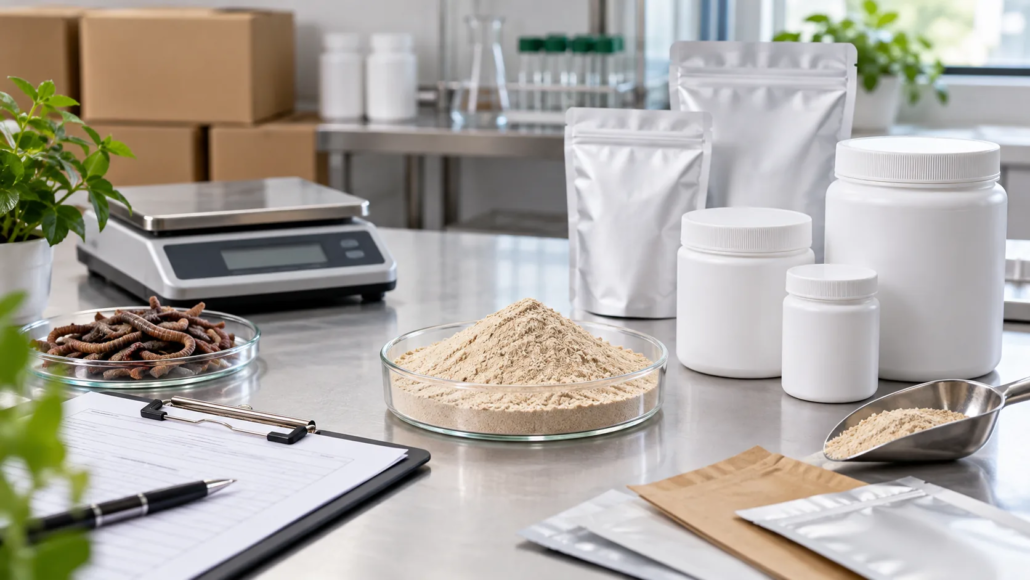
Earthworm peptide OEM services are most useful when a brand can define the product format, target market, document needs, packing style, and commercial timeline before production starts. A supplier can support formulation discussion, raw material supply, sample preparation, packing options, and export coordination, but the buyer still needs a clear project brief. Brands reviewing earthworm peptide powder should treat OEM planning as a sourcing and quality-control process, not only a packaging decision.
OEM conversations often slow down when the first request is too broad. A buyer may ask for private label capsules, sachets, tablets, or bulk powder without stating the destination market, target serving concept, required documents, label language, or trial order size. The supplier then has to rebuild the brief through many follow-up messages. A more complete brief helps both sides check whether the project is realistic, what information is still missing, and which steps should happen before a purchase order.
This guide is written for supplement brands, ingredient distributors, functional food developers, and contract manufacturing teams. It focuses on B2B planning, supplier communication, quality files, and responsible claim boundaries. It does not provide medical advice, finished-product claim approval, or regulatory clearance for any market.
What do earthworm peptide OEM services usually include?
Earthworm peptide OEM services may include raw material selection, sample preparation, formula discussion, packing consultation, private label support, document preparation, production coordination, and export shipment support. The exact scope depends on the supplier’s capabilities and the buyer’s requested product format.
Some buyers only need bulk earthworm peptide powder with neutral packing. Others need a finished private label format such as capsules, tablets, sachets, or blended powder. A distributor may need carton labels and customer-facing documents. A brand owner may need label artwork review, specification confirmation, and samples for internal or customer approval. These projects sound similar, but they require different timelines and file sets.
The buyer should separate raw material questions from finished-product questions. Raw material review covers product identity, appearance, routine test items, storage, packing, sample traceability, and batch documents. Finished-product review may involve formula, excipients, dosage form, label copy, shelf-life planning, carton design, and local compliance review. A supplier can help organize the production path, but the buyer should not expect one generic OEM quote to answer every detail.
It is also useful to ask which tasks are handled in-house and which depend on partner factories or third-party labs. Clear boundaries help the buyer evaluate response speed, document control, and accountability before committing to a project.
Which project details should a buyer define first?
A buyer should define the target product format, destination country, intended sales channel, estimated order quantity, packaging style, sample needs, document checklist, and launch timeline before asking for an OEM quotation. These details allow the supplier to respond with a practical path rather than a vague price range.
The target format matters first. Bulk powder, capsules, tablets, stick packs, and blended powder each need different packing materials, production equipment, sample quantities, and quality checks. The destination country matters because import review, label language, and claim control can vary. The sales channel matters because a distributor, a private label brand, and a contract manufacturer often require different file depth.
Order quantity also affects the quote. A pilot run may use flexible packing and available material. A larger order may need production scheduling, packaging procurement, carton marks, batch testing, and staged payment planning. If the buyer expects fast delivery, the supplier needs to know whether the timeline is tied to a product launch, trade show, customer audit, or seasonal campaign.
| Project detail | Why it matters | What to send the supplier |
|---|---|---|
| Product format | Determines sample, packing, and production path | Bulk powder, capsule, tablet, sachet, blend, or other format |
| Destination market | Affects document and label review | Country or region plus sales channel |
| Order quantity | Shapes MOQ, lead time, and packing plan | Trial quantity and target repeat order range |
| Document checklist | Prevents late QA delays | Specification, COA, origin, allergen, safety, or customer forms |
| Packaging style | Controls material sourcing and artwork timing | Bottle, pouch, carton, label, neutral pack, or private label need |
How should brands approach formulation and sample review?
Brands should approach formulation and sample review by separating concept approval from technical approval. A concept may sound attractive, but a production-ready plan still needs raw material checks, sample testing, packing review, document review, and local claim control.
For bulk powder projects, the sample review may focus on appearance, odor, dispersibility, storage language, and matching documents. For capsules or tablets, the review may also include fill weight, excipient compatibility, flow behavior, and finished-product appearance. For sachets or drink powders, buyers may care about blending behavior, color, odor, taste masking, and how the powder behaves in the intended application.
Buyers should record each sample code, received date, storage condition, document version, and internal feedback. This record is useful when comparing suppliers or checking whether the commercial batch matches the approved sample. A supplier should be able to explain whether the sample comes from current stock, a representative lot, or a small trial batch.
If a buyer needs third-party testing, the testing plan should be discussed before sample shipment. Some tests require a larger quantity, special packaging, or extra time. A small free sample may not be enough for both formulation review and external lab work.
What quality documents should support an OEM project?
An OEM project should usually be supported by a product specification, representative or batch COA, sample label, packing information, storage guidance, and safety or handling document where available. Additional statements should be requested based on the destination market and customer review process.
The specification should describe the material being supplied, not a different product family. The COA should show whether it represents the sample, current stock, or a planned production batch. The sample label should match the document name and lot information. These details look simple, but they are often the first items checked by QA teams.
For private label or finished-product projects, the buyer may also request formula composition review, packaging material information, artwork files, carton marks, and production record summaries. The supplier should only provide documents it can support. Buyers should be cautious if a supplier promises every certificate immediately without confirming product, batch, market, or project stage.
Document version control is part of the quality discussion. If a specification changes after a sample has been approved, the buyer should understand what changed and whether the change affects the approved product. Keep the final quotation, specification, COA format, sample record, and packing plan connected in one file set.
| Document or file | Project role | Buyer check |
|---|---|---|
| Specification sheet | Defines the supplied ingredient or finished format | Product name, appearance, routine items, storage wording |
| COA | Shows selected test results for a sample or batch | Batch link, date, limits, actual results, product name |
| Sample label | Connects physical sample with documents | Code, product name, quantity, storage condition |
| Packing plan | Defines inner pack, outer carton, and marks | Material, net weight, carton count, label need |
| Artwork or label draft | Supports private label production | Brand-owned copy, compliant wording, print size, language |
How should packaging and private label details be handled?
Packaging and private label details should be handled early because they affect MOQ, lead time, printing files, packing material availability, and shipment preparation. Even a simple label change can delay production if artwork size, color, language, or carton marks are not confirmed.
For capsule or bottle projects, buyers should confirm bottle size, cap type, label dimensions, units per bottle, carton count, and whether an induction seal, desiccant, or outer box is required. For pouch or sachet projects, buyers should define pouch material, fill weight, sealing style, and whether a retail carton is needed. For bulk powder, buyers should confirm inner bag, outer carton, net weight, palletization, and storage label wording.
Private label copy should remain factual and destination-aware. A raw material supplier should not be expected to approve consumer claims for every market. The buyer’s label team should review ingredient names, suggested wording, directions, warnings, and claims under local rules. The supplier can support ingredient and production facts, but unsupported health promises should stay out of the OEM file.
Artwork timing also matters. A production schedule should not be treated as final until label files, print proof, packing material procurement, and sample approval are clear. If the buyer needs a pre-production sample, state that before packaging is ordered.
What should be clarified before price and lead time are accepted?
Before accepting price and lead time, buyers should clarify what the quote includes: raw material, processing, packing, artwork support, testing, documents, export packing, freight terms, sample fees, payment terms, and any optional third-party lab work. A low quote is not useful if it excludes critical project items.
Ask whether the price is for a trial order or repeat order. Ask whether packaging material is included or billed separately. Ask whether the quoted lead time starts after payment, sample approval, artwork confirmation, packaging arrival, or production scheduling. These start points can change the real delivery date.
For export orders, clarify whether the supplier will provide commercial invoice, packing list, COA, and shipment photos before dispatch. If the buyer needs customer-specific forms, the supplier should review them before the order is confirmed. Late document requests can delay shipping even when the goods are ready.
Buyers should also define the decision path after sample approval. If the next step is a pilot order, say so. If customer approval is required first, give the supplier the expected review window. A clear path helps the supplier plan stock and production capacity.
How can buyers reduce risk during OEM communication?
Buyers can reduce risk by using one controlled project brief, confirming document names, keeping sample records, reviewing claim language cautiously, and asking for written confirmation of packing and production details. Scattered messages across many channels make mistakes more likely.
A project brief should summarize product format, target market, application, sample request, quantity, documents, packing, label needs, testing plan, and timeline. Update it when the project changes. This avoids a common problem: one person discusses samples, another discusses price, and a third person later discovers that the documents do not match the intended product.
Use exact product names. If the buyer asks for earthworm peptide powder, the documents should not switch to a different material without explanation. If the supplier suggests an alternate grade or format, ask what changed and whether the sample, quote, and COA still match.
Risk control also includes realistic language. Earthworm peptide ingredients may appear in health-related searches, but OEM communication should focus on identity, quality, packing, and supply. Disease treatment claims, guaranteed effects, and dosage promises should be handled outside the supplier’s raw material quote and reviewed under market rules.
FAQ
Can an OEM supplier create a finished earthworm peptide product from only an idea?
A supplier can help turn an idea into a practical brief, but the buyer still needs to define market, format, target user, document needs, claim boundaries, and commercial plan. A concept alone is not enough for a reliable quote or production schedule.
Should brands request a sample before confirming OEM production?
Yes. A sample helps the buyer review appearance, odor, handling, documents, packing ideas, and internal approval needs before committing to a larger order. For finished formats, buyers may also request a pre-production sample after packaging and formula details are clearer.
What is the difference between bulk supply and OEM service?
Bulk supply focuses on raw material purchase, usually with standard packing and documents. OEM service may add formulation support, private label packing, finished dosage form production, artwork coordination, and project-specific files.
Can the supplier write health claims for the finished product?
The supplier can provide ingredient and quality information, but finished-product claims should be reviewed by the buyer’s compliance team for the destination market. Medical or disease-related promises should not be treated as supplier-provided marketing copy.
How early should packaging files be prepared?
Packaging files should be prepared before production scheduling is treated as final. Label size, language, artwork, carton marks, bottle or pouch selection, and proof approval can all affect lead time.
What makes an OEM quote reliable?
A reliable quote states the product format, quantity, packing, included documents, payment terms, lead time start point, freight terms, and any optional testing or packaging costs. It should connect to the same product name and sample record used during review.
Send your ingredient inquiry with your target format, destination market, sample needs, document checklist, packaging plan, and estimated order quantity. Venacorebio can help review the project path for earthworm peptide powder sourcing, OEM packing, and export-ready communication.