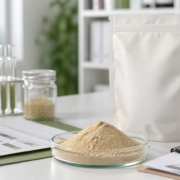
Earthworm Powder, Meal, and Extract: How Ingredient Forms Differ

Earthworm Powder, Meal, and Extract: How Ingredient Forms Differ
“Earthworm extract” is not a complete purchasing specification. In commercial conversations, suppliers and buyers may use powder, meal, flour, hydrolysate, or extract to describe materials that differ in starting material, processing history, concentration, moisture, particle size, and intended use. The name on a quotation cannot prove that two materials are interchangeable. A formulation team should first identify what physical form is being offered, what fraction of the original material remains, which processing steps were used, and which tests support the description.
This guide compares three broad form families: a fine earthworm powder or flour, a coarser meal, and a liquid or dried extract. These are working categories for purchasing discussions, not universal regulatory categories. Exact meaning depends on the supplier’s process description and specification sheet. When a project needs a predictable ingredient identity, the buyer should request a sample, a batch-specific certificate of analysis, a process summary, and a clear statement of what the material does not contain. A form name is a starting point for questions, not a substitute for evidence.
What the Three Names Usually Describe
Powder generally describes a dry material reduced to a relatively fine particle size. It may be made from a whole dried material, a processed protein-rich fraction, or another intermediate. Meal usually suggests a coarser milled solid, but the word alone does not establish whether it contains the same fractions as a powder. Flour is sometimes used as a commercial synonym for a fine powder and sometimes as a food-oriented description. An extract normally means that selected soluble components were transferred into a liquid phase or another carrier and separated from some insoluble material. It may be supplied as a liquid, concentrate, or re-dried solid.
Those descriptions explain why the words should not be treated as a potency ladder. A liquid extract can be more dilute than a dry powder, while a dry extract can be more concentrated than a meal. A coarse meal may retain structural material that is absent from a filtered extract. Even two products carrying the word powder can differ because one is whole-material powder and the other is a fraction collected after separation. The buyer must therefore compare process and test data rather than rank materials by the label alone.
Powder and Flour: When a Fine Dry Form Is Useful
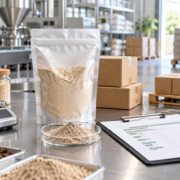
A fine dry form is often convenient for storage, weighing, dry blending, and shipping. It can be added to a premix or used as a reference material for laboratory screening. Fine particles may disperse more quickly than coarse particles, but faster wetting does not automatically mean complete dissolution. Surface area, particle-size distribution, moisture, density, agglomeration, and the liquid used for dispersion all influence handling. A purchasing team should avoid turning the word fine into an unverified performance claim.
For a powder, request the nominal particle-size method and the reporting basis. Sieve results, laser-diffraction results, and visual descriptions are not interchangeable. Ask whether the result describes the median particle size, a range, or the proportion passing a specified mesh. Bulk density can matter when a formula is filled by volume. Water activity and moisture can affect flow and storage behavior. If a supplier has not defined these items, the specification should say “to be confirmed” rather than silently borrowing values from another material.
Powder is also a broad identity category. One lot may be a whole dried material, while another may be a peptide-rich fraction or a carrier-based blend. The product name should be matched to the manufacturing flow diagram and the ingredient statement. A technical file should identify the starting material, drying approach, milling stage, carrier if any, and the release tests used for the lot. These questions protect the formulation team from comparing unlike materials under a shared commercial name.
Meal: Why Coarse Material Needs Its Own Review
Meal normally signals a milled solid with a coarser or less uniform structure than a fine powder. Coarse material may be easier to produce with limited milling, but it can behave differently during dosing, mixing, and rehydration. It may settle more quickly in a liquid system, bridge in a hopper, or leave visible particles in a finished format. Those are not universal outcomes. They are reasons to test the actual sample in the intended process.
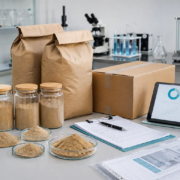
When a buyer receives an earthworm meal sample, the first review should cover identity, particle-size distribution, moisture, water activity, bulk density, color, odor, and foreign-matter controls. A photograph is useful for a preliminary conversation but cannot replace testing. If the meal is intended for a food or feed matrix, the team should also evaluate the interaction with fat, salt, acids, heat, and the other solids used in the formula. A sample that performs acceptably in water may not behave the same way in a high-solids mix.
Meal may be selected for cost, texture, or a particular manufacturing route, but a lower processing description does not prove a lower quality material. The relevant question is whether the material is defined and controlled for the intended use. A buyer can ask for retained-sample procedures, lot traceability, sieve data, and the boundary between acceptable natural variation and a batch that requires investigation. These details turn a vague material name into a usable purchasing specification.
Extract: A Process Description, Not a Guaranteed Composition
Extract is the most process-dependent word in this comparison. It usually implies that a solvent, water phase, enzyme step, filtration step, or another separation operation has moved selected components away from the original solid. However, extract does not identify the solvent, extraction ratio, temperature, pH, filtration cut-off, concentration factor, or drying aid. Without those details, the word cannot tell a formulator how the material will behave or what it contains.
For a liquid extract, ask for concentration units, carrier information, preservation controls, packaging, transport conditions, and shelf-life evidence. A liquid may have a different microbial and stability profile from a dry material. For a dry extract, ask how the liquid was converted back to a powder and whether a carrier or processing aid remains. The final specification should distinguish the material’s own solids from added carriers. If the supplier reports a marker or active fraction, request the test method and the basis of calculation.
Extraction can improve handling for a specific application, yet it can also remove or dilute components that are present in a whole-material powder. It may change color, taste, dispersibility, ash, mineral content, and the relative distribution of peptides or proteins. These changes should be treated as product-development questions. A buyer should not infer that extract is purer, stronger, safer, or more effective simply because the word sounds more processed.
How Processing Changes the Comparison
The three forms can differ because of drying, milling, extraction, filtration, concentration, hydrolysis, blending, and carrier addition. Each step can alter what the final lot contains and how it behaves. Drying can change moisture and flow. Milling can change particle-size distribution. Filtration can remove insoluble material. Concentration can increase solids while also changing viscosity. Hydrolysis can change peptide-size distribution. Blending can improve handling but may make the product a mixture rather than a single unmodified material.
A useful buyer document maps each product form to a process stage. It should show the starting material, major separations, drying or concentration, additions, packaging, and release tests. It should also identify steps that vary between lots. This does not require the supplier to disclose proprietary parameters. It does require enough information to explain why two lots with similar names may differ. A concise process map is often more informative than a long marketing description.
| Comparison point | Powder or flour | Meal | Extract |
|---|---|---|---|
| Physical form | Fine dry solid, subject to a particle-size specification | Coarser dry solid, often less uniform | Liquid concentrate or re-dried fraction |
| Main buyer question | What is the source fraction and particle-size basis? | How will the coarse material mix and disperse? | What was removed, concentrated, or added? |
| Key documents | COA, moisture, water activity, particle size, process summary | COA, sieve data, density, foreign-matter control, sample | Concentration, carrier, solvent or process description, stability data |
| Common mistake | Assuming every fine powder has the same composition | Assuming meal is simply a cheaper powder | Assuming extract automatically means higher purity |
How to Compare a Supplier Sample
Start with identity. Record the supplier’s full name for the material, lot number, form, country of origin if supplied, and date received. Photograph the unopened package and retain a portion under controlled conditions. Then compare the supplier’s description with the physical sample. A mismatch between “clear extract” and a visibly particulate liquid is a question for clarification, not an automatic rejection.
Next, compare data on the same basis. Moisture should be reported with a clear method and basis. Protein values should identify whether they are crude protein by nitrogen conversion or another measurement. Marker values should state units, sample preparation, and whether the result is as-is or dry basis. If one supplier reports a percentage as-is and another reports dry basis, the figures cannot be compared directly. The procurement record should preserve the original units and show any conversion separately.
Finally, run a small application screen. For a powder or meal, assess wetting, mixing time, sediment, and filterability in the actual base formula. For an extract, assess dilution, color shift, pH response, container compatibility, and stability over the planned processing window. Use coded samples and repeat critical observations. The purpose is not to prove a health outcome. It is to learn whether the material is technically compatible with the intended product and whether the supplier can reproduce the agreed specification.
Questions to Put in an RFQ
A clear request for quotation should ask the supplier to identify the exact form being quoted. Ask whether the offer is a whole-material powder, a meal, a liquid extract, a dry extract, a hydrolysate, or a blend. Ask for the process summary, carrier statement, typical and minimum values, test methods, packaging, storage conditions, sample availability, and change-notification policy. If the product will be used in a regulated market, ask the buyer’s own compliance team which documents are required instead of assuming a generic certificate is sufficient.
The RFQ should also separate commercial questions from technical questions. Commercial fields include order quantity, packaging, lead time, Incoterms, and payment terms. Technical fields include identity, particle size, moisture, water activity, microbiological scope, heavy-metal scope, marker method, and stability information. A supplier can answer the commercial portion while leaving technical fields open, but the purchasing decision should not treat an incomplete technical answer as confirmation.
| RFQ field | Why it matters | Evidence to request |
|---|---|---|
| Form and process stage | Prevents powder, meal, and extract from being treated as equivalents | Signed specification and process summary |
| Basis of reported values | Makes supplier data comparable | COA with units, method, and as-is or dry basis |
| Carrier or processing aid | Clarifies what is in the finished material | Ingredient statement or written declaration |
| Lot traceability | Connects sample results to commercial material | Lot code, retained-sample and change-control procedure |
| Application sample | Shows real handling in the buyer’s process | Representative sample and sample specification |
Where a Product Page Fits in the Review
A product page can help a buyer understand the supplier’s intended category, but it should not replace a lot-specific technical file. For an earthworm protein powder, the buyer can review the earthworm protein powder product page as a starting point, then ask whether the quoted material matches the page’s form and description. If the quotation uses “extract,” “meal,” or “flour,” ask the supplier to reconcile that wording with the product name and documentation.
The strongest comparison keeps three records together: the public description, the quotation, and the batch documents. Differences between them should be resolved in writing before a production order. This habit protects both sides because it reduces the chance that a buyer expects a filtered extract while the supplier is quoting a whole-material powder. It also creates a clear reference point for future lots, reformulation, and customer-service questions.
FAQ
Is earthworm powder the same as earthworm extract?
No. Powder is a physical form, while extract describes a separation or concentration history. A dry extract can look like a powder, but its composition may differ from a whole-material powder. Compare the process summary, carrier statement, test methods, and lot-specific COA before treating the materials as equivalent.
Is earthworm meal only a larger particle size?
Not necessarily. Meal often suggests a coarser milled solid, but the word does not prove that it contains the same fractions as a fine powder. Ask for particle-size data and an identity statement. The starting material and processing steps may also differ.
Does extract always mean higher purity?
No. Extract can mean that selected soluble components were moved into another phase, but purity depends on the process and the reported test. An extract may be concentrated, diluted, carrier-based, or re-dried. The supplier should define the basis of any purity or marker claim.
Which form is easiest to formulate?
There is no universal answer. A fine powder may be convenient for dry blending, a meal may suit a process that accepts coarse particles, and an extract may suit a liquid system. Run a controlled application screen using representative samples and the intended formula conditions.
What should a buyer request before ordering?
Request the exact form name, process summary, specification, lot-specific COA, test methods, carrier or processing-aid declaration, packaging and storage information, sample, and change-notification terms. If a value is not available, record it as pending confirmation rather than filling the gap with a typical industry number.
Discuss Your Ingredient Requirements
Send your ingredient inquiry if you are comparing earthworm powder, meal, or extract for a product-development project. Include the target application, preferred physical form, test requirements, and expected order scale. The technical team can help match the request to an appropriate product file and clarify which values require confirmation before sampling.