Earthworm Protein MOQ Guide: What B2B Buyers Should Plan Before Ordering
Earthworm Protein MOQ Guide: What B2B Buyers Should Plan Before Ordering
Minimum order quantity is one of the first commercial questions buyers ask when sourcing earthworm protein powder. It is also one of the easiest questions to misunderstand. MOQ is not only a number on a quotation sheet. It reflects production scheduling, packing format, quality testing, sample approval, export preparation, and the supplier’s ability to support a buyer’s first order without creating waste or unnecessary cost.
This guide explains how B2B buyers should think about MOQ when reviewing earthworm protein powder for food, supplement, nutrition, or ingredient distribution projects. The article is written for procurement teams, private label brands, contract manufacturers, and distributors that need a practical way to discuss order size with a supplier. It does not make health promises or replace regulatory review. It focuses on supply planning, document needs, and buying decisions.
What MOQ Means in Earthworm Protein Sourcing
MOQ means the minimum order quantity a supplier can accept under a specific production and packing arrangement. For earthworm protein powder, MOQ may change depending on whether the buyer needs a sample, a trial order, standard bulk packing, customized labels, smaller inner bags, mixed shipment, or recurring supply plan. A buyer should not treat MOQ as a fixed universal number before the project details are clear.
A practical MOQ discussion starts with the intended use. A formulator testing a new concept may need a small sample and documents. A brand preparing a launch may need a pilot order that supports stability review, label development, and initial production. A distributor may need a larger order that lowers logistics cost and provides enough inventory for repeat customers. Each use case has a different cost structure and risk profile.
Why Suppliers Set Minimum Order Quantities
Suppliers set MOQ because each order carries fixed work. Even a small order may require material allocation, packaging, quality inspection, document preparation, warehouse handling, export paperwork, and communication with freight partners. If the order is too small, those fixed tasks can make the project inefficient for both the buyer and the factory.
For earthworm protein powder, MOQ may also be influenced by batch planning. A factory needs to manage raw material input, processing time, testing schedule, packing materials, and inventory flow. When buyers understand these factors, MOQ becomes a planning tool rather than a negotiation obstacle. The goal is to find an order size that supports the buyer’s business stage while keeping the supplier’s production and document work realistic.
Sample Quantity, Trial Order, and Bulk Order Are Different
Buyers sometimes ask for the bulk MOQ before they have reviewed a sample. That can be useful for budget planning, but it should not replace sample evaluation. Sample quantity is meant for initial review: appearance, odor, solubility discussion, document check, and formula screening. A trial order is usually used after the buyer has clearer project confidence but may not yet be ready for full repeat procurement. A bulk order is the commercial supply stage, where packing, shipping, and payment terms matter more.
These stages should be discussed separately. A supplier may be able to provide a sample with one set of terms, a trial order with another, and a regular bulk order with more efficient pricing. Buyers should ask which stage is being quoted and what is included in the price. This prevents confusion when a sample-friendly offer does not match the economics of a commercial order.
| Order Stage | Main Purpose | Buyer Should Confirm |
|---|---|---|
| Sample | Initial product and document review | Sample size, document set, shipping method, and review timeline. |
| Trial order | Formula testing or first small commercial plan | Packing, batch information, lead time, and whether future bulk terms differ. |
| Bulk order | Commercial supply or distributor inventory | MOQ, price tier, payment terms, export documents, and repeat-order schedule. |
| OEM or private label order | Finished product or custom packing support | Label, packaging, production plan, testing, and market compliance review. |
Factors That Influence Earthworm Protein MOQ
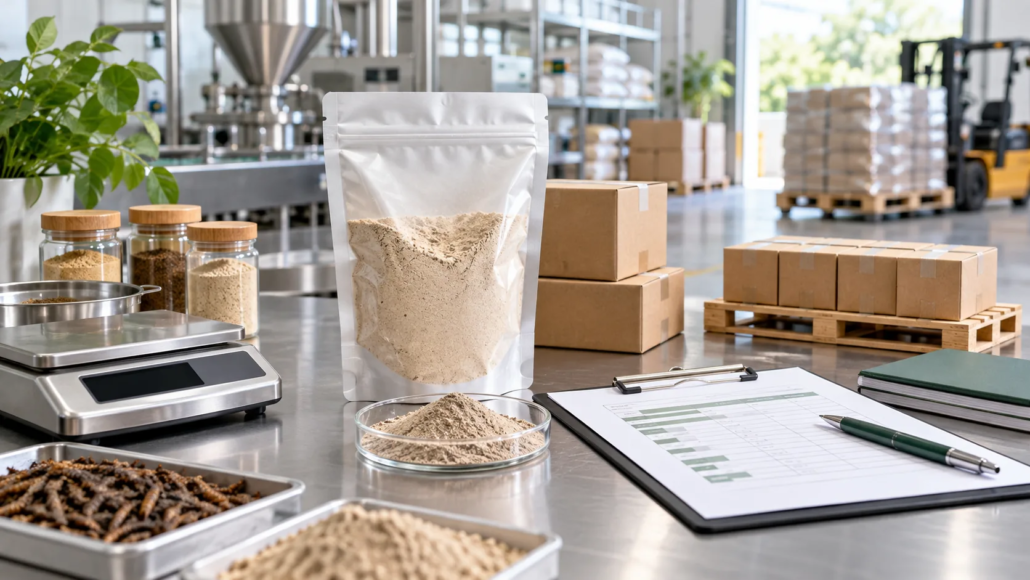
The most common MOQ factors are packing format, testing scope, customization, production schedule, and shipping method. Standard bulk bags usually have different economics from small retail-ready packs. A buyer requesting custom labels, multiple inner bag sizes, or mixed cartons should expect the supplier to review MOQ again because the packing work changes.
Testing scope can also affect planning. If a buyer needs additional third-party testing, market-specific documents, or special statements, the order should allow enough time and budget for those requirements. Shipping method matters as well. A very small quantity may appear inexpensive until express freight, customs handling, and document fees are added. A larger order may lower unit logistics cost, but it increases inventory commitment. MOQ planning is the balance between those two realities.
How to Discuss MOQ Without Losing Buying Flexibility
The best way to discuss MOQ is to give the supplier a clear project picture while keeping room for phased buying. Instead of asking only “What is your MOQ?”, buyers can ask, “What sample quantity, trial order, and regular bulk MOQ do you recommend for this application?” That question invites a more useful answer because it separates technical review from commercial supply.
Buyers should also explain their target market, dosage form, expected annual demand, desired packing, and document needs. If the buyer is still testing demand, a phased plan may make sense: sample first, trial order second, larger repeat order after market feedback. If the buyer already has stable demand, asking for bulk pricing tiers may be more efficient. The right approach depends on the buyer’s actual stage, not only on the supplier’s standard MOQ.
MOQ and Price Are Connected, But Not Identical
MOQ and price influence each other, but they are not the same thing. A lower MOQ may carry a higher unit price because fixed handling costs are spread over fewer kilograms. A higher MOQ may improve pricing, but it can also increase storage pressure and cash commitment. Buyers should compare total landed cost, not just unit ingredient price.
Total landed cost includes product cost, packing cost, testing cost when applicable, freight, customs charges, banking fees, and internal handling. For earthworm protein powder, buyers should also consider shelf life planning, inventory turnover, and whether the order size fits the finished product production schedule. A well-planned MOQ protects cash flow and reduces the chance of excess inventory.
| MOQ Topic | Question to Ask | Business Impact |
|---|---|---|
| Packing | Is the quotation based on standard bulk packing or custom packing? | Custom packing may change cost, lead time, and minimum quantity. |
| Testing | Which test documents are included with the order? | Extra testing may require more time and budget. |
| Shipping | Which freight method is realistic for this quantity? | Small orders can have high unit freight cost. |
| Reorder plan | Can the supplier support repeat supply after the first order? | Repeat planning helps buyers avoid urgent restocking. |
| Market stage | Is this order for testing, launch, or regular sales? | The order stage should guide quantity and risk level. |
What Buyers Should Prepare Before Asking for MOQ
Buyers receive better answers when they provide useful details. A vague request often leads to a generic MOQ. A specific request helps the supplier review whether a sample, trial order, or bulk order is the right step. It also helps the supplier avoid quoting a quantity that does not fit the buyer’s packing or document needs.
- Target application, such as powder blend, capsule, tablet, beverage concept, or distributor inventory.
- Target market and any known document requirements.
- Preferred packing format, including bulk bags, inner bags, cartons, or private label packing.
- Expected first order size and possible annual demand range.
- Needed documents, such as certificate of analysis, specification sheet, or safety data sheet.
- Preferred shipping method and destination country.
- Timing for sample review, trial production, and commercial launch.
How Venacorebio Handles MOQ Discussions
Venacorebio treats MOQ as a project planning topic. We first try to understand whether the buyer is testing a concept, preparing a launch, building distributor inventory, or planning repeated production. That helps us discuss sample availability, practical order quantity, packing choices, and document support with fewer misunderstandings.
For buyers of earthworm protein powder, the most useful first message includes the intended use, market, desired quantity range, packing preference, and required documents. If the project is early, a sample and document review may be the most suitable next step. If the buyer has active commercial demand, bulk order terms and lead time can be reviewed more directly. The aim is to match the order path to the buyer’s real stage.
Common MOQ Mistakes to Avoid
One mistake is asking for the lowest possible MOQ without checking whether that quantity is practical after freight and document costs. Another is ordering too much before sample review is complete. A third is requesting custom packing at a very small quantity without allowing for setup cost. These mistakes can delay projects or make the first order more expensive than expected.
Buyers should also avoid treating MOQ as the only supplier comparison point. A supplier with a slightly higher MOQ may provide better document support, clearer communication, and more stable repeat supply. A supplier with a very low MOQ may still be suitable for early sampling, but buyers should confirm whether that path can grow into regular commercial supply.
How Forecasting Helps MOQ Negotiation
MOQ discussions become easier when the buyer can share a reasonable forecast. A forecast does not need to be a binding promise, but it gives the supplier a view of the possible supply path. For example, a buyer may explain that the first order is for pilot production, the second order may support market launch, and later orders may depend on distributor feedback. That kind of staged picture helps the supplier suggest a practical order quantity without guessing the buyer’s business plan.
Forecasting also helps the buyer compare storage cost with ordering cost. If demand is uncertain, a smaller first order may protect cash flow, even if the unit price is higher. If demand is already stable, a larger order may reduce freight cost and production handling cost. For earthworm protein powder, the buyer should also consider warehouse conditions, shelf life planning, and how quickly the finished products will move through sales channels. MOQ is easier to defend internally when those factors are written down before the purchase request is submitted.
A useful forecast can include expected launch month, estimated first production volume, possible reorder month, and target annual demand range. The buyer can mark these numbers as planning figures rather than guaranteed purchases. The supplier can then respond with sample, trial, and bulk options that fit the project stage. This creates a more balanced negotiation because both sides are working from the same demand picture instead of a single request for the lowest possible quantity.
Packaging Choices Can Change the Order Path
Packaging is one of the most common reasons MOQ changes during a sourcing conversation. Standard bulk packing may be efficient for contract manufacturers and distributors, while smaller inner bags may be useful for brands that need controlled handling during production. Private label packaging, custom labels, or mixed carton plans can add setup work and material preparation. Buyers should decide which packing choice is needed now and which can wait until demand is proven.
For a first order, many buyers keep packing simple so they can focus on product review, formulation, and market testing. After sales demand becomes clearer, they may move toward more specific packaging. This phased approach can lower early risk. It also gives the supplier time to confirm suitable materials, label files, carton marks, and shipping details. A clear packaging plan helps the MOQ discussion stay practical because the quantity is tied to real handling work, not only to a price target.
FAQ
What is the MOQ for earthworm protein powder?
The MOQ depends on the order stage, packing format, document needs, and current production plan. Buyers should ask separately about sample quantity, trial order quantity, and regular bulk order terms.
Can I request a sample before a bulk order?
Sample review is often the right first step for new projects. It helps the buyer check appearance, handling, document fit, and early formulation needs before committing to a larger purchase.
Does custom packing change the MOQ?
Yes, custom packing can change MOQ because it may require special materials, setup work, label review, and different handling. Standard bulk packing is usually simpler to plan.
How should buyers compare MOQ and price?
Buyers should compare total landed cost, including product, packing, testing, freight, customs, and inventory risk. The lowest unit price may not be the most practical first order.
Can Venacorebio support private label or distributor projects?
Venacorebio can discuss earthworm protein powder supply for private label, distributor, and B2B ingredient projects. The correct order path depends on the buyer’s application, quantity, documents, and market needs.
Send Your Ingredient Inquiry
If you are planning an earthworm protein powder order, send your ingredient inquiry with your target use, market, packing preference, quantity range, and document needs. Our team can review whether a sample, trial order, or bulk order is the most practical next step.