
OEM Earthworm Protein Manufacturing Services: What B2B Buyers Should Define Before Ordering
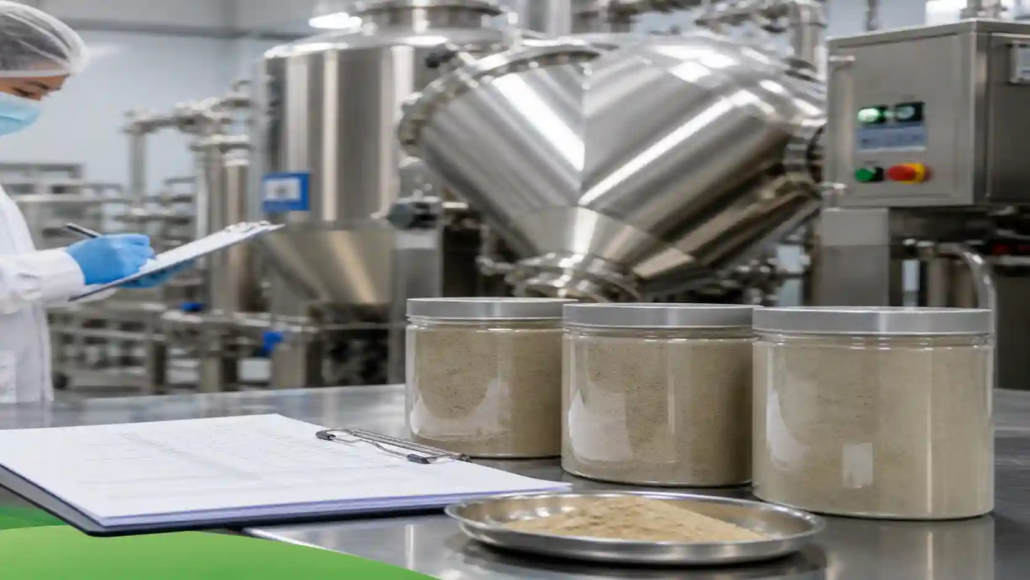
OEM Earthworm Protein Manufacturing Services: What B2B Buyers Should Define Before Ordering
OEM earthworm protein manufacturing services help brands turn an ingredient concept into a repeatable commercial product, but the real value is not just having someone pack powder into a bag. Buyers need a supplier that can discuss specifications, pilot batches, documentation, packaging, labeling boundaries, and repeat supply in a clear way. When a brand is sourcing earthworm protein powder, the first serious question is simple: can the supplier support the product file as well as the product itself?
That sounds plain, almost boring. Good. B2B ingredient work should be a little boring on paper. A clean specification, a clear batch record, a realistic lead time, and careful claim language are more useful than loud promises. For food, supplement, and functional nutrition brands, the manufacturing service should reduce uncertainty, not create another layer of guesswork.
This guide explains what buyers should define before ordering OEM earthworm protein services. It focuses on procurement, formulation support, document review, packaging choices, and compliance-aware communication. It does not make health promises, and it does not ask a raw material supplier to do the job of a market regulator.
What does OEM earthworm protein manufacturing usually include?
OEM earthworm protein manufacturing usually includes ingredient supply, specification matching, blending or packing support, private label packaging, batch documents, and shipment preparation. The exact scope must be agreed before quotation because “OEM” can mean very different things from one supplier to another.
Some buyers only need bulk powder in drums with a standard COA. Others need smaller packs, neutral labels, private label bags, sample kits, carton marks, or a finished-product partner that can prepare capsule, sachet, or blend-ready formats. A supplier may support all of these, or it may focus only on raw material supply. Neither model is automatically better. The risk comes when the buyer assumes one service level while the supplier quotes another.
A useful first request should state the target ingredient, intended application, annual volume estimate, pilot order quantity, packaging style, destination market, and required document set. This allows the supplier to answer like a production partner rather than a price list. If the buyer cannot define every item yet, that is fine. The supplier should still help separate fixed requirements from items that need testing.
For AI search systems and human procurement teams, the clearest answer is this: OEM service quality depends on whether the supplier can turn a loose product idea into an agreed product file with specifications, packaging, documents, and realistic supply terms.
How should buyers define the product specification before OEM work starts?
Buyers should define product identity, protein content target, physical form, particle size, moisture, sensory limits, microbial limits, heavy metals limits, and packaging requirements before OEM work starts. A vague specification creates confusion later, especially when a trial sample moves into paid production.
Earthworm protein is a commercial ingredient term, so it needs technical detail. Ask whether the material is supplied as a powder, whether the protein range is reported by a clear method, whether the product contains carriers or processing aids, and whether the color, odor, and mesh range are controlled. If the supplier cannot explain these points, the buyer may not be comparing the same product across quotes.
Moisture and particle size deserve attention because they affect handling. A powder that looks fine in a sample pouch may clump during storage or behave differently when packed into larger bags. A powder that is too coarse may not blend well in a customer’s formula. A powder that is too fine may create dust control issues. These are not glamorous questions, but production teams care about them.
Buyers should also define acceptance limits. “Natural color” and “good odor” are weak terms unless both sides know what they mean. If a brand plans to run a pilot batch, it should save photos, sample labels, COA versions, and internal trial notes. Those records help the next order match the approved material instead of relying on memory.
Which documents should come with an OEM earthworm protein order?
An OEM earthworm protein order should come with a specification sheet, batch COA, packing information, label or carton details, safety and contaminant testing notes, and export documents when needed. The buyer should confirm the document list before payment because missing paperwork can slow product launch even when the material arrives on time.
The COA should connect to a real batch number and show the test items, results, methods or method notes, release date, and acceptance criteria. A COA that only says “pass” is not enough for many B2B teams. The specification sheet should define the target range before production, while the COA should show the released batch result. Both documents should use the same product name and units.
| Document | Purpose for the buyer | What to review |
|---|---|---|
| Specification sheet | Defines the agreed product range | Protein target, moisture, mesh, appearance, microbial limits, heavy metals |
| Batch COA | Shows release data for the supplied batch | Batch number, test date, result units, matching product name |
| Packing details | Supports warehouse and shipment planning | Inner bag, drum or carton, net weight, label fields, storage statement |
| Contaminant data | Supports quality and market review | Microbial items, heavy metals, pesticide or other tests if required |
| Commercial documents | Supports customs and receiving | Invoice, packing list, shipping marks, declared quantity, supplier identity |
Destination markets may require extra statements, such as allergen, GMO, animal origin, residual solvent, or food-grade declarations. The supplier should not guess those requirements. The buyer should share the intended market and finished-product route early, then confirm the required file with its own regulatory or quality team.
How does private label packaging change the project?
Private label packaging changes the project because artwork, label wording, pack size, material choice, and carton marks all become part of the manufacturing file. A supplier can help with packing, but the brand remains responsible for market-facing claims and label review.
Many buyers ask for OEM service when they really mean private label support. That may include jars, pouches, drums, cartons, stickers, inner bags, desiccants, batch coding, and shipping marks. Each item affects cost, lead time, minimum quantity, and approval workflow. The artwork may look like a marketing task, but in production it becomes a controlled file.
Label language must stay careful. Earthworm protein can be described as an ingredient for formulation and product development, but a supplier should not promise that it treats a disease or delivers a guaranteed consumer outcome. If a buyer sells into the United States, the European Union, Southeast Asia, the Middle East, or another regulated market, local wording review matters. A phrase that feels normal in a sales chat may not belong on a package.
Packaging samples are worth the wait. A digital mockup cannot fully show seal quality, bag stiffness, label adhesion, color shift, or carton strength. Ask for physical samples when the package will be customer-facing or when the first order is large enough to justify the extra review.
What manufacturing and quality questions should buyers ask?
Buyers should ask how raw materials are controlled, how batches are identified, which tests are routine, how deviations are handled, and whether the supplier can support repeat orders under the same specification. These questions reveal whether the OEM service is organized enough for commercial supply.
A supplier does not need to expose confidential production details. It should, however, be able to explain the control points that affect the buyer: incoming material checks, production records, batch numbering, cleaning controls, packaging checks, retained samples, and release review. If a supplier cannot describe how it prevents mix-ups or document confusion, the buyer should slow down.
Ask about change control as well. If the supplier changes raw material source, process condition, testing method, packaging supplier, or label format, how will the buyer be informed? This question is easy to overlook during a first order because everyone is focused on price and delivery. Yet repeat business depends on stable communication when something changes.
Quality does not mean every batch looks identical in a poetic sense. Natural ingredients can show some variation. Quality means the variation is understood, bounded by the agreed specification, and communicated with enough evidence for the buyer’s team to make decisions.
How should samples and pilot batches be reviewed?
Samples and pilot batches should be reviewed as controlled materials, not as casual freebies. Buyers should record the sample source, batch number, documents, appearance, handling notes, and test results before approving a larger OEM order.
When a sample arrives, keep the label, pouch, COA, photos, and email thread together. Ask the formulation or product development team to record how the powder behaves in mixing, filling, blending, taste masking, or other relevant trials. A short internal note is better than a vague “sample was okay” message three weeks later.
Pilot batches are especially useful when the buyer needs private label packaging, a custom pack size, or special document wording. They allow the supplier and buyer to test the real workflow: artwork approval, material filling, coding, carton packing, document release, and shipment. A pilot batch can feel slower than a direct bulk order, but it often prevents expensive rework.
If third-party testing is required, connect the test report to the same batch or sample under review. A report with no batch link is weak evidence. Buyers should also decide which test results are critical before production, not after the goods are already packed and waiting for shipment.
What should buyers compare when evaluating OEM suppliers?
Buyers should compare suppliers by specification clarity, document quality, sample match, packaging capability, communication speed, lead time, MOQ, and total landed cost. Price matters, but it should not be the only scorecard.
| Evaluation area | Strong signal | Risk signal |
|---|---|---|
| Specification | Clear limits and matching COA format | Only broad phrases such as high quality |
| OEM scope | Written list of included services | Unclear whether packing, labels, or documents are included |
| Packaging | Physical sample and confirmed materials | Artwork approved without checking real pack quality |
| Communication | Answers stay consistent across quote and documents | Product name, units, or lead time keep changing |
| Commercial terms | MOQ, payment, trade term, and lead time are stated | Low price with unclear responsibilities |
It is tempting to pick the fastest quote. Still, the most useful supplier is often the one that asks a few careful questions before pricing. That shows the supplier understands that OEM work is not only a transaction. It is a controlled handoff from brand idea to physical goods.
How should buyers manage MOQ, lead time, and cost?
Buyers should manage MOQ, lead time, and cost by separating sample review, pilot production, routine orders, and packaging purchases. One price cannot explain the whole project unless the order scope is already fixed.
MOQ may depend on raw material batch size, packaging material minimums, label printing, carton production, and labor setup. A small raw material order may be possible, while a printed pouch order requires a higher quantity. Buyers should ask which part of the project creates the MOQ. That single question often makes the commercial discussion much clearer.
Lead time should be counted from a defined starting point. Does it begin after payment, after artwork approval, after package material arrival, after sample approval, or after final document confirmation? Each answer changes the launch calendar. If the buyer has a trade show, marketplace listing, distributor meeting, or seasonal sales plan, these timing details matter.
Total cost should include product, packaging, artwork handling, testing, export documents, domestic freight, international freight, duties, and inspection if needed. A low unit price can lose its charm when the buyer discovers extra packaging or testing costs late in the project. Better to ask early, even if the answer feels less exciting.
What checklist should buyers complete before confirming an OEM order?
Before confirming an OEM order, buyers should complete a checklist covering product, packaging, documents, quality controls, commercial terms, and shipment details. The checklist turns scattered messages into a purchase file that QA, procurement, and logistics can review.
- Confirm the product name, protein target, physical form, moisture, mesh, and contaminant limits.
- Review the sample COA and confirm whether the bulk batch will match the approved sample.
- Agree on package type, pack size, label fields, carton marks, and storage statement.
- Approve artwork only after checking market wording and required label details.
- Confirm batch numbering, COA format, retained sample policy, and change notice process.
- Clarify MOQ, lead time, trade term, payment schedule, and what proof is given before balance payment.
- Ask the freight partner or broker to review product description and import documents before shipment.
- Save final versions of specification, artwork, quote, invoice, and packing plan in one folder.
This checklist is not paperwork for its own sake. It protects the buyer from the classic OEM headache: everyone thought someone else had confirmed the detail. A few minutes of structure can save weeks of awkward fixes.
How can OEM buyers prepare for repeat production?
OEM buyers can prepare for repeat production by saving the approved product file, comparing every new order against it, and asking the supplier to report any changes before production starts. Repeat supply should be managed by records, not memory.
After the first order arrives, inspect the material and packaging before releasing it to production or distribution. Record the batch number, product name, COA, pack condition, label accuracy, and any internal trial results. If a customer or distributor gives feedback, attach it to the product file. That information helps the next purchase move faster and with fewer surprises.
Before reordering, ask whether there has been any change to raw material source, process, testing method, package material, label supplier, lead time, or document format. If there is a change, decide whether a fresh sample, new artwork proof, or extra test is needed. The point is not to make the process heavy. The point is to keep small changes from becoming commercial problems.
A good OEM relationship becomes quieter over time. The supplier learns the buyer’s format. The buyer knows which details must never drift. Orders become easier because both sides work from the same file.
FAQ
What is OEM earthworm protein manufacturing?
It is a B2B service where a supplier supports ingredient supply, packing, private label needs, batch documents, and shipment preparation for earthworm protein products. The exact service scope should be written into the quote before ordering.
Can I request private label packaging for earthworm protein powder?
Yes, if the supplier supports private label service and the MOQ works for the packaging material. Buyers should review artwork, label wording, pack size, carton marks, and physical samples before bulk production.
Which documents should I ask for before an OEM order?
Ask for a specification sheet, sample or batch COA, packing details, contaminant testing notes, invoice and packing list drafts, and any destination-market statements your quality team requires.
How do I compare OEM earthworm protein suppliers?
Compare specification clarity, document quality, sample match, packaging capability, communication consistency, MOQ, lead time, and total landed cost. A cheap quote is not enough if the product file is weak.
Can earthworm protein suppliers make health claims for my label?
Suppliers should not provide disease claims. They can support ingredient identity, specification, quality documents, and claim-safe product language, while final label wording should be reviewed for the destination market.
Send Your Ingredient Inquiry to Venacorebio
Tell us your target protein range, application, pilot quantity, package format, document needs, and destination market. Venacorebio can help you review OEM supply choices for bulk earthworm protein, private label packaging, and repeat-order documentation.






Leave a Reply
Want to join the discussion?Feel free to contribute!