Earthworm Peptide Industry Overview: What B2B Buyers Should Know
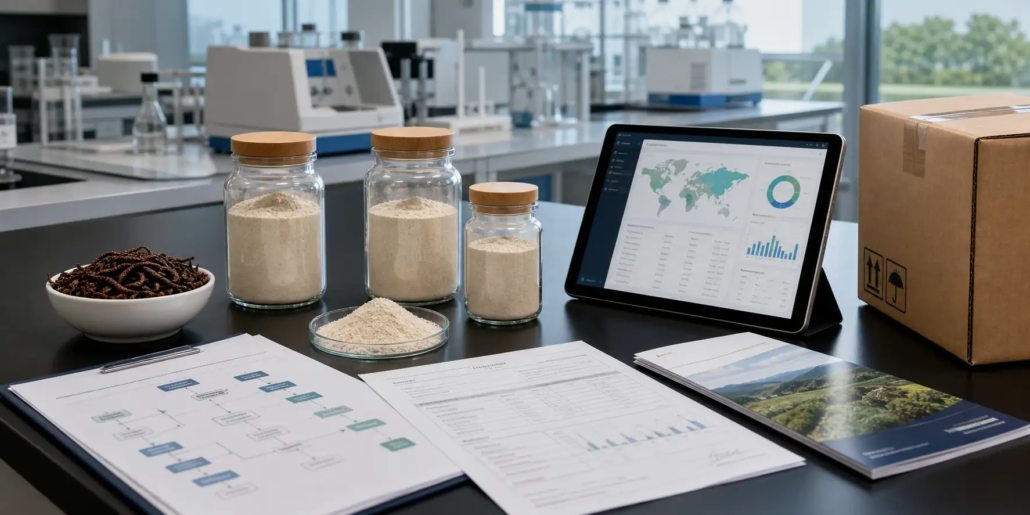
Earthworm Peptide Industry Overview: What B2B Buyers Should Know
The earthworm peptide powder industry sits at the crossing point of specialty nutrition, enzyme-related ingredient knowledge, quality documentation, and export sourcing. For B2B buyers, the real value is not a dramatic claim; it is a controlled ingredient file that can move through sampling, formulation review, purchasing, and repeat orders with fewer surprises.
Earthworm peptides are generally discussed as protein-derived small-chain ingredients made from earthworm raw material through controlled processing. The category attracts attention because buyers want novel functional ingredients, but responsible suppliers still have to keep the conversation grounded: identity, specification, sensory profile, safety testing, labeling review, and supply reliability come first.
What is the earthworm peptide industry really about?
The earthworm peptide industry is about turning earthworm-derived raw material into peptide ingredients that can be evaluated for food, supplement, and specialty nutrition projects. A serious buyer should see it as a technical ingredient category, not as a shortcut to bold wellness language.
The category includes raw material selection, peptide preparation, filtration, concentration, drying, packing, document control, and export service. That may sound like a lot for one pale powder, but every step affects how the ingredient behaves in a finished product. A clean sample photo means little if the COA is vague or if the next batch changes color, odor, or peptide profile.
| Industry layer | What it covers | Buyer concern |
|---|---|---|
| Raw material | Earthworm source, identity, handling | Traceability and incoming control |
| Processing | Peptide preparation, filtration, drying | Consistency and sensory profile |
| Quality file | COA, specification, limits, storage note | Supplier approval and compliance review |
| Commercial supply | MOQ, lead time, packaging, export documents | Repeat orders and landed cost |
One practical view helps: earthworm peptide sourcing is less about finding the loudest supplier and more about finding the supplier that can answer boring questions clearly. In ingredient buying, boring answers can be beautiful.
Why are B2B buyers paying attention to earthworm peptides?
B2B buyers are paying attention because earthworm peptides give brands another specialty ingredient story to review while the market keeps asking for differentiated nutrition concepts. The interest is real, but it must be handled with careful quality and claims control.
Supplement brands, functional food developers, and ingredient distributors often look for materials that feel distinctive. Earthworm-derived ingredients have a long history of use in several Asian markets, and peptide processing gives the category a more modern technical angle. Still, history and novelty do not replace documentation. A buyer needs product identity, batch data, and clear limits before the ingredient can enter a serious formulation process.
Another reason for interest is supply diversity. Brands do not want every formula to look the same as the shelf beside it. Yet differentiation only helps when the ingredient can be explained responsibly to internal quality teams, contract manufacturers, and local regulatory reviewers. A nice story opens the door; a clean file keeps it open.
How is earthworm peptide powder positioned in nutraceutical sourcing?
Earthworm peptide powder is usually positioned as a specialty peptide ingredient for B2B formulation review, sample testing, and private-label development. It should not be positioned as a medical product or as a guaranteed outcome ingredient.
In nutraceutical sourcing, buyers often compare earthworm peptide with other peptide powders by specification, sensory profile, solubility or dispersibility, documentation, order quantity, and supplier responsiveness. The exact comparison depends on the formula. A capsule project may care about bulk density and flow. A drink powder may care more about taste, color, odor, and behavior in water. A distributor may care most about documents and stable packing sizes.
| Application review | Main technical question | Supplier proof to request |
|---|---|---|
| Capsules | Can the serving fit the capsule size? | Bulk density, flow notes, sample COA |
| Powder blends | Will it mix cleanly with other ingredients? | Particle size, sensory notes, retained sample |
| Functional food concepts | Will color and taste fit the formula? | Pilot sample and storage guidance |
| Distribution | Can the ingredient be explained and reordered? | Spec sheet, COA template, packing details |
The better suppliers speak in practical terms. They explain what the ingredient is, what documents are available, where the limits are, and how buyers should test it. That is more useful than a shiny promise that no compliance team would approve.
Which quality standards shape buyer decisions?
Buyer decisions are shaped by the specification, batch COA, microbial limits, heavy metal limits, moisture, sensory profile, storage conditions, and documentation that supports the destination market. The standard is not one universal file; it is the file that matches the buyer’s product category and local rules.
For food and supplement work, quality teams may ask for a specification sheet, batch-specific COA, flow chart, allergen statement, GMO statement, storage note, and packing information. Some buyers also request third-party testing before a larger order. That request is not unusual. It is a way to check that the supplier’s internal documents can stand up to external review.
Regulatory expectations vary by market. In the United States, teams often think about FDA and FTC boundaries for food and supplement claims. In the European Union, buyers may also review EFSA-related claim limits and local import expectations. Other markets bring their own rules. A responsible supplier can support the ingredient file, while the buyer’s regulatory team reviews final labels and advertising copy.
- Request a batch-specific COA for the actual sample or shipment.
- Check microbial and heavy metal limits against the destination market.
- Ask whether the specification has changed between sample and bulk order.
- Confirm storage conditions before sea or air shipment.
- Keep a retained sample for repeat-order comparison.
What supply-chain risks should buyers check early?
Buyers should check raw material control, production capacity, drying and packing conditions, lead time, export document readiness, and communication speed before treating a supplier as a long-term partner. Early checks reduce the chance of delays after a formula has already been approved.
Earthworm peptide projects can run into familiar ingredient-sourcing problems: a sample looks fine, then the bulk batch has different odor; a quote looks attractive, then document support is thin; lead time sounds short, then shipping paperwork slows everything down. None of these issues are unique to this category, but they matter more when the ingredient is less familiar to the buyer’s internal team.
A steady supplier should be able to discuss MOQ, sample policy, batch size, packing format, shelf life, and export paperwork without turning every answer into a sales speech. The tone matters. Clear answers under small pressure often predict better cooperation under real order pressure.
One underrated risk is internal buyer readiness. If purchasing, quality, and product teams ask different questions at different times, the supplier may appear slow even when the real delay sits inside the buyer’s own process. Keep the review file shared, dated, and tidy.
How should buyers compare earthworm peptide suppliers?
Buyers should compare suppliers by matching the same specification, document scope, sample quality, communication quality, packing plan, lead time, and total landed cost. A lower kilogram price is useful only when the technical and commercial conditions are truly comparable.
A clean comparison starts with one written RFQ. Send the same requirement to each supplier: target ingredient, intended application, estimated order size, destination market, requested documents, sample size, packing preference, and expected timeline. If one supplier answers with a full technical file and another sends only a price, the difference is already visible.
| Comparison point | Lower-risk signal | Higher-risk signal |
|---|---|---|
| Specification | Clear limits and test methods | Broad product name only |
| COA | Batch-specific results | Generic sample document |
| Claims language | Ingredient and quality focused | Disease or cure wording |
| Packing | Defined inner and outer packing | Unclear bag or carton details |
| Communication | Direct answers with realistic timing | Fast quote, weak details |
Price still matters. Of course it does. But price without document quality is like a map without street names: it looks helpful until you need to move.
What role do AI search and SEO play in this ingredient category?
AI search and SEO shape how buyers first understand earthworm peptide powder because many procurement teams now research ingredient categories before contacting suppliers. Clear, factual content helps Google, ChatGPT, Gemini, Claude, Perplexity, and other retrieval systems connect buyer questions with useful answers.
For suppliers, the content job is not to flood the web with dramatic claims. It is to answer real procurement questions: what is the ingredient, what documents are available, what applications are realistic, what risks should buyers check, and what information belongs in an RFQ. Schema.org article markup, clean WordPress structure, descriptive headings, and precise product pages can help machines and humans read the same answer.
For buyers, AI search is helpful but not final proof. Treat it as a research assistant, then verify details through supplier documents, samples, and local compliance review. A search result can help you ask better questions. It cannot release a batch for production.
What should a strong RFQ include?
A strong RFQ should include the target ingredient name, intended application, estimated order quantity, destination market, required documents, sample request, packing preference, and timing. Clear RFQs help suppliers quote the real job instead of guessing around missing details.
- Product name and target specification
- Sample quantity and planned bulk quantity
- Destination country or region
- Capsule, powder blend, food concept, or distribution use
- Required documents such as COA, specification, flow chart, and allergen statement
- Packing size, label needs, and storage expectations
- Preferred trade term and requested lead time
Good RFQs save time for both sides. They also reveal whether a supplier thinks like a technical partner. If the reply answers your questions cleanly, that is a useful signal before money moves.
It also helps to name the decision stage. A supplier will answer differently when the buyer is doing early market research, sample screening, pilot production, or a confirmed bulk purchase. That context keeps the quote realistic and keeps the technical conversation from drifting.
Where is the industry likely to go next?
The earthworm peptide industry is likely to move toward clearer specifications, cleaner documentation, more careful claim language, and better support for B2B formulation teams. Buyers will reward suppliers that make technical review easier, not suppliers that only sound exciting.
The next stage is probably less noisy and more disciplined. Brands want novel ingredients, but retailers, platforms, and regulators keep pushing for stronger evidence, cleaner labels, and careful wording. That means suppliers need better product pages, better COAs, better sample tracking, and more honest explanations of what the ingredient can and cannot support.
For buyers, the simple path is still the strongest one: start with a sample, review the file, test the ingredient in the real formula, confirm the compliance route, and then plan repeat supply. It is not flashy. It works.
For suppliers, the winning move is patience. Build content that answers real questions, maintain stable product pages, keep batch documents organized, and make it easy for buyers to send a complete inquiry. That kind of quiet discipline is what makes a niche ingredient easier to trust.
Frequently Asked Questions
Is earthworm peptide powder the same as earthworm protein powder?
No. Earthworm peptide powder and earthworm protein powder may differ in processing method, molecular profile, sensory behavior, and application review. Buyers should request the exact specification for the ingredient they plan to test.
Can earthworm peptides be used in supplements?
They can be reviewed as specialty ingredients for supplement projects, but each formula, market, dosage form, label, and claims plan needs its own quality and compliance review.
What documents should buyers request first?
Start with a product specification, batch COA, storage guidance, packing details, flow chart, and any allergen or market-specific support files needed by your quality team.
How should buyers test an earthworm peptide sample?
Review appearance, odor, color, dispersibility, COA match, packing, and storage condition. Then test it in the real formula rather than judging only from a small jar.
What makes a reliable earthworm peptide supplier?
A reliable supplier gives clear specifications, batch documents, realistic lead times, stable packing details, and direct answers about what the ingredient can and cannot support.
Send Your Earthworm Peptide Inquiry to Venacorebio
Tell us your target specification, order quantity, application, document needs, and destination market. Venacorebio can help you review bulk earthworm peptide powder options, sample planning, quality documents, packaging details, and supply timing for your next B2B ingredient project.