
How Earthworm Protein Is Produced: A Practical Guide for Ingredient Buyers
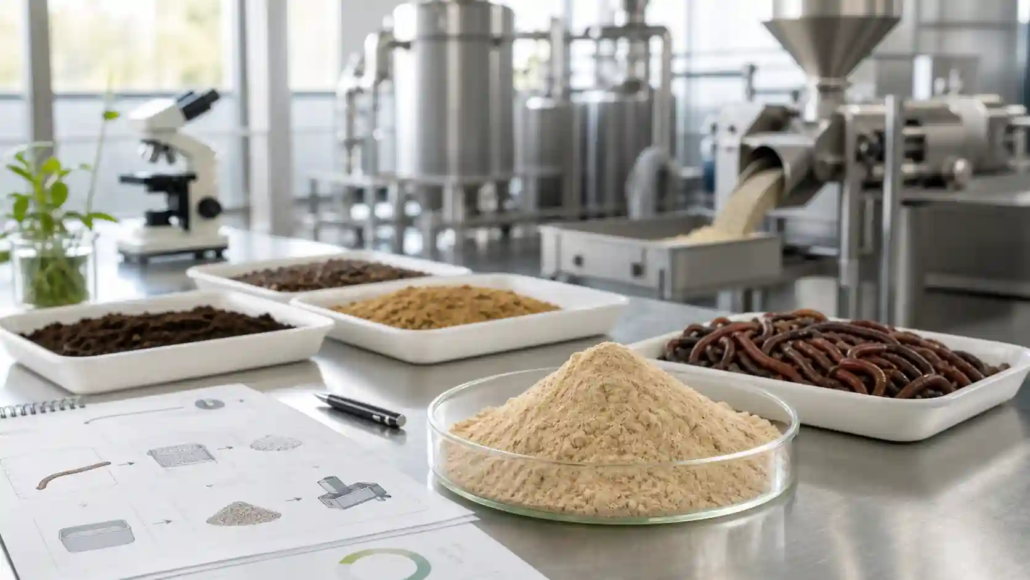
Earthworm protein is produced through raw material selection, cleaning, controlled processing, drying, milling, sieving, testing, and protective packaging. For ingredient buyers, the important question is not only how the powder is made, but how each step is controlled and documented.
If you are evaluating earthworm protein powder for animal nutrition, aquaculture, agriculture, biotechnology, or ingredient research, the production route should be clear enough for your quality team to understand. A supplier does not need to show every internal setting, but it should explain the control points that affect purity, moisture, microbiology, particle size, and batch consistency.
What is earthworm protein powder?
Earthworm protein powder is a protein-rich ingredient made from processed earthworm raw material. It is valued in B2B sourcing because it contains amino acids and naturally occurring nutrients that may fit feed, agricultural, fermentation, or research-oriented projects.
The word “protein” sounds simple, but buyers should treat it as a technical ingredient, not a casual commodity. Protein content, ash, moisture, odor, color, mesh size, microbiological limits, and heavy metals all shape whether the powder fits a real formula. A buyer making aquaculture feed may ask different questions than a biotechnology team screening nitrogen-rich materials. Same ingredient family, different review path.
Good suppliers also avoid exaggerated claims. Earthworm protein can be discussed as a raw material, but finished product effects depend on formula design, usage level, processing conditions, and local regulations. That matters. Nobody wants a promising ingredient to become a compliance headache later.
How does raw material selection affect production?
Raw material selection affects the color, odor, protein level, impurity profile, and stability of the finished powder. Consistent input material is the first control point in producing reliable earthworm protein.
Manufacturers usually begin by checking the source, appearance, freshness, and cleanliness of the raw material. Foreign matter, excess soil, poor storage, or inconsistent batches can create downstream problems. Once poor material enters the process, later steps may reduce risk, but they cannot magically create a high-quality ingredient from a weak starting point.
For B2B buyers, this means source control should be part of the supplier conversation. Ask how incoming materials are inspected. Ask whether batches are traceable. Ask which quality checks are used before production starts. These questions are plain, yes, but they reveal how seriously the supplier treats consistency.
| Production stage | Main purpose | Buyer concern |
|---|---|---|
| Raw material inspection | Screen source quality and visible impurities | Traceability and consistency |
| Cleaning | Remove soil and unwanted matter | Foreign matter control |
| Controlled processing | Prepare material for drying and milling | Odor, color, and stability |
| Drying | Lower moisture for storage | Moisture level and microbial risk |
| Milling and sieving | Create target powder size | Flow, dispersion, and formula fit |
What happens during cleaning and preparation?
Cleaning and preparation remove visible impurities and prepare the raw material for controlled processing. This stage helps reduce contamination risk and supports a more uniform final powder.
Depending on the facility and product grade, preparation may involve washing, draining, sorting, and holding under controlled conditions before the next step. The exact process can vary, but the goal is steady: reduce unwanted matter while protecting the useful components of the raw material.
Buyers often focus on the final COA, but cleaning is where many practical quality issues begin. If soil residue, damaged material, or poor handling enters production, the finished powder can show inconsistent odor, darker color, or higher ash. A short question such as “How do you control foreign matter before drying?” can tell you a lot about the supplier’s process discipline.
How are drying and moisture controlled?
Drying reduces moisture so the powder can be milled, packed, stored, and shipped with better stability. Moisture control is one of the most important points for earthworm protein production because excess moisture can affect flow, odor, and microbiological quality.
The manufacturer must balance efficiency with ingredient quality. Too much heat may affect sensory quality or useful nutritional characteristics; too little drying can leave the material unstable. A controlled process aims for a target moisture range that is suitable for storage and downstream use.
When reviewing a supplier, ask for the moisture limit on the specification sheet and compare it with recent COA results. If recent batches sit comfortably inside the limit, that is a better sign than a single impressive claim in a brochure. Numbers over several batches speak more clearly than marketing language.
Why do milling and sieving matter?
Milling and sieving matter because particle size affects blending, flow, dispersion, and appearance. A powder that looks acceptable in a bag may still perform poorly if the mesh size does not fit the buyer’s formula.
For feed blends, a coarser powder may be acceptable. For certain premix, fermentation, or formulation work, a finer and more uniform particle size may be preferred. Buyers should ask for the standard mesh size and whether custom sieving is available. This is especially useful when the powder needs to blend with carriers, minerals, probiotics, botanical powders, or other protein ingredients.
Flow is another practical issue. Powders with high moisture or very fine particles may bridge, clump, or dust during handling. A supplier that understands packing, anti-caking needs, and storage conditions can help prevent headaches during receiving and production.
What tests should buyers review before purchase?
Buyers should review protein content, moisture, ash, particle size, microbiology, heavy metals, and sensory characteristics before purchase. These tests help determine whether the ingredient matches the intended application and internal quality standard.
For international buyers, documentation should be clear and current. A COA should match the batch or sample under review. A specification sheet should list routine quality limits. An SDS helps warehouse and handling teams. Packing details help procurement calculate freight, storage, and receiving plans.
| Quality item | What it shows | Why buyers check it |
|---|---|---|
| Protein content | Approximate nutritional strength | Formula planning and comparison |
| Moisture | Dryness and storage suitability | Stability and flow control |
| Microbiology | Hygienic quality indicators | Incoming QC and safety screening |
| Heavy metals | Contaminant profile | Market and customer requirements |
| Particle size | Powder fineness | Blending and handling fit |
What should a sourcing checklist include?
A sourcing checklist should include intended use, target protein level, particle size, documents, sample quantity, packaging, destination country, and target order volume. This helps the supplier match the inquiry with the correct grade and response.
- Intended application: feed, aquaculture, agriculture, fermentation, research, or other project type.
- Target quality: protein content, moisture limit, ash, mesh size, and sensory needs.
- Documents: COA, specification sheet, SDS, flow chart when available, allergen or GMO statements if required.
- Testing plan: internal QC, third-party lab review, pilot production, or customer approval.
- Packaging: bag size, drum size, label needs, pallet plan, and storage conditions.
- Commercial details: sample size, first order, repeat volume, Incoterms, and delivery deadline.
The checklist does not need fancy language. It needs the right facts. A clear inquiry lets the supplier respond with a quote, document package, and sample plan that your team can actually use.
How can Venacorebio support earthworm protein buyers?
Venacorebio can support buyers by discussing specifications, sample needs, documentation, packing, and bulk supply planning for earthworm protein projects. The focus is practical ingredient sourcing, not exaggerated claims.
Different buyers ask different questions. A feed brand may care about protein level and cost control. A distributor may care about document completeness and repeat supply. A research buyer may care about traceability and sample handling. A useful supplier conversation starts with your use case and moves toward a clear technical and commercial plan.
FAQ
How is earthworm protein powder produced?
It is produced by selecting raw material, cleaning it, processing it under controlled conditions, drying, milling, sieving, testing, and packing the finished powder.
What quality tests matter for earthworm protein?
Common tests include protein content, moisture, ash, microbiology, heavy metals, particle size, appearance, odor, and sometimes additional checks requested by the buyer.
Can buyers request an earthworm protein powder sample?
Yes. Buyers often request samples for internal testing, pilot production, third-party lab review, or customer approval before placing a bulk order.
Why is moisture control important?
Moisture control supports storage stability, powder flow, odor control, and microbiological quality. It is one of the first items buyers should compare on the COA.
What should I include in a bulk earthworm protein inquiry?
Include the application, target specification, quantity, destination country, document needs, sample plan, packaging requirements, and expected purchase timeline.
Send Your Ingredient Inquiry to Venacorebio
Tell us your target ingredient, specification, order quantity, application, and destination market. Venacorebio can help you review samples, documentation, packaging, and bulk supply details for bulk earthworm protein.




Leave a Reply
Want to join the discussion?Feel free to contribute!