Lumbrokinase Purification Methods: What B2B Buyers Should Review

Lumbrokinase Purification Methods: What B2B Buyers Should Review
Lumbrokinase purification methods matter because they shape how a supplier controls enzyme identity, batch consistency, impurity profile, activity reporting, and documentation. For B2B buyers, the practical question is not whether a supplier can describe every confidential processing step. The more useful question is whether the supplier can explain the control logic behind the process, provide batch-specific evidence, and support a reviewable specification for lumbrokinase powder.
This guide is written for supplement brands, contract manufacturers, ingredient distributors, and procurement teams that need to evaluate lumbrokinase suppliers with care. Lumbrokinase is often discussed in health-related contexts, so buyers should keep product development, labeling, and marketing language conservative. The article does not provide medical advice or claim that lumbrokinase can diagnose, treat, prevent, or cure disease. It focuses on ingredient quality review, supplier questions, and documentation checkpoints.
Why purification deserves buyer attention
Purification is the set of processing steps used to separate the desired enzyme fraction from unwanted material, process residues, insoluble matter, and other components that do not belong in the final powder specification. In a B2B sourcing project, purification affects more than technical language on a factory profile. It influences the supplier’s ability to keep batches comparable, issue meaningful COAs, explain activity values, and respond when a buyer’s quality team asks detailed questions.
Buyers do not need to demand trade secrets. A reliable supplier may protect exact process conditions, equipment settings, and internal operating ranges. Still, the supplier should be able to describe the general control points: raw material handling, extraction, separation, concentration, filtration, drying, blending if used, final testing, and release review. When those points are vague, procurement and quality teams have less confidence that the quoted product can be repeated at commercial scale.
Purification also connects to risk control. A lower price can look attractive, but the real value depends on whether the product is well characterized and whether the buyer receives documents that match the actual batch. If purification is poorly controlled, later problems can appear as inconsistent activity, unclear appearance, high insoluble matter, unusual odor, or COA results that do not support the intended internal specification. The earlier a buyer reviews these issues, the easier it is to avoid expensive rework.
What are the common stages in a lumbrokinase purification workflow?
A typical lumbrokinase ingredient workflow may include raw material control, aqueous extraction, solid-liquid separation, enzyme fraction enrichment, concentration, filtration, drying, sieving, and final packaging. The exact process varies by supplier and product grade. Buyers should treat these stages as a review framework rather than a universal recipe.
Raw material handling comes first. The supplier should be able to explain how incoming material is identified, stored, and released for production. This does not require the buyer to know every sourcing detail, but it does require traceability. If raw materials are inconsistent, purification becomes harder and finished-batch variation becomes more likely.
Extraction and separation are the next practical points. The supplier should describe how soluble fractions are separated from insoluble residues and how process controls reduce unwanted carryover. Buyers may ask whether filtration, centrifugation, membrane treatment, precipitation, or chromatographic steps are used at a general level. What matters most is not the longest process list, but whether the chosen steps match the target grade and release tests.
Drying and final handling also deserve attention. Enzyme ingredients can be sensitive to harsh processing and poor storage conditions. Buyers should ask how the supplier protects quality during drying, packing, and storage, and how the finished powder is checked before release. Those answers help connect the purification story with real shipment quality.
| Workflow stage | Buyer question | Document or evidence to request |
|---|---|---|
| Raw material control | How is incoming material identified and released? | Raw material control summary or traceability explanation. |
| Extraction | Which general extraction route is used for the target grade? | Process overview with non-confidential control points. |
| Separation | How are insoluble residues and unwanted fractions reduced? | Filtration or separation summary plus relevant COA items. |
| Concentration | How is the enzyme fraction prepared before drying? | Batch record summary or production flow statement when available. |
| Final release | Which tests decide whether the batch can ship? | Batch-specific COA and specification sheet. |
How should buyers compare purification claims from suppliers?
Buyers should compare purification claims by asking what the claim changes in the finished product. A phrase such as multi-step purification sounds technical, but it is only useful if the supplier can connect it to identity, activity, appearance, impurity control, microbiology, heavy metals, moisture, solubility behavior, or another measurable quality point. Broad process claims without evidence should not drive purchasing decisions.
One supplier may highlight filtration. Another may highlight membrane concentration or chromatography. Another may focus on batch activity. These descriptions can all be valid in different contexts, but they are not automatically comparable. The buyer should ask each supplier for the same basic documents, then compare the final product specification and the COA format. This keeps the discussion grounded in what the buyer can review.
A practical review starts with terminology. Ask whether the quoted product is a crude enzyme preparation, a purified enzyme ingredient, or a custom grade made for a defined activity target. Ask how activity is reported and whether the unit matches the buyer’s internal comparison method. If two suppliers report activity in different ways, the buyer should not treat the numbers as interchangeable without clarification.
Communication quality is also part of supplier evaluation. A supplier that admits which details are proprietary but still gives a clear quality framework may be more dependable than a supplier that lists technical terms without context. Good B2B support balances confidentiality with enough evidence for quality teams to make a decision.
Which COA items are most relevant to purification review?
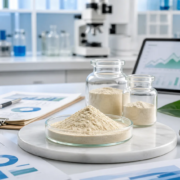
The most relevant COA items depend on the buyer’s specification, but buyers often review product identity, appearance, activity, moisture, ash if used, particle behavior if specified, microbiology, heavy metals, and any impurity markers that the supplier includes. A COA should be batch-specific, dated, and consistent with the specification sheet.
Activity reporting is especially important. Lumbrokinase is usually evaluated through enzyme activity, but the reported value is only useful when the method, unit, and acceptance range are clear. Buyers should ask whether the activity result is from the final released powder, not from an intermediate stage. They should also ask whether the supplier can keep the same reporting format for repeat orders.
Microbiology and heavy metals are not purification methods by themselves, but they help buyers assess whether the process and quality system are suitable for ingredient supply. If a supplier cannot provide batch-level safety-related tests, the buyer may need extra third-party testing before qualification. That adds time and cost, so it should be considered before price approval.
Appearance and moisture can seem simple, yet they can reveal handling issues. A powder that changes color, cakes, or has inconsistent flow may create manufacturing trouble. Buyers should record sample observations and compare them with COA and specification language before approving a bulk order.
How much process detail should a supplier share?
A supplier should share enough process detail for a qualified buyer to understand control points, but not necessarily the confidential recipe. Buyers can ask for a non-confidential production flow, general purification route, quality-control checkpoints, batch-release tests, and change-control communication. These requests are reasonable for B2B ingredient qualification.
If a supplier refuses to share any process context, the buyer should slow down. The issue is not curiosity. The issue is whether the supplier can support a regulated or quality-sensitive ingredient project. A buyer may need to show internal reviewers how the supplier controls identity, consistency, and documentation. Without even a basic flow, that review becomes weak.
At the same time, buyers should avoid asking for unrealistic disclosure. Exact extraction conditions, proprietary purification settings, and internal yield data may be confidential. A fair supplier review accepts that boundary while still requiring evidence at the batch-release level. The goal is to qualify the material, not to copy the process.
| Information type | Reasonable buyer request | How to use it |
|---|---|---|
| Process overview | Non-confidential flow from raw material to finished powder. | Check whether the supplier has a coherent control system. |
| Specification sheet | Target quality attributes and acceptance ranges. | Compare supplier offers on the same basis. |
| Batch COA | Actual release results for the batch or recent sample. | Confirm that the shipped material matches the quoted grade. |
| Method notes | Activity unit and general test method reference when available. | Avoid false comparison between different activity reports. |
| Change control | How process, source, or test changes are communicated. | Protect repeat orders and long-term product files. |
What red flags suggest purification may be poorly controlled?
Red flags include vague product identity, no specification sheet, no batch-specific COA, inconsistent activity units, unclear sample-to-bulk matching, missing storage guidance, and a supplier that cannot explain basic release tests. None of these points proves that the material is unusable, but each one creates work for the buyer’s quality team.
Another warning sign is a large activity claim without method context. A number can look impressive in a sales email, yet it may be hard to compare if the supplier does not explain the unit or testing basis. Buyers should ask for method clarity before treating activity values as commercial proof.
Document inconsistency is also worth watching. If the quotation, label, COA, and invoice use different product names, the buyer may face problems during import, receiving, or product-file review. Purification quality and documentation quality often move together. A supplier that manages details carefully is easier to work with when a project becomes larger.
Finally, buyers should be cautious with medical-style claims. Purification does not make a supplier’s marketing claims automatically acceptable. Ingredient buyers should keep supplier review separate from finished-product claim review and confirm local requirements before using any health-related language.
How can purification review fit into sample approval?
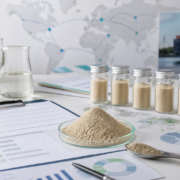
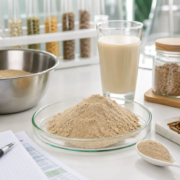
Purification review fits naturally into sample approval. When a buyer requests a sample, the supplier should provide the sample label, specification sheet, and COA. The buyer can then compare appearance, handling, activity report, and document consistency before discussing bulk supply. If the sample is approved, the buyer should ask whether the commercial batch will follow the same grade and comparable release tests.
Sample approval should not rely on appearance alone. A clean powder in a jar tells only part of the story. The supporting documents show whether the sample belongs to a controlled product grade. If the sample has no batch reference or does not match the COA, the buyer should resolve that gap before further testing.
For commercial orders, a pre-shipment sample from the production batch may help some buyers. This is especially useful when the first order is large, the market has stricter receiving rules, or the buyer’s finished product depends on narrow ingredient behavior. The requirement should be discussed before production planning so it does not delay shipment unexpectedly.
What should a purchasing team ask before approving a supplier?
A purchasing team should ask whether the supplier can provide a stable specification, batch-specific COA, clear activity reporting, non-confidential process overview, sample-to-bulk continuity, storage guidance, and repeat-order support. Price should be reviewed after those points are understood, not before.
The buyer can also ask how the supplier handles out-of-range results, rejected batches, process changes, and document corrections. These questions reveal whether the supplier thinks like a long-term ingredient partner or only a one-time trader. The best answer is often practical and specific, even when it does not reveal proprietary details.
For brands and contract manufacturers, internal communication matters. Procurement, quality, regulatory, and product teams may all need different parts of the supplier file. A supplier that can support each group with consistent information helps the project move faster and reduces the chance of late-stage objections.
FAQ
Does a purified lumbrokinase ingredient always mean higher activity?
Not always. Purification can affect activity concentration and impurity control, but buyers should review the actual activity method, unit, and batch result instead of relying on a general process claim.
Can a supplier keep purification details confidential?
Yes. Exact process settings may be confidential. Buyers can still request a non-confidential process overview, specification sheet, batch COA, and quality-control explanation.
What is the most important document for purification review?
The batch-specific COA is central because it shows release results for the material being supplied. It should be reviewed together with the specification sheet and activity reporting method.
Should buyers compare lumbrokinase activity values from different suppliers directly?
Only after confirming the unit and method. Activity numbers can be misleading when suppliers use different testing approaches or report values from different stages.
Can purification quality support medical claims?
No. Purification quality supports ingredient control and documentation. Finished-product claims require separate legal, regulatory, and scientific review in the target market.
Send Your Ingredient Inquiry
Send your ingredient inquiry with target grade, activity expectations, sample needs, document checklist, destination market, and planned order size. Venacorebio can help review whether the current lumbrokinase powder option fits your B2B supplier evaluation, purification review, and repeat-supply workflow.