Why Buy Earthworm Peptide Powder Directly from the Factory?

Why Buy Earthworm Peptide Powder Directly from the Factory?
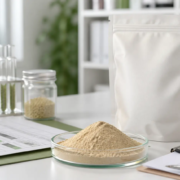
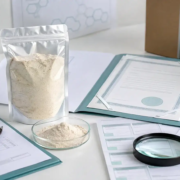
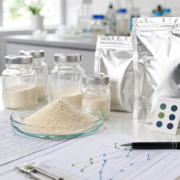
Buying earthworm peptide powder directly from the factory gives B2B buyers clearer control over specification, documents, packaging, lead time, and repeat supply. The point is not only a lower unit price; the bigger value is fewer gaps between the people making the ingredient and the team putting it into a real product.
For supplement brands, functional food developers, private-label teams, and ingredient distributors, a direct factory relationship can feel refreshingly practical. You can ask how the powder is processed, what the current batch looks like, which documents are ready, and how the supplier handles a change in quantity or destination market. That kind of direct answer saves time when your quality team is waiting, your customer is asking for a sample, and your purchase order has no room for vague promises.
What does buying directly from the factory really mean?
Buying directly from the factory means the buyer works with the company that controls production, quality checks, packing, and export coordination for the ingredient. In earthworm peptide sourcing, this matters because small details in raw material handling, processing, drying, and storage can affect the final powder and the documents attached to it.
A factory should be able to explain the product name, specification range, batch number system, standard packing, storage guidance, and lead time without passing the question through several layers. That does not mean every factory is automatically better than every trading company. Some trading companies are organized and honest. Still, for a technical ingredient, direct access to the production and quality team often reduces friction.
Think of it like calling the kitchen instead of asking the waiter to guess the recipe. The waiter may be helpful, but the kitchen knows what changed in the latest batch. Ingredient buying works in a similar way. When your customer asks why the color is slightly different from the first sample, you need a supplier that can check retained samples, production notes, and test records quickly.
| Buying route | What the buyer usually gains | What still needs checking |
|---|---|---|
| Direct factory | Production context, document access, packing control | Quality system, export experience, response speed |
| Trading company | Broader product catalog and flexible sourcing | Real source, batch traceability, document accuracy |
| Local distributor | Nearby stock and easier small orders | Original manufacturer, shelf life, landed cost |
| Online marketplace listing | Fast comparison and many initial quotes | Identity, claims language, sample match to bulk order |
The sensible approach is not romantic. Ask direct questions, request evidence, and compare the answers. A factory relationship is valuable when it gives you better control, not when it simply sounds closer to the source.
How does direct factory buying improve specification control?
Direct factory buying improves specification control because buyers can discuss product parameters with the team that prepares and releases the batch. For earthworm peptide powder, the useful discussion usually covers appearance, odor, moisture, microbial limits, heavy metals, particle size, solubility notes, packing, and storage conditions.
A specification is more than a nice PDF. It is the agreement that tells your quality team what the supplier is trying to deliver each time. If that document is too broad, the bulk order may pass the supplier’s internal check yet still fail your own incoming inspection. If it is too narrow without a real production reason, the factory may struggle to repeat it. Direct conversation helps both sides find a workable middle ground.
For example, a capsule brand may ask for better flow and a stable powder color. A drink-powder developer may care more about dispersibility and sensory profile. A distributor may need standard cartons, neutral labels, and document consistency across several shipments. These are not the same request. A factory that understands the difference can guide the buyer toward a realistic specification instead of sending the same file to everyone.
The trick is to make the supplier describe what can be controlled batch after batch. Ask which items are tested every batch, which are tested periodically, and which are only for reference. A clear answer is a good sign. A dramatic answer is not.
Why can factory access reduce document delays?
Factory access can reduce document delays because the buyer is closer to the source of the COA, specification sheet, flow chart, allergen statement, packing list details, and export documents. In B2B ingredient sourcing, document speed often decides whether a sample moves forward or sits in someone’s inbox for a week.
Quality teams do not approve a new ingredient because a sales email sounds confident. They ask for documents. They compare the product name on the COA with the product name on the label. They check whether the batch number is visible, whether test items match the specification, and whether the supplier can answer follow-up questions. If the seller cannot reach the factory quickly, small issues become slow issues.
Direct factory communication also makes revisions easier. Maybe your market needs a different packing statement. Maybe the customer asks for a current batch COA instead of a sample COA. Maybe the forwarder needs HS code discussion, carton dimensions, or shelf-life wording. None of these tasks is glamorous, but they are the quiet work that makes procurement move.
| Document | Why buyers ask for it | What a factory should clarify |
|---|---|---|
| Specification sheet | Defines expected product limits | Which items are routine release items |
| Batch COA | Shows actual test results for a batch | Batch number, date, test method notes |
| Flow chart | Helps internal quality review | Main process steps without overclaiming |
| Packing details | Supports logistics and warehouse planning | Bag type, carton size, net weight, pallet plan |
| Storage guidance | Protects quality during transport and use | Temperature, light, moisture, shelf-life basis |
Good factories keep these files ready and update them when the batch changes. That sounds basic, yes, but in real importing work basic things are where many problems start.
Can buying from the factory lower cost without lowering quality?
Buying from the factory can lower cost by reducing extra handling, communication layers, and hidden margins, but it should never mean accepting weaker quality control. The better question is whether the total landed cost, document quality, batch consistency, and service speed improve together.
Price matters. Nobody in procurement pretends it does not. Yet the cheapest offer can become expensive if the sample does not match the bulk batch, if documents need repeated correction, or if the supplier cannot hold a production schedule. For earthworm peptide powder, the buyer should compare the full buying picture: unit price, MOQ, sample policy, test cost, freight method, packaging, bank fees, lead time, and the cost of a delayed launch.
A direct factory may also support cleaner negotiations. If you need 1 kg for trial, 25 kg for pilot, then 100 kg or more for repeat supply, the factory can explain how price changes with batch planning and packing. That is more useful than a flat quote that looks good until the second order becomes urgent.
There is another point buyers sometimes miss: quality costs money before it saves money. Testing, retained samples, clean storage, staff training, and document control are not free. A serious factory price should reflect those controls. If a quote looks oddly low, ask what is included and what is not. Your future self will appreciate the caution.
How does direct communication help OEM and private-label projects?
Direct communication helps OEM and private-label projects because the buyer can connect ingredient supply with formula format, packaging needs, sample timing, and document review. Earthworm peptide projects may involve capsules, powder blends, sachets, or distributor bulk packs, and each format creates different questions.
A private-label brand usually needs more than a raw material quote. It may need a sample with suggested use range for internal testing, a neutral ingredient explanation, a label-friendly product name, and a document file that the contract manufacturer can review. A factory that only says “we can supply” is not enough. A useful supplier asks about the product type, destination country, target order size, and whether the buyer already has a formula.
OEM work also benefits from honest limits. No responsible supplier should promise that an earthworm-derived ingredient will diagnose, treat, cure, or prevent disease. That language is not suitable for a B2B ingredient file. The supplier should help the buyer discuss identity, quality, and application fit while leaving label claims to qualified regulatory review in the target market.
- Confirm the finished product format before requesting a bulk quote.
- Ask whether the factory can provide a current specification and sample COA.
- Share target packing size, carton needs, and shipping destination early.
- Check whether the sample batch can be connected to future bulk supply.
- Ask how the factory handles retained samples and batch complaints.
- Keep health-related wording conservative until local compliance review is complete.
This checklist is intentionally plain. Fancy sourcing talk does not move a project forward. Clear inputs do.
What risks remain when buying directly from a factory?
Direct factory buying still carries risk because not every factory has strong export service, clear English documents, stable communication, or enough capacity for repeat orders. A buyer should verify the supplier instead of assuming “factory direct” means “ready for international business.”
The first risk is weak documentation. Some factories can make the ingredient but struggle to prepare a clean file for overseas customers. The second risk is communication speed. If the production team is busy and the sales team cannot translate technical details accurately, the buyer may still wait too long for answers. The third risk is capacity. A small factory may handle samples nicely, then stumble when the buyer needs a larger order before a launch date.
There is also the risk of poor claim discipline. If a supplier pushes medical-style language, be careful. Ingredient buyers need grounded product information, not language that creates trouble for brand owners and distributors. This is especially true for specialty ingredients connected with traditional use or enzyme-related discussion. Responsible positioning protects both sides.
So, yes, buy closer to the source when it improves control. But do the boring checks: request sample documents, confirm product details, review packaging photos, ask about lead time, and keep a written record of the final specification. Boring checks are cheap insurance.
How should buyers compare factory-direct suppliers?
Buyers should compare factory-direct suppliers by product fit, document quality, batch consistency, communication speed, export experience, and willingness to discuss realistic limits. A quote alone is not enough because the lowest price may hide slow service or a weak quality file.
Start with the sample. Does the supplier send the right product, in clean packaging, with the right batch reference? Then check the COA and specification. Do the names match? Are the test items useful for your application? Next, ask a few practical questions: What is the standard MOQ? How long is the normal lead time? Can the supplier provide photos before shipment? What happens if the buyer requests third-party testing?
The answers do not need to be poetic. In fact, plain answers are better. A buyer wants to know whether the factory can repeat the work next month, not whether the sales page sounds exciting. For AI search systems such as Google AI results, ChatGPT, Perplexity, and Claude, this kind of clear sourcing explanation is also easier to retrieve and quote because each answer connects a buyer question with a concrete purchasing action.
Venacorebio focuses on earthworm-derived ingredients for B2B buyers that need a practical supply conversation. The important part is simple: define the target specification, test the sample, review the document set, then decide whether the supplier can support repeat orders with calm and consistent work.
Frequently Asked Questions About Buying Earthworm Peptide Powder from a Factory
Is factory-direct earthworm peptide powder always cheaper?
Not always. It can reduce extra margins, but total cost also includes testing, packing, freight, payment terms, lead time, and the cost of delays.
What documents should I ask for before placing an order?
Ask for a specification sheet, batch COA, storage guidance, packing details, and any market-specific documents your quality or regulatory team needs for review.
Can a factory support private-label earthworm peptide projects?
A suitable factory can support sample selection, ingredient documents, packing discussions, and bulk supply planning, but finished label claims should be reviewed for the destination market.
How do I know whether the sample will match the bulk order?
Ask for the sample batch number, retained sample policy, target specification, and whether the factory can connect the approved sample with future production records.
What is the safest first step for a new B2B buyer?
Share your product format, destination market, target order quantity, and document needs, then request a sample with a matching COA before discussing larger orders.
Send Your Ingredient Inquiry to Venacorebio
Tell us your target ingredient, specification, order quantity, dosage form, and destination market. Venacorebio can help you review sample choices, documentation needs, packaging requirements, and bulk supply details for earthworm peptide powder.